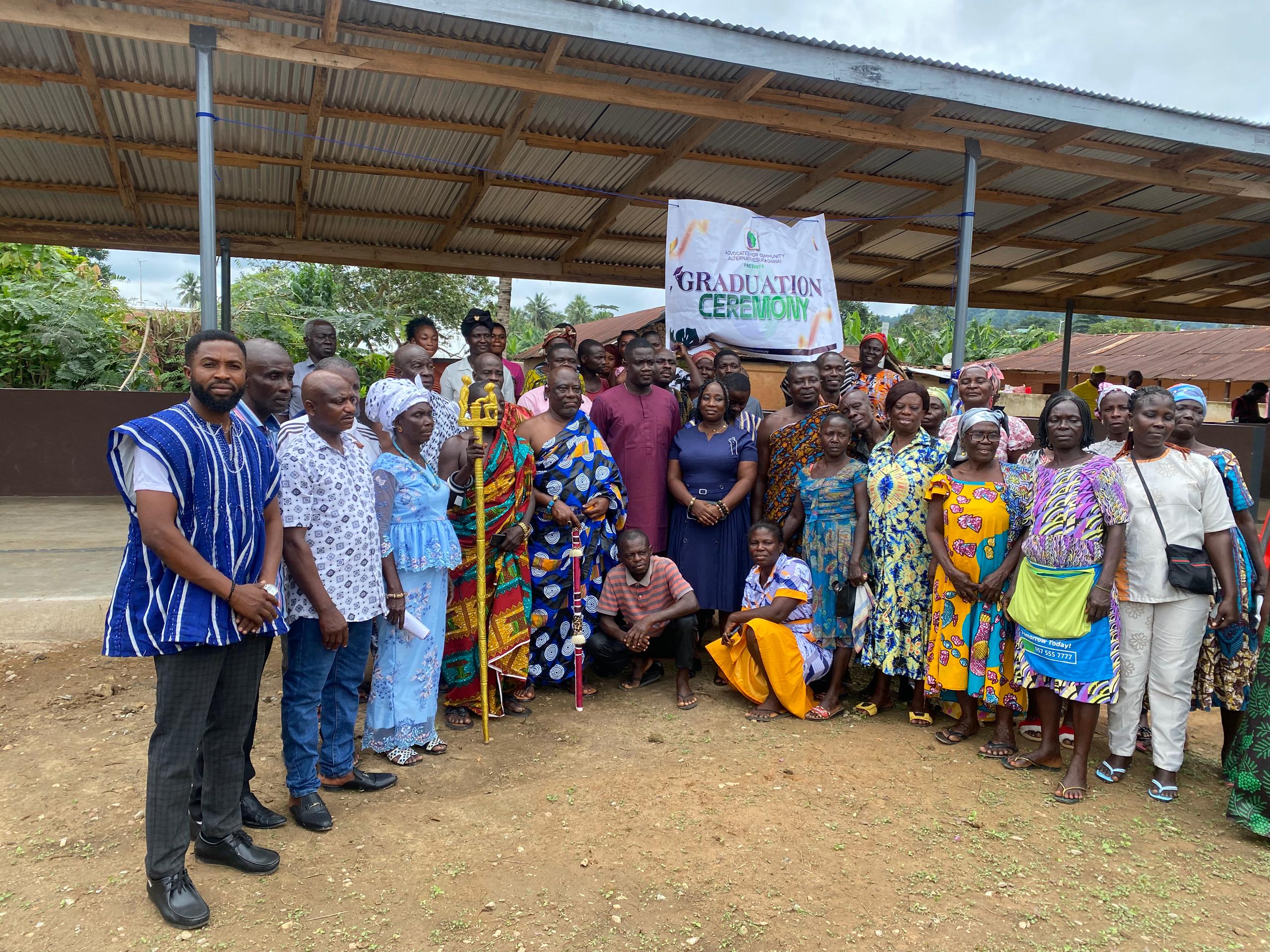
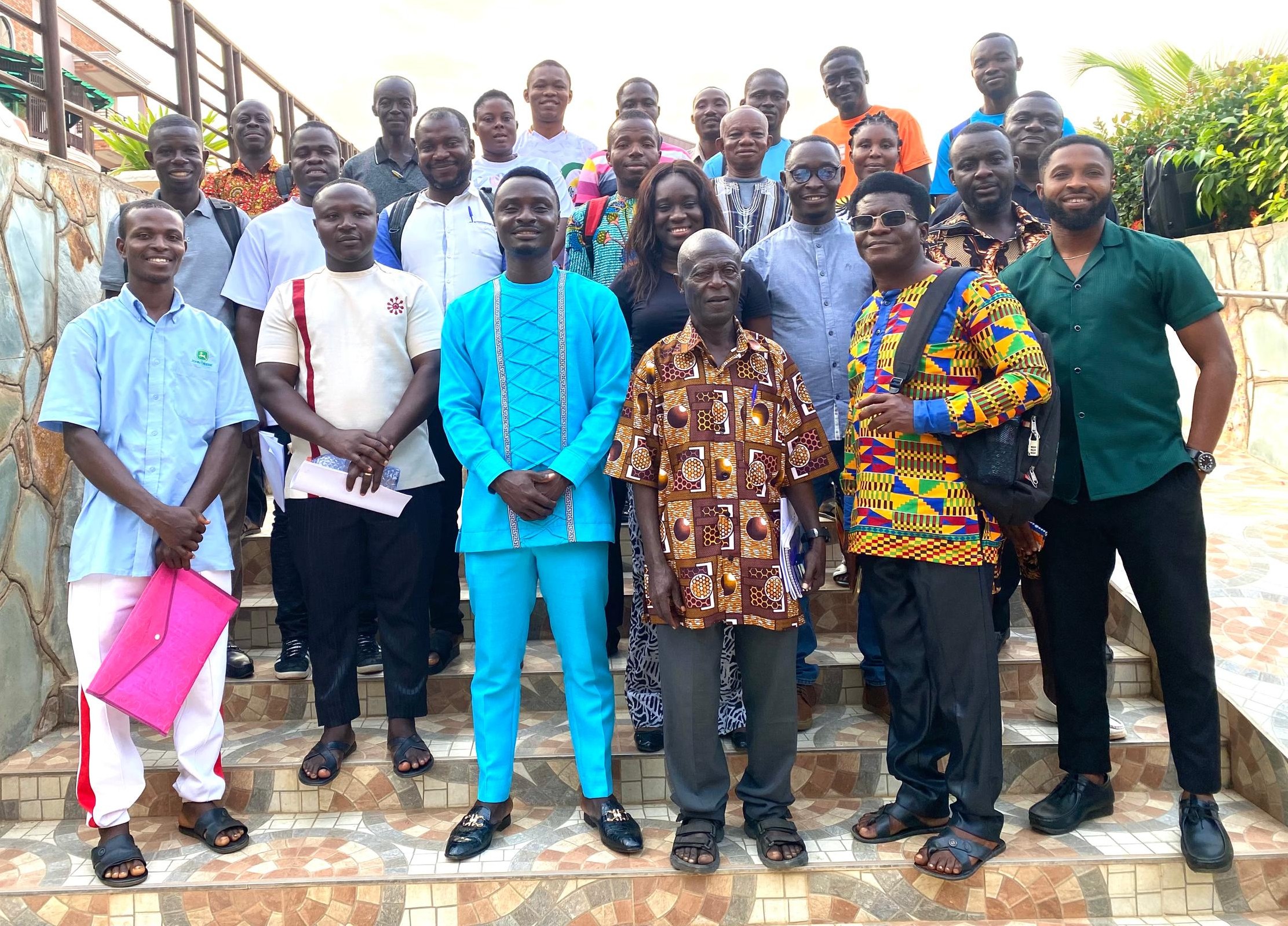
In a colourful and inspiring graduation ceremony at Amanfrom, ten communities in the Abuakwa South Municipality of Ghana’s Eastern Region have been celebrated for the successful completion of their community-driven development projects under the Facilitated Collective Action Process (FCAP). Also called “Oman yie die”, the initiative, led by the Accra-based NGO Advocates for Community Alternatives (ACA), is empowering rural communities to identify their own development priorities, mobilize resources, and implement solutions for long-term impact.
Each of the graduating communities has implemented a unique project tailored to its most pressing needs, achieving tangible results aligned with key success indicators. The ceremony served not only as a recognition of their achievements, but also as a testament to the power of grassroots participation in sustainable development.
Livelihoods and Economic Empowerment
To combat unemployment and boost local income, the Apapam community has completed a Pig Farm Venture aimed at reducing unemployment by 5% by 2025. The initiative also targets a 20% income increase for pig traders and a 15% growth in their savings.
Similarly, Obopekonya has built a Palm Oil Processing Centre that is projected to increase employment among local palm oil producers by 20% and boost the income and savings of palm oil traders by another 20% within a year.


In Obopeko, residents are already benefiting from a newly constructed Corn Mill Processing Centre, which will allow between 20% to 50% more community members to process their corn and gari locally. The project is expected to raise farmers’ incomes by 20% and drastically reduce the distance they previously had to travel—more than 5km—to process their crops.
Amanfrom has successfully launched a mini-market project designed to tackle rural unemployment. Projections show the project will reduce unemployment by 15% by 2026, increase market traders’ income by 40%, and raise their savings by 20%.
Water and Sanitation Improvements
Access to potable water—a long-standing challenge in many rural communities—was tackled head-on by three of the graduating communities. Asiakwa, Addo Nkwanta, and Adadientem have each completed mechanized borehole projects, significantly improving water access and public health. These projects aim to reduce the average distance to safe water from over 5km to under 1km, cut waterborne diseases from 50% to 10% in the first year, and boost access to clean water by 25% within 18 months.


Infrastructure for Safety and Trade
Communities like Bomponso and Lartemu tackled mobility and safety challenges with the construction of Foot Bridges. These critical infrastructures are expected to reduce accidents and fatalities by 15%, improve access to nearby communities by 50%, and boost local trade by 20% within the first year.
Powering Progress
The Adortoa community celebrated the successful implementation of an Electricity Extension Project. This game-changing initiative is forecast to increase economic activities by 30%, improve academic outcomes among students by 25%, and enhance security in the community by 40% over the next 12 months.
A Model for Community-Led Development
Speaking at the graduation ceremony, representatives from ACA commended the communities for their dedication, unity, and vision. “These projects show that when communities are empowered to take charge of their own development, the results are remarkable. FCAP is not just a process; it’s a movement towards sustainable, people-driven transformation,” ACA’s Senior Trainer, Francis Manu noted.

Traditional leaders, government representatives, and community members all praised the FCAP initiative, with many calling for its expansion across more districts in the Eastern Region and beyond.
The Abuakwa South Municipal Chief Executive, Nana Adu Sarpong Addo Aikins, who graced the occasion with his presence, inaugurated the Amanfrom market.
He assured the gathering of his unwavering commitment towards the completion of the remaining projects being implemented in partnership with ACA.

As these ten communities move forward, their projects are set to serve as models of success and inspiration for other rural areas seeking to shape their own development paths. The graduation marks a milestone—but for these communities, it is only the beginning of a brighter, self-driven future.