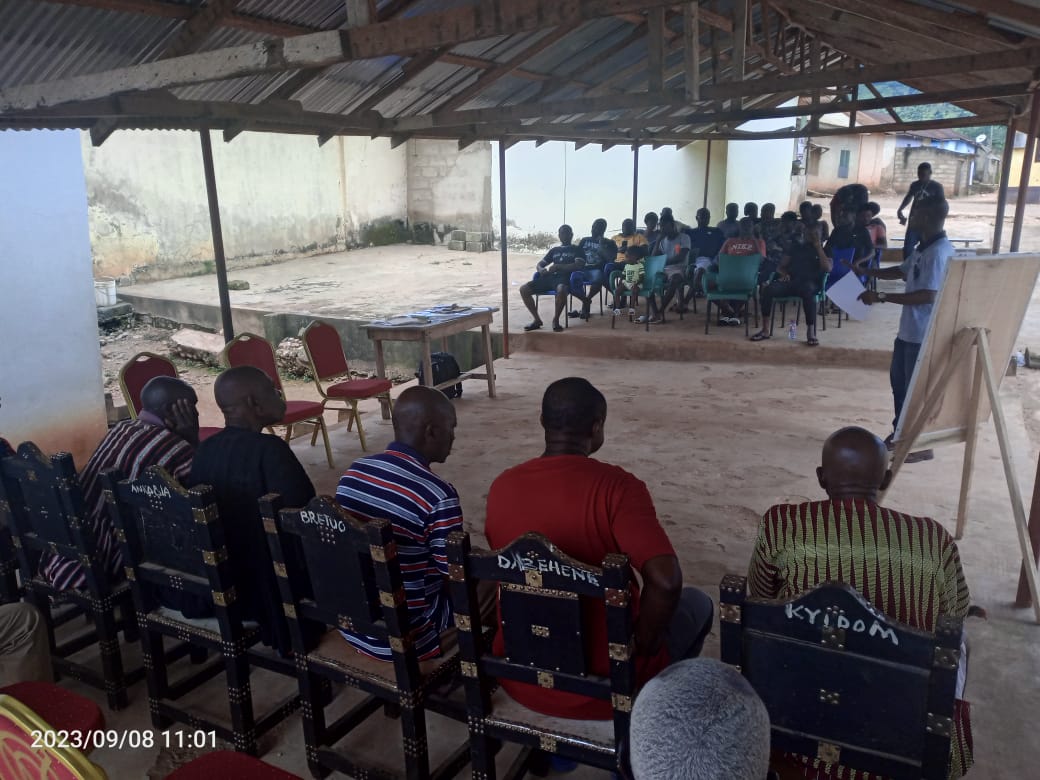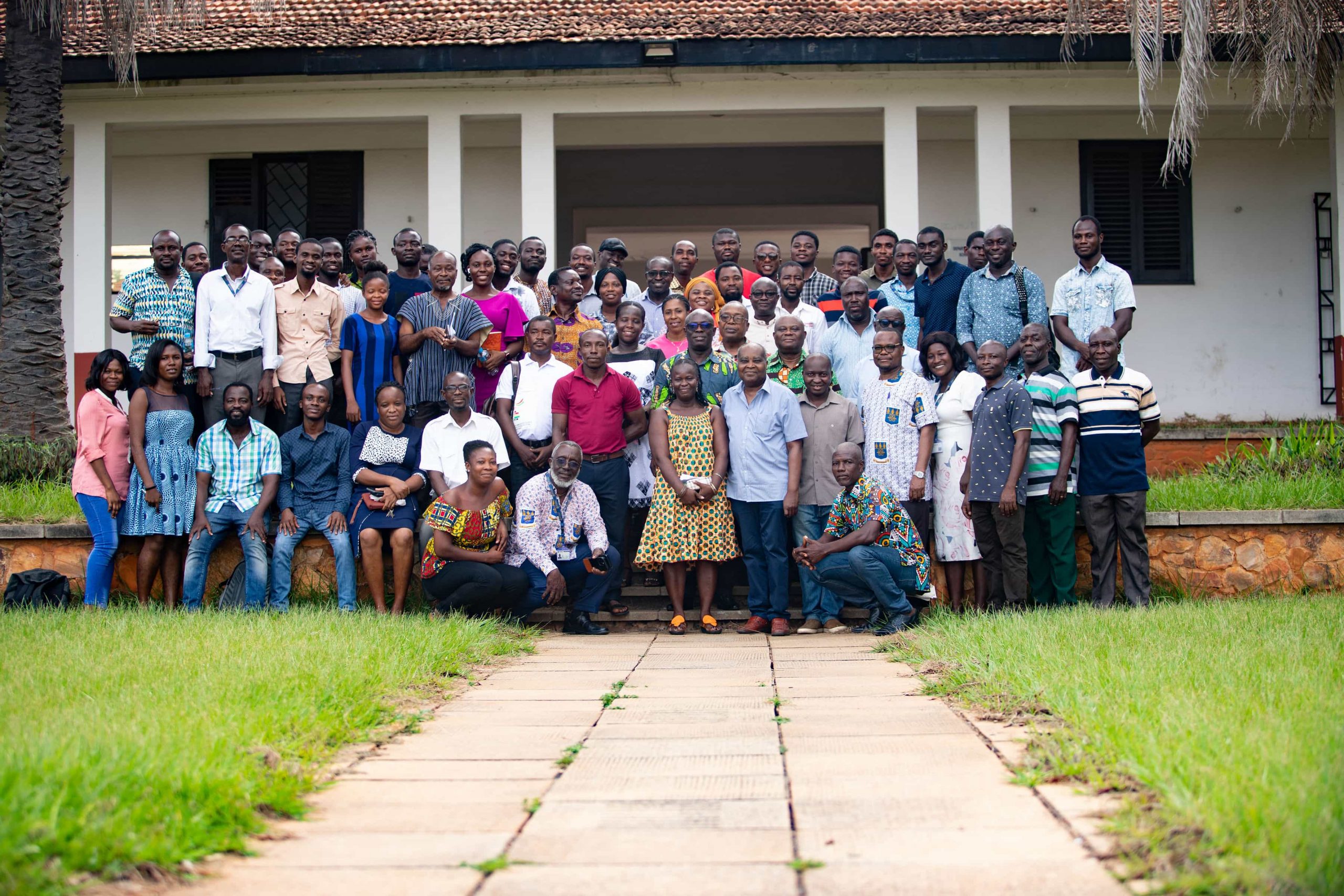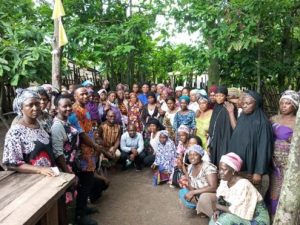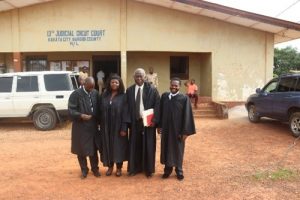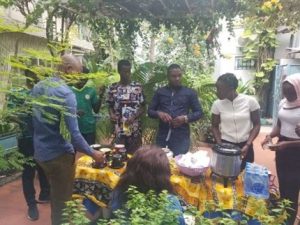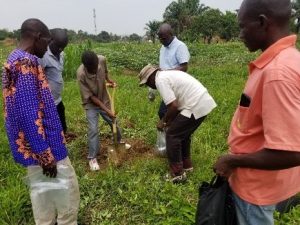
Ahead of the execution of development projects under ACA’s community-driven development (CDD) module, beneficiary communities have held their third weekly meetings to further deliberate on their collective futures.
These communities, which include Abompe, Saaman, Bososo, Kplandey, Nsutam, Dome, Dwenease and Heman in Fanteakwa South District; and Asikam and Ahwenease in Abuakwa South Municipality, are threatened by extractive activities are poised to be in control of their own development.
ACA is giving them the tools to advocate for their own vision of the future in line with the Facilitated Collective Action Process (FCAP), which was developed and popularized in East Africa by ACA’s partner organization, Spark MicroGrants.
FCAP is a two-year program that encourages communities to create a common development vision and equips them with skills and financial resources – including a USD 9,000 microgrant – to pursue it.
Under FCAP, which is also called “Oman Yie Die” (an expression in Twi, a local Ghanaian language, which literally means community development), the beneficiary communities are expected to be holding weekly meetings for four months to adequately prepare for the final roll-out of the project, which is a partnership with local Municipal and District Assemblies.
The Municipal or District Assembly contribute a portion of the microgrant (20%) and are in turn trained to supervise and monitor FCAP initiatives while ACA comes in with 80% of the cost of each project implemented.
At the third meeting held simultaneously across the first batch of the communities under FCAP, attendees undertook Community Resource Mapping, through which they indicated the shape of their communities, detailing available resources and facilities/social amenities in the town.
This provided them the basis for arriving at priority projects to be factored into the local Assembly’s medium-term plan, a key prerequisite of FCAP.
[et_pb_section fb_built=”1″ admin_label=”section” _builder_version=”3.22″][et_pb_row admin_label=”row” _builder_version=”3.25″ background_size=”initial” background_position=”top_left” background_repeat=”repeat”][et_pb_column type=”4_4″ _builder_version=”3.25″ custom_padding=”|||” custom_padding__hover=”|||”][et_pb_text _builder_version=”4.6.6″ _module_preset=”default”]2022 was an amazing year, during which ACA’s internal investments increasingly paid off in terms of concrete results for communities and civil society partners across West Africa. [/et_pb_text][et_pb_text _builder_version=”4.6.6″ _module_preset=”default”]At ACA, we help West African communities that are threatened by the destructive impacts of extractives-led development take control of their own development and use law and science to fight off threats to their chosen future. We are a laboratory for community-driven development and legal action, an incubator that helps our partners acquire the capacities to champion the interests of threatened communities, and a launch pad for new institutions that train and encourage lawyers, scientists, and development professionals to act in the interest of communities. [/et_pb_text][et_pb_text _builder_version=”4.6.6″ _module_preset=”default”]In 2022, we made progress on all these fronts, and threatened communities are benefiting as a result. [/et_pb_text][et_pb_text _builder_version=”4.6.6″ _module_preset=”default”]First, as always, we experimented and perfected innovative legal and community-driven development (CDD) tools to help communities seek remedies for abuses by powerful economic actors and build resilience to their impacts and attacks: [/et_pb_text][et_pb_text _builder_version=”4.6.6″ _module_preset=”default”]
We piloted a CDD intervention for women who lost their livelihoods to a sprawling diamond mine in Koidu, Sierra Leone. The project has brought the women such hope that they are now the unshakable core of our legal strategy as well.
We helped Ghanaian citizens induce the suspension of a polluting mining company’s operating permit and the filling of abandoned mining pits through Citizens Committee Network (CiCoNet), a community-government interface group that we sponsored and trained to advocate on their communities’ behalf.
Our new case in Liberia, on behalf of villages whose land was stolen by the giant Salala Rubber Plantation, survived a Motion to Dismiss and seems headed to trial. If we win, the case will invalidate a massive, country-wide land grab that the Liberian state perpetrated against indigenous communities in 1956 and establish that compensation is due when indigenous land is given to foreign companies.
We crafted a strategy to use the French courts to enforce the judgment of the ECOWAS Court of Justice in the Zogota massacre case by seizing Guinean state assets. A case will be filed in the coming months to strike a blow against international crimes and deter corrupt leaders from stashing ill-gotten wealth.
ACA’s Science Adviser coordinated three citizen-science studies using ACA’s methodology for community-driven scientific analysis. The results will be used in litigation and to design additional community-led interventions to improve their living environment.
[/et_pb_text][et_pb_text _builder_version=”4.6.6″ _module_preset=”default”]Second, we promoted partners’ capacity to use our most effective techniques, especially through the Public Interest Lawyering Initiative for West Africa (PILIWA): [/et_pb_text][et_pb_text _builder_version=”4.6.6″ _module_preset=”default”]
With our coaching, our partner in Niger adapted a tool called compulsoire from a PILIWA member in Côte d’Ivoire. This led to the first successful legal action in Niger to compel pre-litigation disclosure of information, unblocking a major barrier to civil justice.
We launched a webinar series on innovations for justice in West African legal systems.
ACA began holding M&E and strategic planning seminars for key ACA partners.
And third, we are taking huge steps forward in building a foundation of public interest activists and organizers across West Africa through training institutions and programs:
ACA is scaling up from 7 to 107 CDD communities in Ghana, in partnership with local government authorities! By working with local District Assemblies, we will build a wide-reaching and lasting base of CDD-trained government authorities and civil society partners.
ACA’s Science Adviser is working with universities across West Africa and will begin training young scientists in our community-driven methodology in 2023.
[/et_pb_text][et_pb_text _builder_version=”4.6.6″ _module_preset=”default”]Given all of these advances, 2023 is going to be a huge year. We’ll begin the massive scale-up of our CDD work in Ghana and launch a legal clinic in Nigeria. We’ll go to trial on cases in Ghana and Liberia, file transnational litigation arising out of Guinea and Nigeria in France and Italy, take a case on appeal in Sierra Leone, and launch litigation in Côte d’Ivoire and Niger. Our citizen-science studies in Senegal and Sierra Leone will be used for advocacy and, potentially, litigation.[/et_pb_text][et_pb_text admin_label=”Text” _builder_version=”4.6.6″ background_size=”initial” background_position=”top_left” background_repeat=”repeat”]
Published October 5, 2022 in The Daily Statesman, pg 10
Above: Minerals Commission officials photograph an abandoned mining pit in Segyimase, Abuakwa South Municipality during an inspection in July
The devastating effects of mining in parts of Ghana continue to bring untold hardships and other forms of deprivation to those people in whose immediate surroundings these activities take place, as well as the country as a whole. In some instances, irreparable damage is caused to land as dangerous chemicals like mercury and cyanide, which are mainly used in processing gold and other minerals, find their way into the soil and water bodies. The deadly effects of these chemicals on human lives are scary in the medium to long term.
Even though governments over the years have taken some steps to control the negative impacts of mining activities – both small-scale and large-scale mining – not much has been achieved in that regard. Most of these mining companies fail to cover the open pits they create in their operations, leaving them as death-traps in most instances.
Tragedy
Earlier this year, two young men fell into one of these abandoned pits near Osino in the Eastern region which has culminated in a resolution by the various communities around Osino that three gold mining companies operating in the area should, as a matter of urgency, return abandoned mining sites to their original state after failing to cover hazardous mining pits.
These communities have come together under the Citizen Committee Network (CiCoNet) representing the villages of Juaso, Nsuapemso and Segyimase to leave no stone unturned in ensuring that all mining pits left open are refilled and restored for use again to save human lives and the environment.
The leadership of CiCoNet will be meeting officials of the Minerals Commission in Koforidua this week in a bid to ensure the full reclamation of 13 abandoned mining and excavation sites, especially as there have been reports that one of the companies who created a pit at Juaso has suspended its refilling work.
Mr. Appiah Gyekye Jr, Vice-Chairman CiCoNet is calling for work to be expedited on the issue; saying, “How many more lives we have to lose to see proper reclamation done in our communities by the mining companies?” He was referring to the deaths of two brothers in June, Larbi Grant, 23, and Domptey Bless, 21, of Nsuapemso who drowned in an uncovered pit that had filled with water. The pit was dug and left uncovered by Narawa Mining.
Petitions
CiCoNet delivered a petition in July to Narawa Mining Limited, Kibi Goldfields Limited, and Managing God’s Resources Limited (MGR) mining companies on behalf of the affected villages requesting the companies fill in all abandoned pits without delay.
Kibi Goldfields’ reply to CiCoNet’s petition on July 14 claimed it had requested its “service provider,” BSD Mining Services, to fill pits near Juaso, which it claimed BSD Mining had dug. Neither Narawa nor MGR acknowledged receipt of CiCoNet’s petition to fill their pits in Nsuapemso and Segyimase, respectively. Petitions were also delivered to the Minerals Commission, the Environmental Protection Agency, and the Fanteakwa South and Abuakwa South district police stations.
Mining companies are required by law to fill in excavation sites no longer in use through a process called “reclamation,” before they are permitted to begin excavation at new sites. Regulatory bodies such as the Minerals Commission and the Environmental Protection Agency (EPA) are often lax in enforcing reclamation laws unless placed under pressure from the affected communities.
Slight compliance
In the absence of institutional support, CiCoNet members have taken the lead and organized their own monitoring at the pit sites to check whether companies are restoring the land as promised. In the first week of September, CiCoNet noted two pits on Kibi Goldfields’ concession in Juaso had been filled in with heavy machinery, and a diverted waterway had been restored at a third pit, though the pit itself remained uncovered. By September 28th, however, residents reported seeing the same heavy machinery used to restore the pit sites now sitting idle in the town center, and CiCoNet has not noted any further reclaimed sites.
In response to the petition, three officials from the Minerals Commission, including the Assistant Chief Inspector of Mines, carried out a fact-finding mission on July 26. They were accompanied by CiCoNet members and representatives from a local non-governmental organization, Advocates for Community Alternatives, which has supported CiCoNet and the three villages since 2018. The group visited a total of 13 pits across the three villages, five owned by Kibi Goldfields in Juaso, two owned by Narawa in Nsuapemso, and six owned by MGR in Segyimase.
The Minerals Commission is expected to take photographs and note down the sites that appeared long-abandoned. At one MGR pit in Segyimase, it appeared mining activities had been carried out without prior approval from the Commission in violation of regulations. In Nsuapemso, the Commission visited the same Narawa pit where the two brothers had drowned a few weeks before, and noted its proximity to the village and water sources.
It is hoped that the Commission will order all three companies to properly restore the abandoned sites under threat of sanctions, and share correspondence with CiCoNet. According to CiCoNet leadership, the Commission has yet to share copies of the letters despite repeated inquiries. Most recently, in August, the Commission claimed it could not produce the letters because one of its employees was on leave.
Defiance
According to the Commission, the letters were sent and Narawa replied to acknowledge that it failed to cover pits, but refused to begin reclamation processes until after the rainy season. Neither the Commission nor the company elaborated on why reclamation was never completed during any of the dry seasons in the nearly ten years since Narawa dug the pits.
Uncovered pits present various safety hazards to nearby residents, especially during rainy seasons when pits fill with water, pollution, and refuse from run-off. Multiple people have died from falling into pits over the years. Mosquitos and other insects lay eggs in the standing water, which can contribute to increased illnesses such as malaria in the local population.
CiCoNet still remains resolute in taking collective action and seeking the knowledge of the communities’ legal rights to fight against institutional heel-dragging at the Minerals Commission and demand all land be restored to local farmers. The group will continue to work with relevant institutions to hold the mining companies accountable to their obligations to the communities and prevent future tragedies.
Survivors of an August 2012 attack against the village of Zoghota, Guinea by state security forces organized a press conference last month on the 10-year anniversary of the attack to demand that the Republic of Guinea comply with an order issued by the ECOWAS Court of Justice in Abuja in 2020 to pay 4.56 billion Guinean francs (then approximately 436,000 U.S. dollars) to victims of the attack and their families.
Frédéric Loua, a lawyer at the Guinean human rights organization Les Mêmes Droits pour Tous (MDT) spoke representing the community at the conference saying, “the victims of the Zoghota massacre ask the Guinean state to immediately and without delay pay the amount of the sentence pronounced by the ECOWAS Court of Justice and to have those presumed responsible for the massacre judged for individual criminal responsibility.” The Zoghota people used this opportunity to renew their resolve to pursue all avenues in Guinea and internationally to hold their government accountable for the massacre.
The order came as a result of a court case filed in 2018, after the community’s cases were repeatedly stalled and ignored in Guinean courts.
Loua, pictured above at the press conference, has accompanied the people of Zoghota since the day of the attack. On Loua’s first visit to Zoghota on August 1, 2012, homes were still smoldering from fires the attackers had set only hours before. At that time the village of Zoghota in southeastern Guinea bordered an iron ore exploration site controlled by VBG, a mining company owned by Brazilian mining giant Vale and BSG Resources. Conflicts had arisen between the company and community over mining activities causing environmental damage, unfulfilled promises to employ local youth, and alleged mismanagement of VBG’s royalty payments intended for community development. The local communities also reported that they did not give the free and informed consent before the company set itself up in the area.
Around 1:00 AM on August 4, 2012 – the night before the government was to meet with the community to discuss these conflicts – state security forces attacked Zoghota, firing bullets and tear gas. Five villagers were killed that night and a sixth later died of his injuries. More than a dozen villagers were arrested, some of whom were tortured by gendarmes. Homes and other buildings were torched, and almost the entire village fled.
One month later, Loua and MDT supported the community to file the first in a series of lawsuits against the individual police, gendarme, and military officers accused of carrying out the attack and their accomplice VBG, accused of supplying materials used in the attack.
These cases have since been shuffled between Guinea’s civilian and military courts, languishing for years while the courts have allowed witnesses and defendants to ignore or flee from subpoenas, much to the dismay of Zoghota survivors and their lawyers. “After all that we had done, there was no justice. The state had no will to shine a light on what had happened,” Loua said.
Faced with national court systems unwilling or unable to deliver justice to the victims, the community turned to the ECOWAS Court of Justice in 2018 to hold the Republic of Guinea responsible for the massacre, torture, and illegal detention of the people of Zoghota.
In November 2020, the Court ruled the Republic of Guinea was responsible for violating the Zoghota villagers’ rights to life; to be free of torture and cruel, inhuman, and degrading treatment; to not be subject to arbitrary arrest or detention; and to an effective remedy. A year after the Court had ordered Guinea to pay compensation to the victims, the Zoghota community appealed to the ECOWAS Commission to enforce the ruling.
While Guinea’s government continues to ignore the ECOWAS ruling despite several meetings and advocacy, the people of Zoghota are tired of waiting for justice. Stymied at the state level, the community is ready to once again turn to international legal systems to enforce the ECOWAS ruling.
Advocates for Community Alternatives (ACA), a non-profit making organisation, is spearheading the implementation of Facilitated Collective Action Process (FCAP) in all the 34 key towns in the Fanteakwa South district as part of efforts to deeply involve communities in the planning and execution of development projects.
In partnership with the Fanteakwa South District Assembly, FCAP is being implemented as a community driven development tool that keeps decision-making and community development in the hands of the local community members.
It was adopted by ACA from ‘Spark Micro-grants’, a partner NGO in East Africa (Uganda, Rwanda, Burundi and Congo), and is currently the development pattern used by the Rwandan government to develop the country.
FCAP takes a maximum of three years in each partner community to fully implement a project, and has three main phases, namely planning, implementation and post-implementation.
Pilot cases
For over a year now, ACA been piloting this process in two communities in the Fanteakwa South district, namely Juaso and Nsuapemso, in partnership with the Assembly.
Following the success of the application of FCAP in these areas, ACA has extended its coverage to all 34 communities of the district on a 60-40 percent deal. ACA will provide 60% of micro grant, which is the cedi equivalent of $9,000.00, in all 34 communities of the district while the district Assembly takes up the remaining 40%.
Launching the FCAP at a town hall meeting held recently at Osino, the district capital, the Community Development Manager of ACA responsible for West Africa, Nana Ama Nketia Quaidoo, said it was extremely important for intended beneficiaries of every development project to be deeply involved from the scratch rather than just putting up the project for them.
“If you have any intent of executing any development for me, engage me and let me determine what I want. So, you don’t just wake up and decide that you want to build a hospital, or school or a chapel when I, the intended user/beneficiary, don’t know anything about it,” she explained.
“How did you know that I need a chapel? What makes you think that the location of the market is at the preferred place? These are some of the issues that hinder effective local governance in Ghana and Africa,” she again said.
Madam Nketia Quaidoo observed that successive governments sometimes tout their achievements by mentioning a lot of infrastructural projects executed without knowing that the supposed beneficiaries do not seem to resonate with these projects because they were not involved in their implementation.
This, she further explained, informed ACA’s decision to adopt the Facilitated Collective Action Process, which deeply involves the people in the planning and execution of any project in their community and avoids white elephant projects.
She expressed the hope that FCAP will help drive community-driven approach in project implementation while reducing the impacts of mining on the local people.
The Public Interest Lawyering Initiative for West Africa (PILIWA) is a professional network of West African lawyers, legal practitioners, and other advocates who use law to promote social justice. We share a commitment to using the law to protect the rights of vulnerable individuals and communities and enhancing their ability to shape their own economic future. We are spearheading the transformation of the legal profession in West Africa to ensure that lawyers work in the public interest rather than just in the interest of the powerful few.
To achieve its mission, PILIWA has among other things established an annual conference to allow the members of the network to meet, share experiences and develop new legal and socio-political strategies to better promote and defend the rights of communities and ensure social justice in West Africa.
The annual conference is a space for communication and development of strategies to strengthen the network. PILIWA members meet once a year in one of PILIWA’s member countries. It allows members of the network to discuss the cases they are working on, the progress made and the challenges encountered. This allows members to share their knowledge and experiences, reflect together on how to address challenges and more clearly identify opportunities for collaboration.
The conference offers members of the network trainings on various human rights themes which allow them to learn different theories of change and different approaches to advocacy and strategic litigation. These trainings not only reinforce their passion for social justice but also sharpen their expertise on issues of environmental rights, land grabbing and all related rights, corporate due diligence standards, resettlement standards, mining standards, strategic litigation etc.
Network members use the conference to also propose appropriate strategies for the future of the network. To this end, one of the successes that has emerged from the conferences is the collaboration around a legal strategy to create systemic change in West African human rights jurisprudence. This nine-country strategy consists of filing cases both internationally at the ECOWAS Community Court of Justice and also domestically before national courts to highlight the mismanagement and responsibility of States in relation to mining operations. The aim is not only to seek justice and compensation for communities affected by human rights violations caused by the extractive industries, but also to encourage ECOWAS to examine closely the degree of compliance of its countries members in respect of their obligations under international law.
Additionally, it is hoped that these efforts will help to change national and regional policies to prioritize the interests of West African communities that suffer violations and abuses committed by multinationals. The lawyers of the network, French and English speakers, collaborate together on their respective cases and complaints filed at the level of the ECOWAS Court of Justice.
From these annual meetings, the idea of making PILIWA an institutional and independent entity was also born, with its own constitution and operating structures with a view to ensuring effective participation and collective ownership by the members. From this institutionalization of PILIWA, was also born the idea of creating a national PILIWA chapter in each country in order to increase its actions and impact.
[/et_pb_text][et_pb_text _builder_version=”4.6.6″ _module_preset=”default” hover_enabled=”0″ sticky_enabled=”0″]To this end, a document stating the vision, missions, principles, theory of change of PILIWA was developed and unanimously approved at the 5th annual conference held in Abidjan in February 2022. During this meeting, the members of the network conducted as assessment of the successes of PILIWA over the past 5 years as well as its setbacks and also developed a country-specific strategic plan that will dovetail into a broader strategic plan for the PILIWA network. This strategic plan document will make it possible to better direct PILIWA’s efforts, coordinate its actions, and increase the visibility and impacts of the network. Another topic that was discussed during this meeting was the enforcement of the decisions of the ECOWAS Court of Justice by ECOWAS member countries. Indeed, members of the PILIWA network discussed the challenges faced in enforcing these judgments in favor of communities. Considering the unwillingness of ECOWAS Member States to execute judgments, strategies for using regional and international mechanisms to force the enforcement of judgments were the subject of intense and interesting discussions at this meeting.[/et_pb_text][et_pb_text _builder_version=”4.6.6″ _module_preset=”default” hover_enabled=”0″ sticky_enabled=”0″]
In conclusion, the annual PILIWA conference allowed the network to grow in terms of membership, expertise, strategy etc.
In recognition of their exemplary roles in championing development in their communities and also serving as role models to others, four individuals have been awarded by the Advocates for Community Alternatives (ACA) as part the maiden annual national delegates’ conference of the Citizens Committee Network (CiCoNet), which took place at Osino in Fanteakwa South District of the Eastern Region.
George Asante of Juaso emerged as the Over-all Best Community Member as a result of his dedication, tolerance and consistency in mobilizing support for Juaso community members, especially with regards to FCAP meetings.
Although he is from Juaso, Mr. Asante has been extending his support to other FCAP communities such as Nsuapemso and Segyimase, especially when those communities are confronted with challenges.
He offers the necessary assistance without asking for any honorarium in return.
As an FCAP Chairperson, he has worked hard to increase attendance and participation of women in meetings and more importantly during decision-making in his community.
Another resident of Juaso, Lydia Opokuaa, received the Most Inspiring Community Member award. She is a self-motivated female whose phenomenal interest and contributions in decision-making in her community cannot be over-emphasized.
Madam Opokuaa Lydia fully attends FCAP meetings every week and participates in all activities for the development of her community.
In her view, activities of the FCAP and CICONET are both geared towards her own community development. She also considers ACA’s methodologies to be non-discriminatory, giving everyone the opportunity to speak.
According to her, the FCAP methodology has helped her to believe that disability is not inability. Madam Lydia has a stammer – a speech impediment that could otherwise discourage her from participating – but the FCA encourages her to get involved in decision making and contribute to the success of her community’s development in the long-term. She therefore entreats other community members with similar speech difficulties to learn from her and be encouraged as well.
Emmanuel Antwi of Nwoase community in Nkoranza South Municipality of the Bono East Region and Rose Addo of Nsuapemso community in the Eastern Region were also recognized as the Most Dependable Community Members.
Hon. Edward Kuyiweh of Salamkrom won the Most Disciplined Community Member award, while the Over-all Best Community award went to Segyimase. Records show that Segyimase community has the full participation of its chief in all FCAP meetings, with members being punctual and well-organized.
All the award winners received Certificates of Recognition.
For
the past five years, ACA has been working with communities in Ghana’s Bono East
and Eastern Regions to help them realize their own development vision while
avoiding the economic and social ills associated with unsustainable mining
practices. While ACA’s projects usually
center around a micro-grant to each community and the community’s efforts to
marshal its own resources, a number of the partner communities have now been
turning to a new source of support: their own compatriots in the diaspora.
Known
as Project Brafie (“come home” in the local Twi language), this new
initiative encourages communities to strengthen ties with their relations
outside of Ghana, inviting them to come home, contribute to the community, and
help the community realize its development vision. So far, ACA partner communities have
re-connected with expatriate Ghanaians in Italy, Spain, Sweden, and the
Netherlands, as well as locals who have left the village to live in Accra.
Donkro
Nkwanta
Donkro
Nkwanta, in the Nkoranza South Municipality of Bono East Region has received tremendous
feedback from the diaspora through Project Brafie. ACA has facilitated the community’s
initiative to build a community center, and members of the diaspora contributed
$4,700 cash towards the construction.
Encouraged
by the success of the ACA project, the people of Donkro Nkwanta have continued
to turn to the diaspora for community investment. So far, expatriate natives of Donkro Nkwanta
have built four washrooms for the community clinic, fenced the facility as a
safety measure to improve health in the community provided funds to construct a
4-unit classroom block, provided a signpost for the town’s police station and
secured 110 bulbs to serve as streetlights for the town to further improve
security.
Juaso
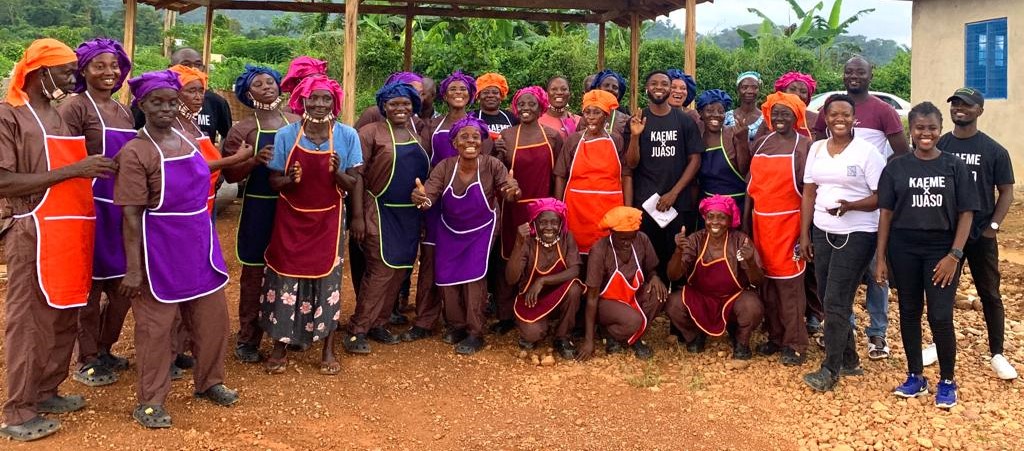
Juaso, a
village in the Fanteakwa South District of Eastern Region, is implementing a
black soap manufacturing operation as part of its partnership with ACA. Through sustainable production that capitalizes
on the waste products of the village’s traditional industries – cocoa and
plantain growing – they are building resilience to external threats, including
the mining companies that threaten their land and livelihoods.
One element of
the black soap project is the construction of a production house. Through Projet Brafie, the people of Juaso have
identified a native of the town who works with GHACEM,
a leading cement producer in Ghana. Discussions
are now underway between the community and their native son to draw on GHACEM’s
Corporate Social Responsibility program to complete construction of the
production house.
August 19, 2021 – New York – If Sia Janet Bayoh and other members of the Marginalised Affected Property Owners (MAPO) have their way, a trove of documents produced in a multi-billion-dollar battle between international mining giants will help them rebuild their lives and livelihoods, which have been shattered by the abusive diamond mining operations of Octea Ltd.
For years, the members of MAPO – residents of Gbense and Tankoro Chiefdoms in Koidu, Sierra Leone, have lost their homes, farms, and livelihoods, and suffered pollution and health problems, due to the Koidu Mine, operated by Octea subsidiary Koidu Ltd. Bayoh lamented the destruction of the community: “We used to farm and live in peace, but now our lands and water sources are poisoned and covered in rubble. Our homes are shaken by explosives every day.”
In April 2019, MAPO and many of its members filed suit against Octea and Koidu Ltd., several of their affiliates, and their Managing Directors, in the courts of Sierra Leone. But the convoluted structure of the BSG Resources Group, which includes the defendant companies and stretches across several notorious offshore secrecy jurisdictions including the British Virgin Islands, Guernsey, and Liechtenstein, has proven a major challenge. “Octea has tried to use its international status to hide from its obligations in Sierra Leone before, and we know they’ll do it again if they get the chance,” said Benedict Jalloh, Principal of C&J Partners and counsel for the plaintiffs.
A move by BSGR to declare bankruptcy in order to avoid its multi-billion-dollar arbitral debt to a former business partner, Brazilian mining giant Vale, further raised alarm bells. “Courts have found that BSGR moves its subsidiaries around like in a game of Three Card Monte, using its global reach to hide documents and assets from creditors,” said Jonathan Kaufman, Executive Director of Advocates for Community Alternatives, which supports the plaintiffs in their pursuit of justice. “This bankruptcy is just another strategy to frustrate creditors such as the Sierra Leone plaintiffs, putting assets out of reach and making it impossible to satisfy the judgment in case MAPO wins the lawsuit.”
As the lawsuit finally moves toward trial by the end of the year, the plaintiffs have filed a Foreign Legal Assistance petition in the federal courts of New York seeking evidence that may be unavailable in Sierra Leone. “While Octea may be able to hide evidence from the court in Sierra Leone, BSGR couldn’t hide from its in bankruptcy proceedings in New York, where they have turned over copious evidence of how their assets are held, how their Sierra Leone operations are governed, and what their liabilities may be,” said Joseph Ansumana, Kono District Manager for the Network Movement for Justice and Development, which advocates for the local community. “All this will help us ensure that the right parties are held responsible for the environmental and economic devastation Octea has caused at Koidu.”
In the last three years, the people of Kyeredeso Community in Ghana’s Nkoranza South Municipality have become savers with the resources to invest in their own future.
For years, most people in Kyeredeso have lived a ‘hand-to-mouth’ existence, focusing mostly on surviving the present and lacking the means to plan for the future. Many felt that, as they could barely feed themselves, there was no possibility of saving a portion of the little income they earned. Others distrusted savings initiatives, having had the bitter experience of losing their investments to unscrupulous and fraudulent financial schemes in the past.
Since 2017, however, ACA has worked with the people of Kyeredeso to implement the Facilitated Collective Action Process (FCAP), an approach to community-driven development that helps people unify around a collective vision and roadmap for the future. The community has, in fact, adopted the teachings of the FCAP so enthusiastically that they have built their own medical center to improve health outcomes for themselves and surrounding villages. As a result, Kyeredeso enjoys a level of cohesion, capacity, trust, leadership, and above all ownership that enables them to manage their affairs peacefully and profitably.
This confidence and unity can be seen in another bold self-help initiative to improve household income: the Community Savings and Loans Association (CSLA) project. Since 2019, CSLA participants have helped each other manage their finances and achieve their individual household goals effectively through weekly savings activities.
The groups hold meetings on a weekly basis, during which they make contributions to the group’s “savings box” based on an agreed group Constitution. When each group was formed, the members were required to set personal household goals and decide how much they wanted to save. Based on their different sources of income, and to avoid over-promising and under-delivering, most chose to set aside weekly savings of between 5 and 10 Ghana cedis (approximately 1 to 2 USD).
These savings are kept safely in the savings box over a period of one year, after which the box is opened, and the proceeds are disbursed accordingly. Each member receives the amount he or she has saved over the year, plus a share of any additional contributions, fees assessed for violation of group rules, or interest charged for loans taken.
When the program began, Kyeredeso had just one CSLA group, but that number has now grown to five savings groups – total membership of 150 community members – as people have seen the benefits. “Having the ability to save is as important as being able to raise funds to deal with life circumstances,” said Nana Ama Nketia-Quaidoo, ACA’s Community Development Director. “These savings groups are helping to reduce financial stress and provide people with a greater sense of financial freedom.”
The use of the CSLA to secure a lump-sum repayment of savings at the end of the year enables members to plan for seasonal purchases, important investments, or life-cycle events. For example, Puokuum Sumariinga is a widow with four children who has been struggling to feed her family and provide basic supports to her children’s needs since her husband’s demise. When she was introduced to the savings group, she made a pledge of GHS10 a week, although she was unsure whether she would be able to honor the commitment. Working menial jobs on other people’s farms, she managed to earn enough short-term income to save weekly. To date, Sumariinga has saved a total of 1,400 Ghana cedis, making her eligible for a low-interest loan from her CSLA. She used the loan proceeds to buy farm inputs to resuscitate her late husband’s farm, which will enable her to gain much more income and save more for her children’s education.
Mr. Amos Salensor, a Kyeredeso farmer, has also set his goals for savings – which currently total 2,550 Ghana cedis – based on his family’s needs.“My overall vision is to save enough to get a decent accommodation for my family and to be able to meet the educational needs of my children,” he explained. “I hope to painlessly pay school fees and at least buy land to begin building in my next phase from the proceeds of the savings.”Other CSLA group members report using the proceeds of their savings to venture into small businesses such as hiring out plastic chairs and petty trading, or to deal with unexpected downturns, for which they would have sought support from friends in the past.