Blog

  • ACA ventures to promote public interest law in Nigeria

    [et_pb_section fb_built=”1″ theme_builder_area=”post_content” _builder_version=”4.18.1″ _module_preset=”default”][et_pb_row _builder_version=”4.18.1″ _module_preset=”default” theme_builder_area=”post_content”][et_pb_column _builder_version=”4.18.1″ _module_preset=”default” type=”4_4″ theme_builder_area=”post_content”][et_pb_text _builder_version=”4.18.1″ _module_preset=”default” theme_builder_area=”post_content” hover_enabled=”0″ sticky_enabled=”0″]

    With the help of Advocates for Community Alternatives (ACA), Nigerian lawyers are building new institutions that champion the fundamental human rights of West Africa’s poor and marginalized communities, especially those that are threatened by the destructive impacts of extractive activities. 

    [/et_pb_text][/et_pb_column][/et_pb_row][/et_pb_section][et_pb_section fb_built="1" theme_builder_area="post_content" _builder_version="4.18.1" _module_preset="default"][et_pb_row _builder_version="4.18.1" _module_preset="default" theme_builder_area="post_content"][et_pb_column _builder_version="4.18.1" _module_preset="default" type="4_4" theme_builder_area="post_content"][et_pb_image src="https://acaredesign.allmediagh.online/wp-content/uploads/2023/12/PILIWAN-3-1.jpeg" _builder_version="4.18.1" _module_preset="default" theme_builder_area="post_content" title_text="PILIWAN 3" hover_enabled="0" sticky_enabled="0"][/et_pb_image][/et_pb_column][/et_pb_row][/et_pb_section][et_pb_section fb_built="1" theme_builder_area="post_content" _builder_version="4.18.1" _module_preset="default"][et_pb_row _builder_version="4.18.1" _module_preset="default" theme_builder_area="post_content"][et_pb_column _builder_version="4.18.1" _module_preset="default" type="4_4" theme_builder_area="post_content"][et_pb_text _builder_version="4.18.1" _module_preset="default" theme_builder_area="post_content" hover_enabled="0" sticky_enabled="0"]

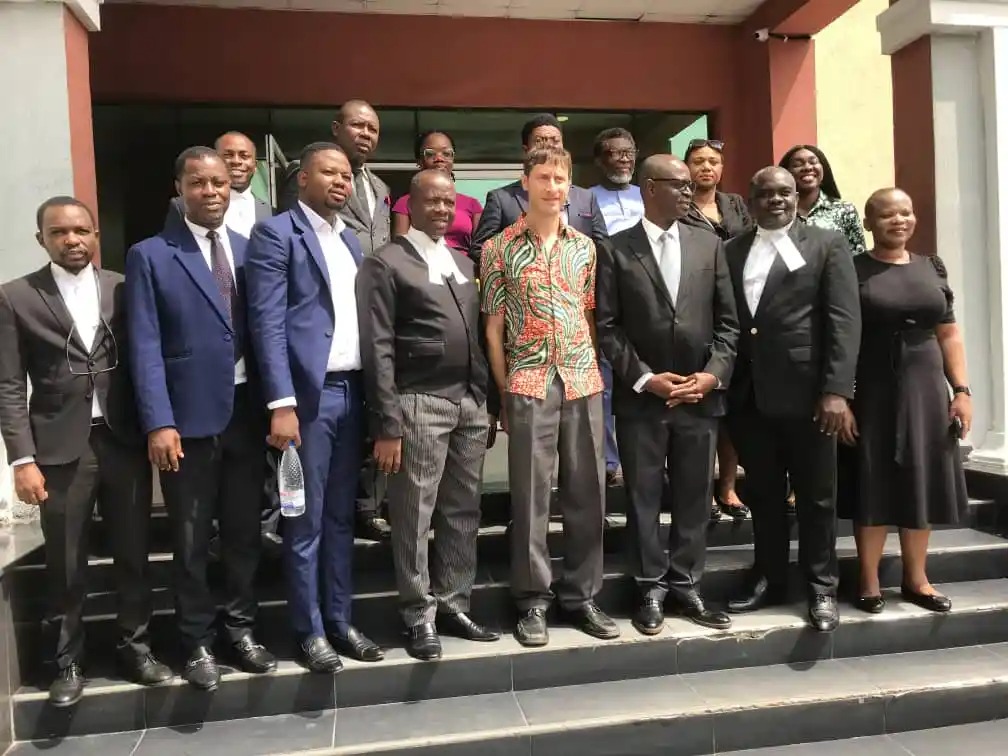
    At the beginning of November 2023, ACA signed Memoranda of Understanding with three such institutions – the Public Interest Lawyering Initiative for West Africa’s Nigeria Chapter (PILIWAN), Caleb University College of Law (COLAW) in Lagos, and the Nigeria Bar Association Port Harcourt Branch (NBA-PHB) – to boost public interest law and representation.

    Legal Clinic at COLAW

    ACA, PILIWAN, and COLAW have agreed to collaborate to launch a public interest legal clinic at COLAW by March 2024.  Clinical students will gain practical experience of the law while contributing to concrete public interest cases – in other words, they will learn by doing, while doing good. 

    ACA will provide curriculum, guest instructors, strategic guidance, and some financial support for the clinic’s operations.  PILIWAN will also collaborate on curriculum and guest instructors, provide opportunities for practical learning, and coordinate fieldwork, while COLAW will host the law school, provide basic instruction, and propose further opportunities for collaboration (such as research endeavors).

    Public Interest Litigation Desk at NBA-PHB

    A new partnership between ACA, PILIWAN, and the Nigerian Bar Association (NBA) centers on a public interest litigation desk, to be hosted at the NBA’s Port Harcourt Branch.  This collaboration will create a space where individuals and communities threatened by powerful economic actors can be connected to lawyers who will support their struggle.

     “This partnership with Nigeria Bar Association is to strengthen the public interest work they do, especially the human rights aspect of it”, said Courage Nsirimovu, PILIWA Nigeria South-South Coordinator and Founder of Pilex Centre for Civic Engagement.

    “They have limited resources, so they need encouragement.  This collaboration will help the NBA Human Rights Committee to do more. We want them to do more so we can help indigent persons who do not have the opportunity to get access to justice”.

    Jonathan G. Kaufman, the Executive Director of ACA, explained, “We are trying to bring to West African countries the idea that the law is an instrument for social justice.  This means that lawyers and the Bar can use the law to help make life better for communities, and individuals.  Being a lawyer is not just about greasing the wheels of the society and serving the interests of the rich and powerful.”

    “That is what this partnership between ACA, PILIWA, and the NBA is all about.  Using law for social justice can mean so many things, like fighting for environmental justice when there is an oil spill, representing people who are wrongfully imprisoned, standing up for women whose rights have been downtrodden or subjected to abuse and seeking to change reality for them.  Human rights include all the things people need to live a dignified and reasonable life, and we hope the public interest litigation desk will help marginalized Nigerian communities to secure these rights.”

    PILIWAN is the Nigerian national chapter of the Public Interest Lawyering Initiative for West Africa (PILIWA), a network of lawyers, law firms, and non-profits in nine West African countries that promote public interest law and representation for marginalized and threatened communities. 

    Advocates for Community Alternatives (ACA) is a Ghana-based non-profit organization that helped West African communities that are threatened by the destructive impacts of extractive projects to take control of their own future, through a combination of community-driven development support and community-based legal and advocacy programming.


    [/et_pb_text][/et_pb_column][/et_pb_row][/et_pb_section]
  • Aggah community puts Eni’s word to test in court

    [et_pb_section fb_built=”1″ theme_builder_area=”post_content” _builder_version=”4.18.1″ _module_preset=”default”][et_pb_row _builder_version=”4.18.1″ _module_preset=”default” theme_builder_area=”post_content”][et_pb_column _builder_version=”4.18.1″ _module_preset=”default” type=”4_4″ theme_builder_area=”post_content”][et_pb_text _builder_version=”4.18.1″ _module_preset=”default” theme_builder_area=”post_content” hover_enabled=”0″ sticky_enabled=”0″]

    Aggrieved community members of the Nigerian town of Aggah have taken Italian energy giant, Eni S.p.A., and its subsidiary, Nigerian Agip Oil Company Ltd. (NAOC), to court in Italy for relief from floods that have caused damage to the people’s lives and property for decades.

    Brief Background

    Aggah is a community in the western part of Rivers State, Nigeria, with a population of about 10,000. Its residents traditionally make their living as farmers and fishermen.

    In the early 1970s, Eni/NAOC created 40,000 ft2 earthen embankments at three locations near Aggah to support wellheads and constructed raised access roads to connect them. These constructions completely blocked the natural course of streams that flowed through the Aggah community and its environs.

    Because adequate measures were not put in place to channel the water, the streams backed up and flooded large swathes of Aggah’s farmlands and residential areas each year, typically during the rainy season.

    Over the course of several decades, Aggah residents and community leaders have contacted Eni/NAOC repeatedly in hopes of resolving the flooding and its impacts. However, these attempts to seek relief have been to no avail. Community members and even the Rivers State Ministry of Environment sued the company on several occasions; while those attempts have on some occasions led to judgments against the company or settlement agreements with individual families, the flooding situation remains unremediated.

    The Italian OECD Complaint and 2019 Settlement Agreement

    In December 2017, Egbema Voice of Freedom – a local community group representing hundreds of Aggah residents – Nigerian law firm Chima Williams and Associates, and Advocates for Community Alternatives (ACA) filed an NCP complaint with Italian and Dutch National Contact Points (NCPs) for the OECD Guidelines for Multinational Enterprises.  The NCPs, which are offices located in the governments of the mostly wealthy countries that belong to the Organization for Economic Cooperation and Development, are charged with helping to resolve disputes between companies and the people and communities affected by their operations, arising from the failure to respect high social and environmental standards.

    In June 2019, the parties reached a settlement: the Eni/NAOC agreed to build “new culverts/drainages” and to work with the complainants to take any further necessary steps to ending the annual flooding.

    NAOC then hired contractors who built new culverts through the access roads. These constructions, however, were poorly designed and shoddily executed, according to an independent report that NAOC suppressed. The company has disavowed any responsibility to take further measures to lift the floods, insisting (against the findings of its own technical experts) that the natural marshy environment of the Niger Delta is to blame. Consequently, the flooding continues to wreak destruction on Aggah community every year.

    Fresh suit against Eni

    Having reached an impasse in its negotiations with Eni/NAOC, the complainants from the OECD process have filed a lawsuit at the Tribunal of Milan in Italy. Represented by Studio Legale Dini-Saltalamacchia, the aggrieved Aggah community members are asking the court to enforce the settlement agreement with Eni by requiring Eni and NAOC to take all necessary steps to lift the floods in Aggah. The community members are also seeking damages for the loss of lives, livelihoods and properties over the years due to Eni’s floods.

    Disappointed Community Members Hope for Justice

    One of the flood victims and a native of Aggah is Mrs. Sandra Ubah. She says she is “highly impressed with the case because NAOC has refused to keep to agreement and the last hope of the common man. Again, the issue of Eni/NAOC human right violation will be addressed.”

    “My expectations in the trial in Italy is to get justice served on our side because the injustices and human right violations we suffer at the hands of the Italian company are numerous, including deaths, strange diseases, etc., and so I am confident that the case will favor us because the court is the place of justice.”

    For Mrs. Victoria Elechi, another resident, it is impressive that Eni/NAOC are being hauled before an Italian court as this is a good step in seeking justice for the people.

    “I am expecting justice for our people. We have suffered a lot of injustices and human rights violations in the hands of the company. E.g., refusal to lift the blockage of water right of way caused by Eni’s facility, which has caused a lot of damage like building collapse, sicknesses and diseases, deaths, etc. I have confidence because the court, as last hope of the common man, will give us justice at last.

    “This suit that has just been filed in Milan court in Italy would give hope to victims of human rights violations everywhere, especially in West Africa,” said Lalla Touré, ACA’s Legal Director. “We’re counting on the Italian legal system to help ensure that the fundamental human rights of Aggah community members are upheld.”

    “It is so shocking that a multi-national organisation like Eni would be living in disobedience to an outcome of an agreement which they willingly signed before the Italian and Dutch governments and then turn around and deceive the world. Eni has operated on our land for over sixty years in this manner. They don’t care about our lives, our environment and source of livelihood. Eni take oil, we pay with our lives.  Eni lives in disobedience to both natural and constituted laws in our land and to me this is genocide,” Pastor Evaristus Nicholas, the leader of Egbema Voice of Freedom said after the case had been filed in Italy.

    “I’m expecting nothing but justice for me and my people, just the same way it was given to us before the Italian and Dutch NCP, but Eni refused to obey, which is why we have come before the Italian judiciary to get the backing of the law.”

    ———————————————————————————————————————

    Advocates for Community Alternatives (ACA) – ACA helps West African communities that are threatened by the destructive impacts of extractives-led development to take control of their own futures. ACA works directly with communities to design their own sustainable development plans and advocate to achieve those plans, and it builds and supports networks of lawyers and other professionals that will serve communities in need. ACA is providing strategic legal support to MDT as part of their participation in the Public Interest Lawyering Network for West Africa (PILIWA), which ACA coordinates.

    Chima Williams & Associates (CWA) – CWA is a public interest law firm based in Benin City, Edo State, Nigeria, that supports communities in the Niger Delta in cases involving human rights and environmental abuses, particularly by oil companies.

    Egbema Voice of Freedom (EVF) – EVF is a community-based organization in Aggah Community in Rivers State, Nigeria, that was formed to represent the people of Aggah in the defense of their human rights, especially with respect to the oil extraction operations of Eni/NAOC in and around their territory.

    END

    Media Contacts

    1. ACA: Lalla Toure, Legal Director: lalla@advocatesforalternatives.org”lalla@advocatesforalternatives.org | +233 50 985 0018
    2. CWA: Chima Williams, Principal Attorney: princewchima@yahoo.co.uk”princewchima@yahoo.co.uk |+234 802 364 9890
    3. Egbema Voice of Freedom: Pastor Nicholas Evaristus: royalgraceassembly_evarist@yahoo.com”royalgraceassembly_evarist@yahoo.com | +234 806 432 9322

    Your content goes here. Edit or remove this text inline or in the module Content settings. You can also style every aspect of this content in the module Design settings and even apply custom CSS to this text in the module Advanced settings.
    [/et_pb_text][/et_pb_column][/et_pb_row][/et_pb_section]
  • ACA, Fanteakwa South jointly open soap-making business at Juaso

    [et_pb_section fb_built=”1″ theme_builder_area=”post_content” _builder_version=”4.18.1″ _module_preset=”default”][et_pb_row _builder_version=”4.18.1″ _module_preset=”default” theme_builder_area=”post_content”][et_pb_column _builder_version=”4.18.1″ _module_preset=”default” type=”4_4″ theme_builder_area=”post_content”][et_pb_text _builder_version=”4.18.1″ _module_preset=”default” theme_builder_area=”post_content” hover_enabled=”0″ sticky_enabled=”0″]

    “Here in Juaso, we have lost almost all our farmlands to mining activities, thereby creating food insecurity in this area. By working at this soap-making mini-factory, I will make some income and be better positioned to fend for my dependents. Even though I’m a seamstress, business has taken a nose-dive in recent times and so this soap-making venture, for me, is very timely as it will go a long way to help me cater for my children and family.”

    Madam Mary Nyarkoa is a witness to the wanton destruction of farmlands in Juaso near Osino in the Fanteakwa South District of the Eastern Region of Ghana by mining companies and laments the adverse impact of mining activities in the area on food production and the livelihoods of her compatriots.

    She recounts that foodstuff such as cassava and plantain, which used to be in abundance prior to the advent of mining activities in the area, are now scarce, thereby heightening their prices on the market – a situation which has brought untold economic hardships on various households in Juaso.

    There is, however, a new day that has dawned on her and other community members of Juaso as they can now boast of a black soap-making business, which builds on and adds value to the community’s traditional cocoa and plantain-growing livelihoods and promises positive prospects for the entire community.

    The black soap project uses the discarded parts of the cocoa and plantain that they traditionally grow in Juaso, so it is a sustainable project that promotes preservation of farmland and the precious Atiwa Forest ecosystem that Juaso is part of.

    Collaboration

    The Juaso soap mini-factory is a collaboration between the Fanteakwa South District Assembly and Advocates for Community Alternatives (ACA), a non-profit-making organisation that helps West African communities that are threatened by the destructive impacts of extractive projects to take control of their own future.

    This black soap facility is the project that Juaso chose to implement through the Facilitated Collective Action Process (FCAP), an intensive engagement between ACA and the Juaso Community during which the community received financial and capacity building support to implement a project that would further the community’s sustainable development vision.  Kaeme Cosmetics Limited, a high-end Ghanaian body product company, provided technical support and training to the community and a guaranteed market for their product.

    “I can say with confidence that this soap production business has a bright future because as we speak, it is the only soap factory in our district (Fanteakwa South) and so we already have a huge market to do business. I’m sure we will expand to serve other nearby communities and districts. It will get to a time that we may have to engage more people, thereby creating employment opportunities for others, so we really have a good future”, Madam Nyarkoa further said.

    “We have witnessed a lot of positive developments in our lives since ACA began its work here at Juaso. Even before this soap-making venture, they educated and assisted us to develop a savings habit through “susu box” concept and so now that this soap-making business has finally taken off, …. Even though we have just started operations we are positive that it will really cushion our lives financially.”

    Sustainable income

    53-year-old Elizabeth Wayoe, who is also one of the initial 28 workers of the factory, says she can heave a sigh of relief because she now is sure of a sustainable income, which will cushion her life in many ways.

    “I know for sure that if I commit myself to this work, I stand to gain in many ways because apart from the financial rewards I will be getting from this job, I will no more be buying soap since we (as workers) are given some pieces of the soap for use at home”, she said.

    The Juaso soap factory commenced operations on Friday, 6th October 2023 and has been producing raw organic black soap in commercial quantities.


    [/et_pb_text][/et_pb_column][/et_pb_row][/et_pb_section]

  • FCAP model makes remarkable impact in Ghana’s deprived communities

    FCAP model makes remarkable impact in Ghana’s deprived communities

    [et_pb_section fb_built=”1″ _builder_version=”4.18.1″ _module_preset=”default” global_colors_info=”{}”][et_pb_row _builder_version=”4.18.1″ _module_preset=”default” global_colors_info=”{}”][et_pb_column type=”4_4″ _builder_version=”4.18.1″ _module_preset=”default” global_colors_info=”{}”][et_pb_text _builder_version=”4.18.1″ _module_preset=”default” global_colors_info=”{}”]

    Every country or community craves for development in various forms – development that has positive impact on various facets of human endeavor. This insatiable quest for development calls for pragmatic measures to bring it to fruition.

    One tested model that holds the key to rapid socio-economic development at the local level is the Facilitated Collective Action Process (FCAP), a process that was developed and popularized in East Africa by Spark MicroGrants, a partner organization of Advocates for Community Alternatives (ACA). In fact, Spark MicroGrants has successfully implemented this model in seven countries involving 816 communities with over 550,000 people directly impacted by this initiative.

    ACA, a non-profit-making organisation, has since 2016 been helping some West African communities threatened by mining activities to choose a development pathway through legal support and popular mobilization.

    In the long-term, the FCAP process envisages that this tried and tested model will be adopted by the government as the main vehicle for the execution of development projects at the local level. Since 2018, FCAP has been ACA’s community-driven development strategy, which encourages communities in Ghana and some other West African countries to create a common development vision and equips them with skills and financial resources – including a USD 9,000 microgrant–to pursue it.

    FCAP typically combines facilitated meetings, community capacity building, savings groups and a microgrant to the community, to impact individual livelihoods and a sense of social cohesion within the whole community. Beneficiary communities are first trained, among others, in how the people could come together, mobilize resources and take their destiny into their own hands.  ACA and the local authorities usually hire Community-Based Facilitators (CBFs) to run the FCAP process on a day-to-day basis in each community.

    How FCAP works

    The Facilitated Collective Action Process (FCAP) is run under three broad Phases. These are the Planning, Implementation and Post-implementation.

    Phase 1: This stage involves effective planning during which community members are first trained, among others, in how they could come together, mobilize resources and take their destiny into their own hands.  ACA and the local government authorities usually hire Community-Based Facilitators (CBFs) to run the FCAP process on a day-to-day basis in each village.

    Phase 2: This is the implementation stage. At this point, ACA signs grant agreement with each beneficiary community to enable the people implement their chosen project with the $9,000.00 micro-grant within a specified period. Examples of communities which are currently at this stage are Saamang, Abompe, Dome, Hemang, Nsutam, Dwenase, Bosuso and Kplandey in the Fanteakwa South district as well as Asikam and Ahwenease in Abuakwa South of the Eastern region of Ghana.

    Phase 3: The last Phase of FCAP is the post-implementation stage where the communities are weaned off FCAP and expected to have acquired some skills to implement their own sustainable development projects, going forward. At this stage, these communities mobilize financial and material resources themselves toward projects in their communities. Donkro Nkwanta, Nwoase, Kyeradeso and Salamkrom in the Nkoranza South municipality, Sagyemase in Abuakwa South as well as Juaso and Nsuapemso in the Fanteakwa South district are communities which are currently at this stage of FCAP.

    Success stories

    Plans are underway to roll out FCAP in one hundred communities across the Ghana following the successful piloting of the process in four communities in the Nkoranza South Municipality namely Donkro Nkwanta, Kyeradeso, Nwoase and Salamkrom as well as additional three communities in the Eastern region namely Sagyemase in Abuakwa South and Juaso and Nsuapemso in Fanteakwa South district.

    The good news is that each of the seven communities just mentioned above has something concrete to show because of the implementation of FCAP primarily because each of them created a common development vision and was equipped with skills and financial resources to realize it.

    For instance, Kyeradeso had no health facility and to avoid the situation where the people of the area travel to nearby communities for medical attention, the community decided to use the $9,000 microgrant to put up a CHPS Compound while Salamkrom constructed a 4-unit nurses’ quarters to accommodate nurses posted to the area.

    This CHPS Compound at Kyeradeso near Nkoranza is one of the several other community-based projects successfully executed under FCAP

    For the people of Nwoase, their main concern was to have accommodation facility for teachers in the town so that they would not have to commute from neighboring towns to work daily. To this end, they have constructed a 4-unit Teachers’ Quarters to ensure that teachers in the area have a convenient place to lodge and go about their normal duties.

    Donkro-Nkwanta, on the other hand, has constructed a 1,400-seating capacity Community Centre to serve as a suitable place of holding major public and social gatherings such as Town Hall meetings, wedding receptions, funerals and many more.

    In the Eastern region town of Juaso, a community still battling with varying devastating effects of mining, the residents are done with a soap-making factory – thanks to FCAP and they have just begun the production of black soap in commercial quantities to generate income for themselves and to boost their local economy.

    Their compatriots at Sagyemase and Nsuapemso have successfully put up CHPS Compounds to aid the access to primary health care services in these communities.

    Post FCAP implementation stage

    It is note-worthy that Donkro Nkwanta, Kyeradeso, Nwoase, Salamkrom, Sagyemase, Juaso and Nsuapemso have recorded tremendous successes after transitioning to the post-implementation Phase of FCAP.

    For example, the people of Donkro Nkwanta have successfully organized a fund-raising ceremony in partnership with their compatriots in the diaspora toward the provision of streetlights in the town, construction of a school block, renovation of the Maternity Block of their local Health Centre as well as provision of doors and windows of the Community Centre. The diasporans have so far supported the community with Gh.c 15,200.00.

    A similar story can be told at Sagyemase where, with the support of their colleagues in the diaspora, the community is wiring their CHPS Compound with ease. A Member of Parliament aspirant has also provided financial support toward the tarring of the floor of the CHPS Compound.

    At Salamkrom, the people have been able to pool resources toward the construction of a maternity block.

    The Kyeradeso community has also undertaken a few self-help initiatives during its post-implementation stage of FCAP. From their own internal mobilization of resources, they have extended pipe-borne water to their clinic and kick-started a nurses’ accommodation project in the town.

    Even though, these communities have been weaned off FCAP, that does not mean that ACA is done with them because they will continue to enjoy other support packages through the Citizens’ Committee Network (CiCoNet), Public Interest Lawyering Initiative for West Africa (PILIWA) and the Citizen Science programs.

    CiCoNet is ACA’s answer to the threat that its partner communities face from powerful economic interests as it serves as an interface group of concerned citizens who help protect the communities’ development vision. Through CiCoNet, our communities have won key victories, such as prompting the suspension of a highly polluting mining company’s operating permit and inducing companies to fill abandoned pits that endangered the welfare of children and livestock.

    ACA’s Public Interest Lawyering Initiative for West Africa (PILIWA), a regional movement of lawyers driven by social justice, a host of self-motivated and human rights-driven lawyers, serve threatened communities and assist them to fight for their own vision of the future in the face of pressure from powerful political and economic actors.

    PILIWA members have resolved to relentlessly fight for justice and sustainable development in eight West African countries namely Côte d’Ivoire, Ghana, Guinea, Liberia, Mali, Niger, Nigeria, Senegal, and Sierra Leone.

    Through PILIWA, ACA’s legal team undertakes case-based legal support, in which ACA directly intervenes to represent or otherwise support West African communities facing serious threats to their human rights, natural environment, or land and livelihoods.

    ACA’s Citizen Science program is an alternative, independent, participatory and inclusive scientific approach that helps communities detect the likely impact of mining activities through land, water and air.

    Going forward

    Having successfully run FCAP in Donkro Nkwanta, Nwoase, Kyeradeso, Salamkrom, Juaso, Sagyemase and Nsuapemso, ACA is currently implementing this development model in eight more communities in Fanteakwa South namely Saamang, Abompe, Dome, Hemang, Nsutam, Dwenase, Bosuso, Kplandey as well as Asikam and Ahwenease in Abuakwa South.

    Besides, ACA is in the process of scaling it up by roping in additional 20 communities in Nkoranza South and 46 more communities in Abuakwa South and as time goes on a lot more communities in Ghana are expected to be covered to bring this participatory model of development to the doorsteps of people.

    By Michael Offei


    [/et_pb_text][/et_pb_column][/et_pb_row][/et_pb_section]

  • PRESS RELEASE: Zogota Massacre Victims In Paris For Justice

    [et_pb_section fb_built=”1″ theme_builder_area=”post_content” _builder_version=”4.18.1″ _module_preset=”default”][et_pb_row _builder_version=”4.18.1″ _module_preset=”default” theme_builder_area=”post_content”][et_pb_column _builder_version=”4.18.1″ _module_preset=”default” type=”4_4″ theme_builder_area=”post_content”][et_pb_text _builder_version=”4.18.1″ _module_preset=”default” theme_builder_area=”post_content” hover_enabled=”0″ sticky_enabled=”0″]

    Survivors of the 2012 massacre by state security forces in the village of Zogota in the West African country of Guinea are asking the Tribunal Judiciaire in Paris, France, to ensure that justice is finally served in their lawsuit against the Guinean state. The massacre survivors are supported by three non-governmental organizations: Guinean human rights defense organization Les Mêmes Droits pour Tous (MDT); Advocates for Community Alternatives (ACA), based in Ghana; and the French corporate accountability and anti-corruption organization Sherpa.


    PRESS RELEASE

    Factsheet on Zogota

    [/et_pb_text][/et_pb_column][/et_pb_row][/et_pb_section]

  • Ten Eastern Region communities sign Microgrant Agreements with ACA, celebrate kick-off of community-driven development projects

    Ten Eastern Region communities sign Microgrant Agreements with ACA, celebrate kick-off of community-driven development projects

    [et_pb_section fb_built=”1″ _builder_version=”4.18.1″ _module_preset=”default” global_colors_info=”{}” theme_builder_area=”post_content”][et_pb_row _builder_version=”4.18.1″ _module_preset=”default” global_colors_info=”{}” theme_builder_area=”post_content”][et_pb_column type=”4_4″ _builder_version=”4.18.1″ _module_preset=”default” global_colors_info=”{}” theme_builder_area=”post_content”][et_pb_text _builder_version=”4.18.1″ _module_preset=”default” hover_enabled=”0″ global_colors_info=”{}” theme_builder_area=”post_content” sticky_enabled=”0″]

    It was all joy at Saamang, Abompe, Dome, Hemang, Nsutam, Dwenase, Bosuso and Kplandey in the Fanteakwa South district as well as Asikam and Ahwenease in Abuakwa South of the Eastern region of Ghana when these communities signed grant agreements with Advocates for Community Alternatives (ACA), an NGO, to carry out various development initiatives. Advocates for Community Alternatives (ACA), a non-profit-making organization is facilitating the execution of self-help programs and projects in ten communities in Abuakwa South and
    Fanteakwa South districts of the Eastern region of Ghana.

    The excitement and enthusiasm demonstrated by these community members during the signingof the grant agreement are ample testimonies of their resolve to pursue their vison in line with the medium-term development plan of the Fanteakwa South district assembly.
    ACA is partnering with the Fanteakwa South and the Abuakwa South district Assemblies to support Ghanaian mining communities to implement the Facilitated Collective Action Process (FCAP), a process that was developed and popularized in East Africa by ACA’s partner
    organization, Spark MicroGrants.

    FCAP is part of ACA’s community-driven development strategy, which encourages communities to create a common development vision and equips them with skills and financial resources – including a USD 9,000 microgrant–to pursue it.

    Each community is receiving a $9,000 grant from ACA to pursue sustainable development projects that will put these communities, which are threatened by extractive development, incontrol of their own development and give them the tools to advocate for their own vision of the
    future.
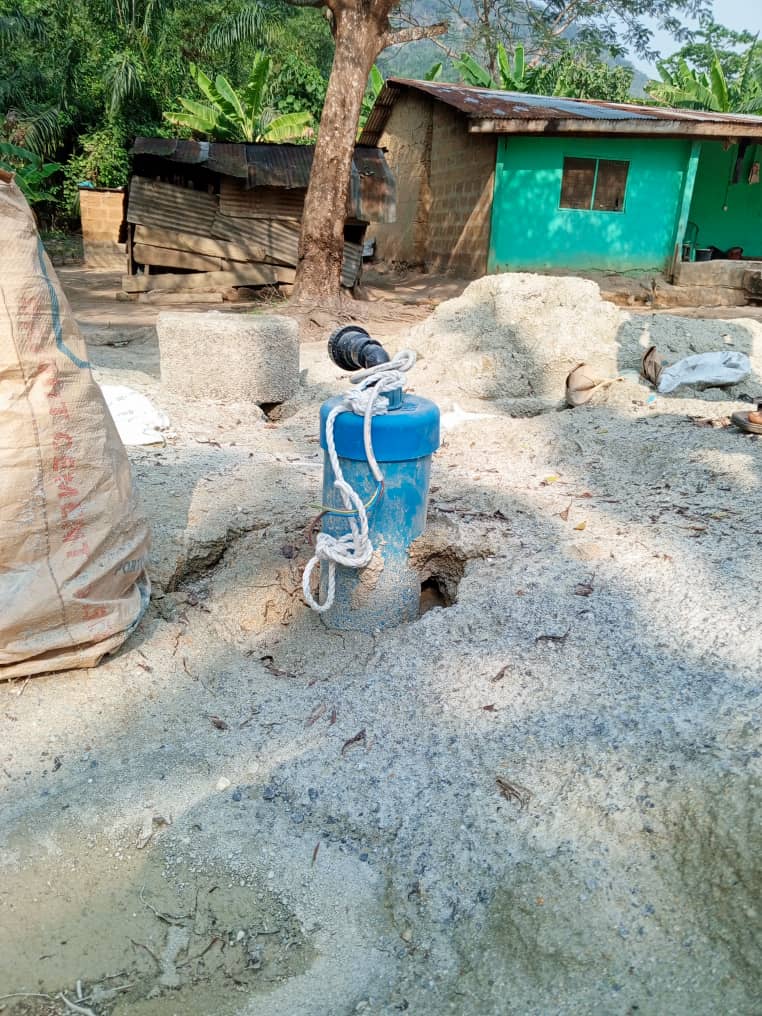
    In line with the District Assemblies’ medium-term plans, Hemang, Dwenase and Kplandey have prioritized the construction of mechanized boreholes while Dome is putting up a CHPS Compound (mini clinic that typically provides primary health care services).
    For residents of Asikam, a maternity block is urgently needed to increase access to maternal health services and further facilitate the process of upgrading their CHPS Compound to a health centre, while their counterparts at Nsutam consider a mini market as their priority. Classroom blocks are to be built at Saamang and Ahwenease.

    Community members of Abompe and Bosuso are investing their grants in income-generating ventures to create employment and wealth among themselves. While the people of Abompe are going into poultry farming, their counterparts in Bosuso are venturing into the production of soap in commercial quantities.“I have learnt a lot from ACA over the last four months as regards project implementation and
    management. Thanks to ACA’s engagements with us, we are clear in our minds in taking our destiny into our hands and mobilizing resources toward a common goal. My community arrived at a consensus that we should have a health centre and we remain committed to ensuring the successful implementation of our project”, Gideon Ofori Boakye, the Assembly member for Asikam Electoral Area said after the signing of the grant agreement.
    “This project will go a long way to help the community as this maternity block, which is about to be built, forms part of the broader plan to upgrade our CHPS compound to a health centre to improve access to good quality health care.” The Mmrateehene (chief of young males) of Asikam, Obed Ofori Ansah also had this to say: The engagements between ACA and the local assembly and the community over the last few months have broadened our horizon on several issues. For instance, we learnt about effective planning and implementation of community-based projects. We are so grateful to ACA and its partners for the good work done so far.”

    Already, Sagyemase, Juaso and Nsuapemso in the Eastern region as well as Donkro Nkwanta, Kyeredeso, Nwoase and Sallamkrom in the Bono East region have benefited from the FCAP microgrant projects while plans are underway to add 20 more communities in the Nkoranza
    South municipality.
    “Following the roll-out of FCAP in my community, Segyemase, we were first trained in how the whole process works. The training, among others, gave us more insight into how we, as a people, could come together, mobilize resources and, with one accord, take our destiny into our hands”,
    Emmanuel Akyeamadu, a beneficiary of FCAP in Segyemase near Osino said. He added: “We came together as a community and contributed through communal labour to ensure cost-effectiveness in the execution of the CHPS Compound project, with ACA assisting with the cedi equivalent of $9,000 at the time, which was about Gh.c 52,000.”

    In all, ACA intends to replicate the process in a hundred communities across Ghana’s mining regions in the coming years. ACA has also sponsored CDD projects in Guinea, Liberia, and Sierra Leone. Through FCAP, communities have successfully built key infrastructures, including clinics and community centers, and start-up collective enterprises, such as rice farms and black soap manufacturing.

    [/et_pb_text][/et_pb_column][/et_pb_row][/et_pb_section]

  • CiCoNet introduces Ghana media to mining company devastation in Eastern Region villages

    CiCoNet introduces Ghana media to mining company devastation in Eastern Region villages

    [et_pb_section fb_built=”1″ theme_builder_area=”post_content” _builder_version=”4.18.1″ _module_preset=”default”][et_pb_row _builder_version=”4.18.1″ _module_preset=”default” theme_builder_area=”post_content”][et_pb_column _builder_version=”4.18.1″ _module_preset=”default” type=”4_4″ theme_builder_area=”post_content”][et_pb_text _builder_version=”4.18.1″ _module_preset=”default” theme_builder_area=”post_content” hover_enabled=”0″ sticky_enabled=”0″]

    On July 6, 2023, the Citizens Committee Network (CiCoNet), a group of concerned community members in the Eastern Region of Ghana, led a group of journalists to tour three towns that have been badly affected by mining activities.

    The field trip, which took the journalists to Juaso, Nsuapemso and Segyimase, gave media representatives an understanding of the impacts of mining on community members’ lives and livelihoods and showcased the failure of Ghana’s mining regulatory agencies to respond to the human rights and environmental abuses that communities are suffering at the hands of some mining companies operating in the area.

    The trip kickstarted at Juaso, where the team visited a structure slated for use as a black soap manufacturing facility, a project that the community launched to provide alternative livelihoods for people who have lost their land to mining expansion.  Ironically, work on the project has stalled due to recent moves by Kibi Goldfields to excavate the land just inches away from the structure, without prior notice to the community.

    Juaso soap making block

    As soon as the group arrived on-site, and before the journalists could peacefully carry out their professional duty, heavily armed private security agents working with Kibi Goldfields Company Limited emerged, tried to confiscate the participants’ phones and devices, and blocked their egress from the area.  Notwithstanding, the ACA staff on board managed to convince the security detail to allow the media to carry on with their work.

    In a series of field visits and interviews, the journalists learned of the community members’ key concerns, including the involuntary acquisition of farmlands by Kibi Goldfields (in Juaso) and Narawa Mining (in Nsuapemso) without adequate compensation to the landowners/farmers and the destruction of water bodies.  Farmers also complained about the companies’ refusal to remediate abandoned mining pits after use, which has led to the accidental death of about nine persons in less than two years.

    “I lost my two sons on the same day because of Narawa Mining Company’s uncovered pits at Nsuapemso in September last year. My two sons, Grant Larbi, 24, and Blessed Damptey, 21, fell into one of the uncovered pits on their way to farm and died on the spot,” Mr. Daniel Damptey narrated his ordeal to the media.

    According to him, the loss was especially devastating, as Grant Larbi, the eldest son, was the bread winner of the family.

    Mr. Daniel Damptey showing 2 sons who died

    Mr. Daniel Damptey showing 2 sons who died

    Mr. George Owusu Asante, Chairman of CiCoNet, stated that Kibi Goldfield’s mining operations had taken over vast areas of lands belonging to the people of Juaso without prior notice, destroying their livelihoods and access to potable drinking water.

    “Instead of the mining company informing owners of the land who are predominantly farmers for negotiations, the company takes over the land – often overnight and in most cases without surveying the land – and destroys crops and economic trees,” he stated.  “Just take a look at this building, which is to house our black soap manufacturing system, built by the community to provide an alternate source of income for residents, and just see how they are excavating around the building without any recourse to future of the community?”

    The mining company’s alleged actions violate Section 72(5) of the Mineral and Mining Act, 2006 (Act 703), which requires the owner of the mining lease to, “in the presence of the owner or accredited representative of the owner, and an officer of the Government agency responsible for land valuation, carry out a survey of crops and produce a crop identification map for compensation in the event that the mining activities are extended to the areas.”

    “The company’s excavators have shaken the building’s stability, frightening community members who want to participate in the self-help project, disrupting farming activities and causing devastating effects on the community’s livelihood,” remarked Owusu Asante.  “We are unable to farm, which is making life extremely difficult for us,”

    [/et_pb_text][/et_pb_column][/et_pb_row][/et_pb_section]

  • Koidu residents disappointed and devastated by ECOWAS court ruling

    [et_pb_section fb_built=”1″ _builder_version=”4.18.1″ _module_preset=”default” global_colors_info=”{}”][et_pb_row _builder_version=”4.18.1″ _module_preset=”default” global_colors_info=”{}”][et_pb_column type=”4_4″ _builder_version=”4.18.1″ _module_preset=”default” global_colors_info=”{}”][et_pb_text _builder_version=”4.18.1″ _module_preset=”default” hover_enabled=”0″ global_colors_info=”{}” sticky_enabled=”0″]

    Koidu City, Sierra Leone (June 20, 2023) Koidu and its surrounding communities could not hide their utter shock and dismay over a judgement announced on Monday June 19, 2023, in Abuja, Nigeria, by the ECOWAS Court of Justice, regarding gross human right abuses they have suffered at the hands of the Sierra Leonean government and Koidu Limited over the years.

    The Court ruled that the community members had not adequately proven their case, despite the extensive testimony and documentation of violence and economic and environmental devastation that they submitted, and the fact that the Sierra Leone government neglected even to mount a defense or to deny the claims.

    While the Sierra Leone courts have erected numerous roadblocks to justice, the communities had believed they could receive a fair hearing before the regional ECOWAS Court.  This devastating judgment raises doubts that there is any forum in which they can obtain justice for the devastating consequences and various abuses caused by the mining operations of Koidu Limited, with the complicity of the Sierra Leonean government.


    Details in a Press Release soon

    Source: Public Interest Lawyering Initiative for West Africa (PILIWA)

    [/et_pb_text][/et_pb_column][/et_pb_row][/et_pb_section]

  • Press Release – ACA Partners Ghana Government to Accelerate Development in 100 Communities

    [et_pb_section fb_built=”1″ theme_builder_area=”post_content” _builder_version=”4.18.1″ _module_preset=”default”][et_pb_row _builder_version=”4.18.1″ _module_preset=”default” theme_builder_area=”post_content”][et_pb_column _builder_version=”4.18.1″ _module_preset=”default” type=”4_4″ theme_builder_area=”post_content”][et_pb_text _builder_version=”4.18.1″ _module_preset=”default” theme_builder_area=”post_content” hover_enabled=”0″ sticky_enabled=”0″]

    Advocates for Community Alternatives (ACA) has launched a massive expansion of its community-driven development (CDD) work to one hundred communities in Ghana.  The project will put communities threatened by extractive development in control of their own development and give them the tools to advocate for their own vision of the future.

    ACA’s community-driven development programs revolve around two key elements.  The first element, the Facilitated Collective Action Process (FCAP), is a process that was developed and popularized in East Africa by ACA’s partner organization, Spark MicroGrants.  FCAP is a two-year program that encourages communities to create a common development vision and equips them with skills and financial resources – including a USD 9,000 microgrant – to pursue it.


    Read More….

    [/et_pb_text][/et_pb_column][/et_pb_row][/et_pb_section]

  • ACA trains university students in citizen science approaches to soil and plant analysis

    ACA trains university students in citizen science approaches to soil and plant analysis

    [et_pb_section fb_built=”1″ theme_builder_area=”post_content” _builder_version=”4.18.1″ _module_preset=”default”][et_pb_row _builder_version=”4.18.1″ _module_preset=”default” theme_builder_area=”post_content”][et_pb_column _builder_version=”4.18.1″ _module_preset=”default” type=”4_4″ theme_builder_area=”post_content”][et_pb_text _builder_version=”4.18.1″ _module_preset=”default” theme_builder_area=”post_content” hover_enabled=”0″ sticky_enabled=”0″]

    More than 60 soil science students and technicians at the University of Ghana have benefitted from a three-day workshop on community-based agricultural science.  Advocates for Community Alternatives (ACA) organized the workshop with the university’s Department of Soil Science from 10 to 12 May, with the aim of “Enhancing the capacity of scientists for community service.”

    The participants, who were mainly MSc and PhD students and technicians attached to the faculty, learned traditional soil and plant analysis techniques, but through a community participation lens. 

    ACA’s Science Advisor, Dr. Kwabina Ibrahim, taught participants how to involve community members in the design of sampling protocols, discussed the presentation of technical data to communities, and the importance of validating results with local communities to ensure accuracy and uptake.


     “This very workshop has enlightened me on a lot of things, especially with regards to how to involve a community in a science study,” said soil science PhD student Isaac Lartey Tawiah enthusiastically. “This participatory approach in the sampling process will ensure that the community members will accept and appreciate the results because they were involved in the process.”

    Kwame Ocloo, an MPhil student in Soil Science, concurred.  “The training was very helpful.  We learned how to take the cell properties that we’re testing for in the field and apply the results of those tests to the farmers, how to explain to the farmers the meaning of those properties,” he said.


    For Grace Karikari Akofo, a Technical Staff of the Material Science and Engineering Department, the program could not have come at a better time.  “This is my first time of hearing about community science, and I think it’s something that will help me professionally as I will be able to interact with non-scientists, especially those without any training in science,” she noted.  “When sharing sampling outcomes with a community, there is no need to use jargon. Rather, one must find innovative ways of breaking those jargons into simple and clearer messages with the help of chats when communicating with the people.”

    At the close of the training, Dr. Daniel Etsey Dodor, the Head of the Department of Soil Science, expressed his gratitude to ACA for the opportunity for students and staff of the university to share knowledge and broaden their horizon on community-centered approaches to soil related issues and hoped that similar workshops would be organized in his department in the years to come.


    Dr. Ibrahim, the ACA Science Advisor, expressed his organization’s commitment to collaborating with scientists to assist communities with scientific knowledge.

    “Community participation in the production of scientific knowledge about their land, soil, and water is key to ensuring that they are in control of their own future, especially when they come under threat from extractive activities,” said Dr. Ibrahim.  “ACA is thankful to the University of Ghana and the Department of Soil Science for helping us to ensure that young scientists are prepared to involve communities in their fieldwork.”

    [/et_pb_text][/et_pb_column][/et_pb_row][/et_pb_section]