Blog

  • Sierra Leone Court of Appeal to hear Koidu Community’s human rights claims

    FOR IMMEDIATE RELEASE

    Sierra Leone Court of Appeal to hear Koidu Community’s human rights claims

    Freetown, Sierra Leone

    Thursday, February 29, 2024

    Koidu Community’s human rights claims will be heard by the Sierra Leone Court of Appeal, thanks to a ruling today that struck out preliminary objections filed by the defendant mining company, Koidu Limited, and scheduled the case for hearing on 16th April 2024.  This appeal will determine whether the community plaintiffs can legally take on a multinational diamond mining company for harm to their livelihoods, their health, and their traditional lands.

    While today’s ruling is technical, it breathes new life into the Koidu plaintiffs’ case, which was dismissed by the High Court in Makeni on 27th October 2022, on the basis that the plaintiffs were not qualified to press their claims in court.  The dismissal order also ruled that the plaintiffs should have used a non-judicial grievance mechanism before going to court, despite also recognizing that the grievance mechanism did not actually exist.

    “The ruling today is a sign of hope, and it has occasioned an opportunity for our clients’ grievances to be heard on the merits,” said Dr. Chernor Mamoud Benedict Jalloh, Esq., the Lead Counsel for the plaintiffs.

    “The outcome of this matter sets important precedent on issues like whether rural people in traditional villages are even allowed to go to court to protect their land rights, and whether companies can stop communities from going to court to protect their rights by signing community development agreements that set up a kind of private arbitration system.”

    Brief background

    Koidu Limited is a diamond mining company that operates in Sierra Leone and is privately owned by BSG Resources Limited (BSGR) through its subsidiary, Octéa Limited. The company is accused of degrading the living conditions of people living near its mining operations and failing to properly relocate them or compensate them for their losses.

    Residents who have not been relocated find it increasingly difficult to farm because waste rock and rubble from Koidu Ltd.’s operations have covered much of their farmland. “Koidu Limited has destroyed our lives,” said Mr. Prince Boima, Chairman of the Marginalized Affected Property Owners Association. “We used to farm and live in peace, but now our lands and water sources are poisoned and covered in rubble. Our homes are shaken by explosives every day.”

    Residents also report that their health has suffered. Dust from the mining operations often covers the community and causes headaches, difficulty breathing, and a burning sensation in the residents’ eyes. The operations have also contaminated the water, and many residents develop skin rashes and digestive problems they did not previously experience. High stress from living with frequent blasting further causes headaches, high blood pressure, heart palpitations, and respiratory problems in the community.

    Despite promising to properly relocate affected community members in advance of expanding its mining operations, Koidu Ltd. has left the people to suffer.  Many community members have neither been relocated, nor compensated for the damage to their properties, health, and livelihoods.  Others have been relocated to a new area, but the conditions of relocation have been incommensurate with what they lost.

    The community is supported in its fight for justice by Advocates for Community Alternatives (ACA), a Ghana-based human rights organization, and Network Movement for Justice and Development (NMJD), a Sierra Leonean civil society organization that organizes communities for a more just society in the face of natural resource extraction.

    The legal journey thus far

    • In April 2019, Koidu resident Aiah Fengai and 73 others filed a class-action lawsuit against Koidu Ltd., five of its parent companies and affiliates, and their Managing Directors, alleging property damage, environmental and health impacts, land and livelihoods loss, and breach of the company’s Community Development Agreement. Before filing, they sought and received permission to serve the parent companies and affiliates in Sierra Leone, even though those entities were formally registered in the British Virgin Islands.
    • In August 2019, an association composed of Koidu residents affected by the diamond mine’s operations filed a lawsuit in the ECOWAS Court of Justice against the Republic of Sierra Leone, accusing the state of violating their human rights by violently repressing the 2007 and 2012 protests and allowing the mining company to destroy their livelihoods, health, and natural environment. The Republic of Sierra Leone never responded to the ECOWAS lawsuit.
    • In February 2020, Koidu resident Morie Momoh and several others filed a second class-action lawsuit, this time in the High Court in Koidu itself. In August 2020, having learned that Octea’s parent company was undergoing a bankruptcy process that had revealed widespread efforts to conceal and dissipate the Group’s assets, the plaintiffs petitioned for orders freezing the defendants’ assets. This order was granted on an interim basis but was vacated when the court dismissed the class-action suit entirely on the basis that the Kono High Court was not a proper venue to launch a civil suit.
    • The plaintiffs refiled their class-action suit in the Makeni High Court in October 2020 and again requested freezing orders. The request was briefly granted but then lifted when the defendants claimed that the previous freezing order had cost them over $6 million and threatened to go to court to enforce their right to collect that sum from the indigent plaintiffs.
    • In June 2021, the class-action lawsuits and individual lawsuits were consolidated before the High Court in Makeni.  After a series of administrative delays, the first arguments were heard in Makeni in March 2022.
    • In October 2022, the High Court upheld the defendants’ jurisdictional objections and dismissed the plaintiffs’ claims, ruling that plaintiffs did not have the legal capacity to file claims relating to customary land rights, to uphold the terms of a Community Benefit Agreement, or to enforce clauses of national legislation that are meant to provide benefits to mining-affected communities.  The Court also ruled that the plaintiffs should have taken their case to a non-judicial grievance committee before coming to court, despite also ruling that the grievance committee had never actually been created.
    • In November 2022, the plaintiffs sought leave of the High Court to appeal the dismissal of their claims.  Leave was eventually granted in November 2023.
    • On Monday June 19, 2023, in Abuja, Nigeria, the ECOWAS Court of Justice ruled that the community members had not adequately proven their case, despite the extensive testimony and documentation of violence and economic and environmental devastation that they submitted, and the fact that the Sierra Leone government neglected even to mount a defense or to deny the claims.

    END

    Advocates for Community Alternatives (ACA) – ACA helps West African communities that are threatened by the destructive impacts of extractives-led development to take control of their own futures. ACA works directly with communities to design their own sustainable development plans and advocate to achieve those plans, and it builds and supports networks of lawyers and other professionals that will serve communities in need. ACA is providing strategic legal support to NMJD as part of their participation in the Public Interest Lawyering Network for West Africa (PILIWA), which ACA coordinates.

    The Network Movement for Justice and Development (NMJD) is a Sierra Leonean civil society organization that engages in advocacy and strengthens the capacity of civil society organizations to effectively engage women, men, children, communities, government and other actors for the transformation of society. NMJD’s vision is of a just and self-reliant society (Sierra Leone) where women, men, children and communities are conscientized and live in dignity without fear and discrimination, especially on ground of sex, race, faith, socio-economic and political status.

    Media Contacts

    1. Abu A. Brima, Executive Director, NMDJ – abu.brima@nmjd.org, +232 88 645314
    2. Dr. Chernor Mamoud Benedict Jalloh – benedictcmj@gmail.com,  +232 76 901637
    3. Daniel Fofanah – danielgfofanah001@gmail.com, +232 76 724066 ACA
    4. Jonathan G. Kaufman, Executive Director, ACA – jonathan@advocatesforalternatives.org, +1(617) 645-4069
    5. Lalla Touré – lalla@advocatesforalternatives.org, +233 50 985 0018
  • Financiers warned of huge risks to communities and biodiversity as Rio Tinto approves world’s biggest mining project

    Financiers warned of huge risks to communities and biodiversity as Rio Tinto approves world’s biggest mining project

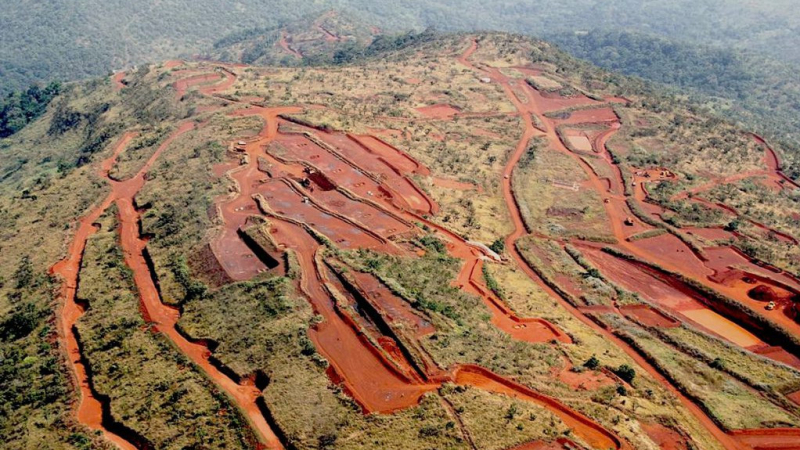
    Simandou deposit, Guinea. Photo: Rio Tinto
    The Board of Directors of Anglo-Australian mining giant Rio Tinto is exposing Guinean communities and the company’s shareholders to grave risks by approving a $6.2 billion investment in the Simandou iron project without adequately studying and mitigating environmental and social risks, according to civil society organisations BankTrack and Advocates for Community Alternatives.

    The Simandou project involves four extensive mining blocks in a globally recognized biodiversity hotspot in southeastern Guinea, over 650 km of new rail lines traversing chimpanzee habitat and the territory of at least 450 communities, and a dedicated port facility in a coastal area where artisanal fishing comprises the main source of income and food security.  While the project is still under construction, local communities have already reported widespread land theft, destruction of farmlands, profanation of cultural sites, pollution of sacred springs and drinking water sources, and degradation of fish stocks and other sources of livelihoods. (1)

    Rio Tinto is one of the main developers of the project through its controlling stake in a local joint venture, Simfer S.A., that was granted rights to mine half the iron ore deposit.  While much of the infrastructure for the project has been built by the holder of the other half of the mineral rights, the Chinese-led Winning Consortium Simandou (WCS), Simfer is the joint owner of the railway and the port.

    “So far, Rio Tinto’s public commitments to strict social and environmental norms has been cold comfort to Guinean communities in the path of the Simandou project,” explained Jonathan Kaufman, Executive Director of Advocates for Community Alternatives.  “As co-owners of the rail and port facilities, they could have put a stop to the abuses and ensured that affected people receive a remedy for what they’ve suffered, but they’ve done nothing.”

    The project developers could mitigate the risks of the project if they properly studied and planned for them, but according to civil society advocates, both Simfer and WCS have failed to do so. (2)

    BankTrack, together with partners, first raised the alarm about the risks and impacts of this project last summer by publishing a Dodgy Deal profile. The banks financing Rio Tinto and the other project developers were also warned in a November 2023 letter, in which they were reminded of their responsibilities under the United Nations Guiding Principles on Business and Human Rights and the OECD Guidelines for Multinational Enterprises. (3)

    The pollution of waterways, failure to respect social and environmental commitments, and decision to start construction before environmental review was complete all constitute violations of Guinean law that could threaten Rio Tinto’s legal and social licenses to operate.  They are also violations of the Equator Principles and the IFC Performance Standards, to which many international financial institutions have pledged adherence in their funding decisions.  If the project results in an environmental and humanitarian disaster, as Human Rights Watch has warned it could, financiers that uncritically support Rio Tinto will find themselves complicit.

    Banks funding Rio Tinto should therefore engage the company to ensure that harms so far experienced by communities are addressed, further risks are mitigated, and with the active participation of local communities. Specifically, banks should insist that Rio Tinto publicly commit to adhering to the IFC Performance Standards, submit to an independent audit under the IRMA standards for responsible mining, apply the principle of Free, Prior, and Informed Consent with respect to the affected communities, and publicly disclose key project documents, including impact assessments and audits and the project’s Environmental Compliance Certificates.  

    Notes to editors

    (1) More information about the Simandou project’s risks and impacts can be found on BankTrack’s Dodgy Deal profile, here: https://www.banktrack.org/project/simandou_iron_ore_project_guinea 

    The profile includes up-to-date maps showing the project’s impacts on communities, protected areas, biodiversity hotspots and chimpanzee habitats produced by EarthInsight.

    (2) WCS’s environmental and social impact assessments are dire; for example, they predict irreversible impacts to groundwater systems that supply local communities and flow into the headwaters of the Niger River, a lifeline to millions of people in several arid West African countries.  But they are also inadequate; expert reviews have shown that they are based on outdated and inapplicable data, fail to include key mitigation plans for biodiversity and management of effluents, and dedicate insufficient funds for the preservation of endangered species such as the West African chimpanzee, the forest elephant, and the pygmy hippopotamus.  

    Rio Tinto’s own record of due diligence is no better; the company’s original impact plan for preserving biodiversity relied on “physically removing or scaring away animals,” and its current assessments and plans have not been made public.  In fact, Rio Tinto began clearing land and building its own section of railroad before its impact studies had ever been considered by the Guinean government.

    (3) Letters were sent to 23 major financiers of Rio Tinto, for an example see here.

    For media enquiries please contact:

    1. Emyloïa Kpadonou, Communications Officer, Advocates for Community Alternatives: +233 50 037 5984
    2. Ryan Brightwell, Research & Communications Director, BankTrack:  +31 634 643 116
  • Newly trained Community-Based Facilitators poised for action

    Newly trained Community-Based Facilitators poised for action

    In line with its resolve to continue impacting positively on communities, Advocates for Community Alternatives (ACA) has trained 66 Community-Based Facilitators (CBFs) drawn from 19 communities in Atiwa West and Abuakwa South districts of the Eastern region of Ghana on the effective implementation of the Facilitated Collective Action Process (FCAP).

    Also called Oman yie die, FCAP is a partnership between ACA and partner the district assemblies as part of measures to strengthen local participation in the implementation of the Assemblies’ medium term development plans.

    The training program, which took place at Asiakwa, was also attended by 16 officials of the two district assemblies.

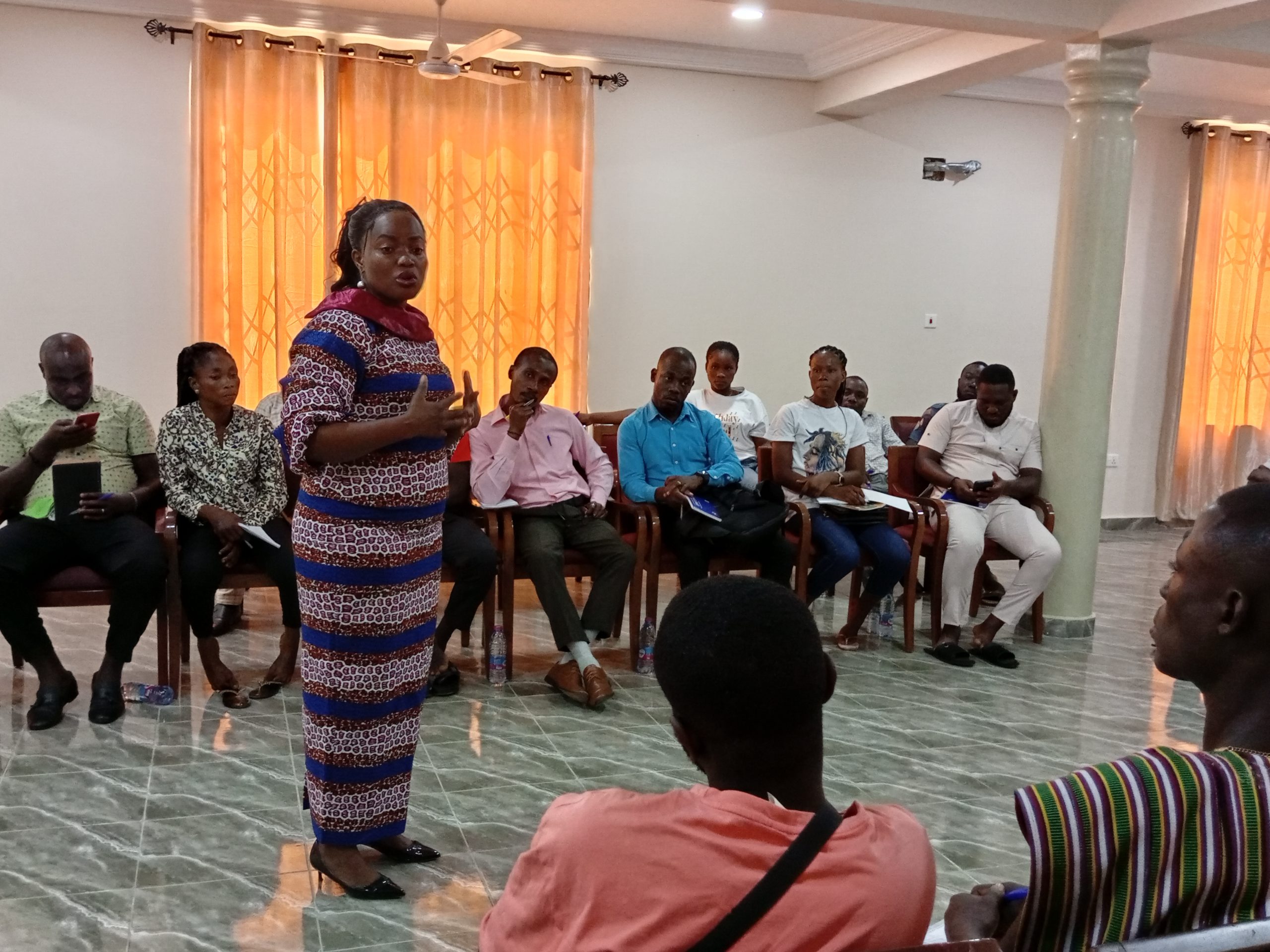
    The participants, which included 16 staff of the two partner district assemblies, were equipped with knowledge on participatory approach to development, conflict resolution and the need to accord maximum respect to their communities’ voices on pertinent issues affecting their welfare.

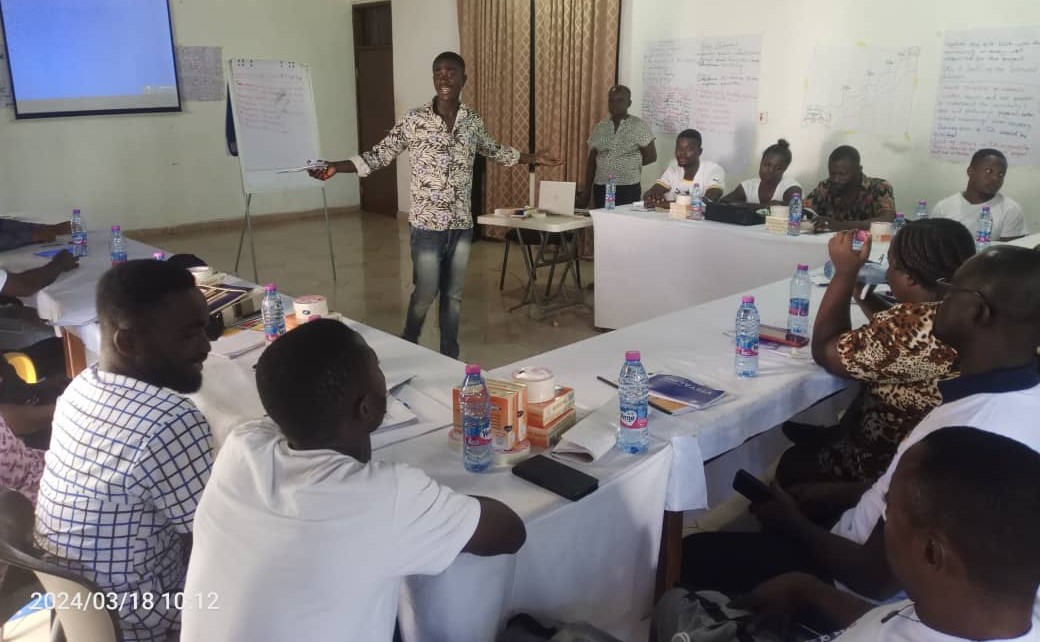
    ACA’s Director of Community-Driven Development (CDD), Nana Ama Nketia-Quaidoo led her team to take the participants through a number of presentations, role-plays and group discussions, among others.

    The CBFs were drawn from Ehiamankyene, Dadetsunya, Ahenkwa, Ahinkwa Sisi, Bepoase, Asedja, Nsuta, Nkankama, Subrima, Gyampomani, Awenare, Akropong, Pameng, Banso, Asunafo, Amonom, Akrofufu, Muoso, Akukuso, Akwaboaso and Asiakwa.

    The rest of the communities represented at the eight-day training programme were Adadientem, Apapam, Akwadum, Apedwa, Adortowa, Bonposo No. 1, Addonkwanta, Operko, Latemu, Agyapomaa, Amanfrom, Maase Payaase, Oboperkunya and Asafo.

  • Bosuso soap-making factory project on course

    Bosuso soap-making factory project on course

    Residents of Bosuso, a farming community in the Fanteakwa South district, are anxiously waiting for the successful completion of a soap-making factory in the town to turn their economic fortunes around.

    They have no doubt that the project, when completed, will offer both direct and indirect jobs to several thousands of people in the area, especially women and the youth.

    The people of Bosuso, led by their chief, Nana Atta Krofa, are taking advantage of an existing palm-oil factory in the area, to put up a soap-making factory to make full use of the residue of the palm-oil factory.

    The residues of the palm-oil factory, especially the palm-kernel, which currently go waste will soon become the major raw material to produce a variety of soap, hence the resolve by the community members to vigorously pursue this laudable project to a successful end.

    The Bosuso community has so far spent $5,250 (Gh.c 62,995) on this project out of its $9,000 microgrant advanced jointly by the Fanteakwa South District Assembly and Advocates for Community Alternatives (ACA), a non-profit-making organisation, which helps West African communities that are threatened by the destructive impacts of extractive projects to take control of their futures.

    The soap-making factory, which is expected to turn around the economic fortunes of the local community, is being executed under the Facilitated Collective Action Process (FCAP), a partnership between the district assembly and ACA as part of measures to strengthen local participation in the implementation of the Assembly’s medium term development plan.

    “We’ve really gone far with the project and currently it’s at the lintel level. We’re going to put additional two blocks on the beam and continue from there. We’re also waiting for the DCE to support us with the specified wood required for the project”, Nana Atta Krofa, said.

    “This livelihood enhancement project will go a long way to boost our local economy and I will everything within my power to ensure its successful completion and I must thank ACA partnering with our district assembly to bring this project to our doorstep.”

  • Abompe embarks on economic transformation journey through poultry business

    Abompe embarks on economic transformation journey through poultry business

    More jobs are expected to be created soon in Abompe and its environs through the poultry business value-chain and turn around the socio-economic fortunes of residents, especially the youth.

    To this end, the entire community of Abompe led by Barima Kwabena Addo, the chief of the area, has commenced construction works on key structures that will house the poultry and other auxiliary structures.

    The project has just commenced with concrete works being done on the sub-structure, after which construction works on the main building (the super structure) will continue.

    This local economic transformation journey by the chief and people of Abompe in the Fanteakwa South district of the Eastern region of Ghana is anchored through the Facilitated Collective Action Process (FCAP), which aims at strengthening local participation in the implementation of the Assembly’s medium term development plan.

    Also called Oman yie die, the project is a partnership between Advocates for Community Alternatives (ACA), a non-profit-making organisation, which helps West African communities that are threatened by the destructive impacts of extractive projects to take control of their futures, and the Fanteakwa South District Assembly.

    ACA is supporting the Abompe Poultry Business with a $9,000 micro-grant.

    “As a community, we resolved to also contribute towards this laudable project by mobilizing ourselves to provide the basic structures to be used as the poultry farm so that the funds expected from ACA can be channeled mainly into the poultry business, we have envisioned for ourselves”, Barima Kwabena Addo said in an interview.

    “As the chief of Abompe, I’m leaving no stone unturned to ensure the successful completion of this project owing to the invaluable benefits it holds for both the present and the future generations of the town.”

  • ACA supports Saamang community to renovate local R/C school block

    ACA supports Saamang community to renovate local R/C school block

    Renovation works on eight classrooms and an office for the local Roman Catholic basic school at Saamang in the Fanteakwa South District of the Eastern region of Ghana are progressing steadily under the Facilitated Collective Action Process (FCAP), a partnership between the district assembly and Advocates for Community Alternatives (ACA), a non-profit-making organisation, which helps West African communities that are threatened by the destructive impacts of extractive projects to take control of their futures.

    When completed, the renovated block will provide a more convenient teaching and learning environment for the kindergarten and the primary sections of the school and ultimately contribute to the overall improvement in educational standards in the district.

    Moreover, the enrolment is expected to increase by 10% one year after it has been completed and put to use, reduce dropout rate by 5% as well as reduced the cost of education for pupils in Saamang by 15%.

    So far, the entire roof of the school has been demolished while new beams with iron rods are being fixed. Also, the pillars are being replaced with stronger ones before the building is re-roofed.

    Out of its $9,000 (approximately Gh.c 108,000) microgrant earmarked for the project under FCAP, the community has so far spent Gh.c 60,000 (approximately $4,500).

    Also called Oman yie die, FCAP is a partnership between ACA) and the Fanteakwa South District Assembly as part of measures to strengthen local participation in the implementation of the Assembly’s medium term development plan.

    In an interview, the Assembly member for the Saamang Electoral Area, Desmond Ofori Abrokwa, said the state of the school block prior to the start of the renovation works was deplorable and adversely affected enrolment as well as effective teaching and learning.

    “It is our hope that when the renovation works are completed, our kids will have a much better conducive environment to go about their studies. Also, teachers will be happy to give of their best when they have good classrooms to teach and an office to hold meetings and mark assignments”, he said.

    According to him, every effort is being made to ensure that all the remaining renovation works are completed before the beginning of next term so that the pupils can use the facility as early as possible.

  • SIMILIMI

    [et_pb_section fb_built=”1″ theme_builder_area=”post_content” _builder_version=”4.18.1″ _module_preset=”default”][et_pb_row _builder_version=”4.18.1″ _module_preset=”default” theme_builder_area=”post_content”][et_pb_column _builder_version=”4.18.1″ _module_preset=”default” type=”4_4″ theme_builder_area=”post_content”][et_pb_text _builder_version=”4.18.1″ _module_preset=”default” theme_builder_area=”post_content” hover_enabled=”0″ sticky_enabled=”0″]

    What happened?

    The inhabitants of Similimi, a village in the sub-prefecture of Bondoukou, about 430 km from Abidjan in the Republic of Côte d’Ivoire, mainly grew cashew nuts, planted other fruit trees, legumes and vegetables on plots of land before manganese mining company, Bondoukou Manganèse SA (BMSA) began operations. These lands were their sole form of economic support until the Ivorian government granted the company a mining concession in the area.

     Organizing workshops to train and exchange views with administrative authorities about the impacts of the mining operations on the lives of the Similimi residents, national and international standards on relocation, and the associated risks.

    Over more than a decade, the operations of BMSA have caused serious disruption to the lives of the people of Similimi. Improper disposal of waste products has polluted the waters, resulting in serious – and sometimes fatal – digestive disorders. Heavy vehicular traffic and extensive strip mining create constant dust and fumes causing respiratory problems. The company’s land clearing activities have deforested the landscape and devastated places of worship, making cultural practices of residents impossible. And the noise of dynamite disrupts residents’ sleep and affects their mental health. Women are particularly affected, as the loss of natural resources undermines their social status and ability to provide for the basic needs of their families.

    It took an advocacy by the community members and Groupe pour la Recherche et le Plaidoyer sur les Industries extractives (in English, the Extractive Industries Research and Advocacy Group, known by its French acronym, GRPIE, for the company to provide a fountain and renovate the village school. GRPIE is the partner organisation of Advocates for Community Alternatives (ACA) in our partner in Cote d’Ivoire.

    Air and water pollution has taken a toll on health conditions of the people vis-à-vis their means of livelihood. As pertains in a lot of mining communities in Africa, farmlands belonging farmers have been taken over for mining activities without the prior notice and approval by the owners. Even though some amounts were paid as compensation, they were inadequate.

    The company has gone further to destroy the sacred hill where the residents previously conducted traditional practices.  Considering all this, the community needs to be relocated immediately.

    Despite numerous complaints addressed to the mining company and the Ivorian authorities, the injuries and human rights violations have persisted without an effective remedy. The people of Similimi have requested repeatedly to be relocated away from the mine, but their prayers have gone unanswered.

     With time, the people of Similimi then decided to file a complaint before the ECOWAS Court of Justice against the Ivorian government in April 2020.

     What’s new?

    On Thursday, November 30, 2023, the ECOWAS Court of Justice, at its sitting in Abuja, declared the Republic of Côte d’Ivoire guilty and ordered the government to pay 20 million CFA Francs each to eleven individual plaintiffs and to repair the environmental damage caused by the mining project.

    Residents of Similimi could not hide their joy upon hearing this as they celebrated this decision of the ECOWAS Court of Justice, which found the Ivorian government culpable of human rights violations in connection with destructive manganese mining on their traditional lands. 

    On Monday December 11, 2023, the ECOWAS Court of Justice released its judgment on the ruling, which justified its earlier ruling against the Ivorian government in a case brought before it by 14 representative inhabitants of Similimi, along with a communal self-help organization.

    “It is precisely this failure to act, to prevent environmental damage and to hold offenders accountable, who feel free to carry out their damaging activities with a clear expectation of impunity, that characterizes the Respondent State’s violation of articles 1, 16 and 24 of the African Charter and article 12 of the ICESCR”, the court said in its ruling.

    The court further accused the Ivorian government of failing to take adequate steps to protect the environment, saying: “It is important to note that, despite all the laws it has passed and all the agencies it has created, the Respondent has not been able to point, in its defense, to a single action that has been taken in recent years to hold to serious and diligent account the perpetrator of the many acts of environmental degradation that have taken place in the Similimi region.”

    The Court’s November 30 ruling indeed affirms the plaintiffs’ long-held view that the State is in fact responsible for violations of Similimi community’s rights to a healthy environment, to health, to an adequate standard of living, to private and family life, and freedom of worship and religion. The Court dismissed the Applicants’ claim that their right to property was violated, for lack of sufficient evidence of ownership. 

    Standing up for justice – how the legal battle started

    In the hope of obtaining justice, 14 representative inhabitants of Similimi, along with a communal self-help organization, filed a complaint in the ECOWAS Court of Justice in April 2020. The communities were supported by two-member organization of the Public Interest Lawyering Initiative for West Africa (PILIWA), Advocates for Communities Alternatives (ACA) and GRPIE.

    The plaintiffs accused the State of Côte d’Ivoire of illegal expropriation, non-compliance with the rules of due diligence, and complicity in environmental, economic, and cultural damage.

    “Even if the Court did not recognize our proprietary right to our ancestral lands, we are indeed happy that our voices were heard by a regional tribunal and that the suffering that we have endured over the years has not been in vain,” said Adou Kouamé, village chief of Similimi and a complainant.

    “We welcome this decision of the ECOWAS Court of Justice which recognized that the State of Côte d’Ivoire voluntarily facilitated and permitted the actions of BMSA, leading to the deterioration of the environment, causing health problems among residents, deteriorating the quality of water and air, destroying their crops and places of worship,” declared Mr. Rashidi Ibitowa, lawyer for the plaintiffs.


    Road to justice – Highlights of activities in the last few years

    Complaints registered by the residents to the authorities on many times have fallen on death ears as no action has been taken to protect them from the negative impacts of manganese extraction. 

    To this end, ACA and its Ivoirian partner, GRPIE, stepped in with local lawyers to support the people of Similimi with the following:

    1. Awareness Raising
    • Organizing several meetings with the people of Similimi to help them understand their rights and the strategic actions they can take to address the risks of mining and defend their interests.
    • Organizing a learning exchange to share experiences with other communities that have been affected by mining and been through the process of relocation.


    1. Advocacy
    • Advocating and lobbying Ivoirian authorities about the need to relocate the community.
    • Creating pressure at the international level on the dangers and suffering faced by the people of Similimi.
    • The Ivoirian government continues to organize meetings with the residents of Similimi, with the aim of eventually relocating them.
    • In August 2020, GRPIE commissioned an independent study into the environmental impacts of BMSA’s operations, which revealed dangerous levels of particulate matter and noise pollution.


    1. Legal strategy

    Conducting missions to investigate, document, and collect testimony and evidence necessary for legal action at the national level against Bondoukou Manganèse and at the ECOWAS Court of Justice against the government of Côte d’Ivoire.

    Collaboration with the law firm SCPA les OSCARS in Côte d’Ivoire to provide pro bono legal assistance to the community and represent them in national and regional forums.

    In October 2019 and May 2020, the lawyers for Similimi were granted “ordonnances de compulsoire” – orders from a court that require the company and the government to disclose the documents forming the basis for the renewal of BMSA’s operating permit despite the unresolved complaints of the community.

    The documents provided reveal important procedural gaps, and the community is considering its options.

    On January 29, 2021, the residents of Similimi sued the Republic of Côte d’Ivoire in the ECOWAS Court of Justice for facilitating the pollution of their natural environment, the appropriation of their traditional lands, and the destruction of their sacred sites. The Court initially set the date to release its ruling in February 2022, but later postponed, and eventually the judge’s 5-year mandate expired before the new release date could be set. As of September 2022, the plaintiffs are waiting for the new judge to be appointed to their case and clarify the status of the ruling.

    In October 2019 and May 2020, the lawyers for Similimi were granted “ordonnances de compulsoire” – orders from a court that require the company and the government to disclose the documents forming the basis for the renewal of BMSA’s operating permit despite the unresolved complaints of the community.

    The documents provided reveal important procedural gaps, and the community is considering its options.

    Your content goes here. Edit or remove this text inline or in the module Content settings. You can also style every aspect of this content in the module Design settings and even apply custom CSS to this text in the module Advanced settings.

    [/et_pb_text][/et_pb_column][/et_pb_row][/et_pb_section]

  • Work progresses on Kplandey water project under FCAP

    Work progresses on Kplandey water project under FCAP

    The lack of adequate sources of potable water in the Eastern region town of Kplandey will soon be a thing of the past following the on-going works on the provision of two mechanized boreholes under the Facilitated Collective Action Process (FCAP), a partnership between the Fanteakwa South District Assembly and Advocates for Community Alternatives (ACA), a Non-profit-making organization.

    Now, the boreholes have successfully been drilled while pumping machines have also been installed.

    “We are now left with the erection of pillars so we can place tanks on them. I’m so happy about the speed with which construction works are progressing and I’m sure that the projects will be complete and put to use by the end of the second quarter of this year”, said Mr. Joseph Teye, Chairman of Kplandey FCAP Implementation Committee.

    It is expected that after the pillars are erected and tanks are mounted on them, they will be connected to electricity to enable the pumps supply water into the tanks. Also, a management committee would be constituted to ensure the maintenance and effective management of the facilities before they are finally put to use.

    “Residents currently depend on a manual borehole and some nearby streams for water supply and so when the project is complete, it will bring a great relieve to us, especially women and children because they would no longer have to walk long distances in search of water.”

    With a $9,000 microgrant, the community members are drilling two boreholes at vantage points in the town in partnership with ACA and the Abuakwa South Municipal Assembly. The community has so far spent approximately $5,000 of its microgrant to reach this far.

    SDG 6

    Sustainable Development Goal 6 is about “clean water and sanitation for all.” It is one of the 17 Sustainable Development Goals established by the United Nations General Assembly in 2023. According to the United Nations, the goal is to: “Ensure availability and sustainable management of water and sanitation for all.

    Safe and readily available water is important for public health, whether it is used for drinking, domestic use, food production or recreational purposes. Improved water supply and sanitation, and better management of water resources, can boost countries’ economic growth and can contribute greatly to poverty reduction.

  • Asikam Maternity block nears completion

    Asikam Maternity block nears completion

    [et_pb_section fb_built=”1″ _builder_version=”4.18.1″ _module_preset=”default” global_colors_info=”{}”][et_pb_row _builder_version=”4.18.1″ _module_preset=”default” global_colors_info=”{}”][et_pb_column type=”4_4″ _builder_version=”4.18.1″ _module_preset=”default” global_colors_info=”{}”][et_pb_text _builder_version=”4.18.1″ _module_preset=”default” hover_enabled=”0″ global_colors_info=”{}” sticky_enabled=”0″]

    “We just can’t wait to witness the successful completion of this maternity block as it will go a long way to alleviate the pains our women go through in accessing ante-natal and post-natal health services”, Gideon Ofori Boakye, the Assembly member of Asikam.

    Asikam, a farming community in the Abuakwa South municipality of the Eastern region of Ghana, is leaving no stone unturned in completing its community-driven project under the Facilitated Collective Action Process (FCAP), which aims at strengthening decentralization process.

    Also called Oman yie die, the project is a partnership between Advocates for Community Alternatives (ACA), a non-profit-making organisation, which helps West African communities that are threatened by the destructive impacts of extractive projects to take control of their futures, and the Abuakwa South Municipal Assembly as part of measures to strengthen local participation in the implementation of the Assembly’s medium term development plan.

    With a $9,000 microgrant, the community members are putting up a Maternity block at a CHPS Compound in the town in partnership with ACA and the Abuakwa South Municipal Assembly. The community has so far spent approximately $4,500 of its microgrant.

    The project, which is about 60% complete, is primarily meant to augment health care delivery, especially with regards to maternal health services.

    “We’re done with the construction of the main building, and we’re left with a few works then we go to the roofing and plastering stages. So far, so good”, the Assembly member said in an interview.

    For Obed Ofori Ansah, the Mmranteεhene of Asikam (chief of young men): “This project is really coming at the right time because the practice where our women travel to Kyebi and sometimes to Koforidua for ante-natal and post-natal health services will soon be a thing of the past.”

    He is therefore calling on the residents of the town to continue with their communal assistance to ensure the timely completion of the project.

    The Asikam maternity block project at the lintel level

    [/et_pb_text][/et_pb_column][/et_pb_row][/et_pb_section][et_pb_section fb_built=”1″ _builder_version=”4.18.1″ _module_preset=”default” global_colors_info=”{}”][/et_pb_section]

  • Similimi residents triumph over Ivorian government in ECOWAS Court

    Similimi residents triumph over Ivorian government in ECOWAS Court

    [et_pb_section fb_built="1" _builder_version="4.18.1" _module_preset="default" global_colors_info="{}"][et_pb_row _builder_version="4.18.1" _module_preset="default" global_colors_info="{}"][et_pb_column type="4_4" _builder_version="4.18.1" _module_preset="default" global_colors_info="{}"][et_pb_image src="https://acaredesign.allmediagh.online/wp-content/uploads/2023/12/Eau-similimi-scaled-2.jpg" title_text="Eau similimi" _builder_version="4.18.1" _module_preset="default" global_colors_info="{}"][/et_pb_image][et_pb_text _builder_version="4.18.1" _module_preset="default" global_colors_info="{}"][/et_pb_text][/et_pb_column][/et_pb_row][et_pb_row _builder_version="4.18.1" _module_preset="default" global_colors_info="{}"][et_pb_column type="4_4" _builder_version="4.18.1" _module_preset="default" global_colors_info="{}"][et_pb_text _builder_version="4.18.1" _module_preset="default" hover_enabled="0" sticky_enabled="0"]

    Residents of Similimi, a village in northeastern Côte d’Ivoire, are celebrating a decision of the ECOWAS Court of Justice finding the Ivorian government culpable of human rights violations in connection with destructive manganese mining on their traditional lands.  At its sitting in Abuja on Thursday, November 30, 2023, the ECOWAS Court of Justice declared the Republic of Côte d’Ivoire guilty and ordered the government to pay 20 million CFA Francs each to eleven individual plaintiffs and to repair the environmental damage caused by the mining project.

     The Fight for Justice

     In the hope of obtaining justice, 14 representative inhabitants of Similimi, along with a communal self-help organization, filed a complaint in the ECOWAS Court of Justice in April 2020. The communities are supported by two member-organizations of the Public Interest Lawyering Initiative for West Africa (PILIWA), Advocates for Communities Alternatives (ACA) and Groupe pour la Recherche et le Plaidoyer sur les Industries extractives (in English, the Extractive Industries Research and Advocacy Group, known by its French acronym, GRPIE). The plaintiffs accused the Côte d’Ivoire of illegal expropriation, non-compliance with the rules of due diligence, and complicity in environmental, economic, and cultural damage.

    The Court’s November 30 ruling determines that the State is in fact responsible for violations of Similimi residents’ rights to a healthy environment, to health, to an adequate standard of living, to private and family life, and to freedom of worship and religion. The Court dismissed the Applicants’ claim that their right to property was violated, for lack of sufficient evidence of ownership.  “Even if the Court did not recognize our proprietary right to our ancestral lands, we are indeed happy that our voices were heard by a regional tribunal and that the suffering that we have endured over the years has not been in vain,” said Adou Kouamé, village chief of Similimi and a complainant.

    “We welcome this decision of the ECOWAS Court of Justice which recognized that the State of Côte d’Ivoire voluntarily facilitated and permitted the actions of BMSA, leading to the deterioration of the environment, causing health problems among residents, deteriorating the quality of water and air, destroying their crops and places of worship,” declared Mr. Rashidi Ibitowa, lawyer for the plaintiffs.

    Brief Background

    The inhabitants of Similimi, a village in the sub-prefecture of Bondoukou, about 430 km from Abidjan in the Republic of Côte d’Ivoire, mainly grew cashew nuts, fruits, legumes, and vegetables on their land before Bondoukou Manganèse SA (BMSA) began its operations. These lands were their sole form of economic support until the Ivorian government granted the company a mining concession in the area. The company soon began digging mining pits within a few hundred meters of the inhabited area of the village.

    Over more than a decade, the operations of BMSA have caused serious disruption to the lives of the people of Similimi. Improper disposal of waste products has polluted the waters, resulting in serious – and sometimes fatal – digestive disorders. Heavy vehicular traffic and extensive strip mining create constant dust and fumes, causing respiratory problems. The company’s land clearing activities have deforested the landscape and devastated places of worship, making residents’ traditional cultural practices impossible. And the noise of dynamite disrupts residents’ sleep and affects their mental health. Women are particularly affected, as the loss of natural resources undermines their social status and ability to provide for the basic needs of their families.

    Despite numerous complaints addressed to the mining company and the Ivorian authorities, the injuries and human rights violations have persisted without an effective remedy. The people of Similimi have requested repeatedly to be relocated away from the mine, but their prayers have gone unanswered.

    [/et_pb_text][/et_pb_column][/et_pb_row][/et_pb_section]