Blog

  • Eric Anorrey: Sora Kaufman Fellow

    Eric Anorrey: Sora Kaufman Fellow

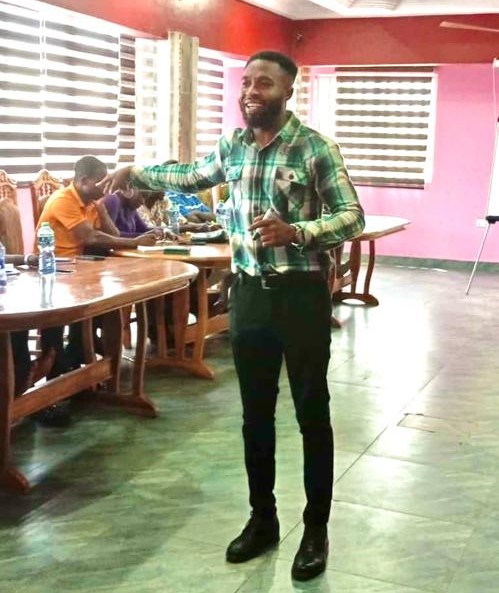
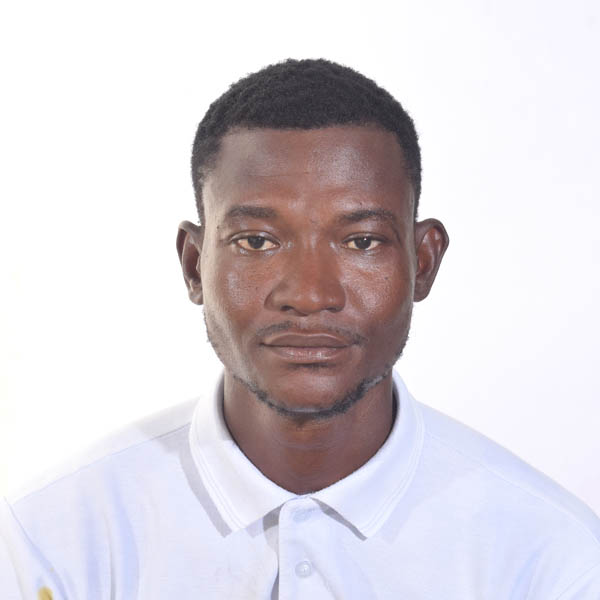
    Meet Eric Anorrey, a proud member of ACA’s Sora Kaufman Fellowship. Born on 19th July 1987, Eric holds a Bachelor of Arts degree in Development Education from the University for Development Studies and has been working with several non-profit-making organizations for about ten years, giving him a vast experience in Ghana’s civil society space.

    He currently acts as the Project Manager for the Livelihood and Environment Ghana (LEG) and leads the STAR Ghana Volunteerism Project, which aims at empowering community volunteers to participate and influence the utilization of mineral revenues for sustainable development in the Asutifi North District of the Ahafo Region of Ghana.

    Besides, he provides consultancy services for Savana Signatures, a Tamale-based NGO, as a Grievance Redress Officer on a World Bank-funded project titled “Transport Sector Improvement Project (TSIP)” where he manages an online grievance redress mechanism to address human rights and all land-related issues pertaining to a road construction in the Bono East Region.

    Eric is also the Founder of Global Youth Innovation Center (GYIC), a registered NGO in Ghana promoting youth development and participation in decision making and community volunteerism, and empowering youth to engage in community-driven initiatives, amplifying voices of rural vulnerable populations and fostering participation and self-help development.

    Over the last decade, he has I have worked on various impactful initiatives supported by organizations such as UNICEF, USAID, OXFAM, the World Bank, Safe Abortion Action Fund, Global Greengrants, STAR-Ghana Foundation, Plan International, among others, especially those related to health, human rights, sexual and reproductive health and rights, education, youth and women economic empowerment improving livelihoods among vulnerable populations in deprived communities through a combination of advocacy, awareness campaigns, education, and capacity-building and training interventions.

    “I work towards a just society where resources and opportunities are distributed, and the populace are recognized as the key actors in their own development rather than passive recipients of commodities and services. My community work has been guided by empathy and compassion, accountability, integrity and transparency, respect for diversity and inclusion, cultural sensitivity and self-reflection and continuous learning”, he says.

    Eric has special interest in youth development that fosters skilled youth population, inclusive governance, and empowers communities and vulnerable women for decent employment and improved livelihoods that protects their human rights and dignity, as well as rural development and environmental management and sustainability.

    Integrating knowledge from fellowship

    According to Eric, he aspires to apply the knowledge gained from the fellowship to his community development activities and at work.

    “The emphasis would be on how to use leadership and collaboration, innovative problem-solving skills, inclusive and sustainable development, community empowerment, networking, and advocacy skills.”

    “With improved skills and team-building skills, I will create a more collaborative and inclusive environment for my team and community, fostering participatory decision-making and respecting varied viewpoints.”

    He further says he would introduce a more innovative problem-solving strategy to empower communities to participate in and solve development challenges and promote active citizenship across communities. Focus on community-driven initiatives and sustainability by advocating for active citizen participation in local governance and development processes.

    “The skills and knowledge I obtain during the fellowship will be utilized in organizing capacity building workshops for my team, other civil society organizations, and communities to help them take a more community-driven approach to development, leadership, and project management for social impact. It is my goal to promote both personal and collective growth, resulting in a more equitable and sustainable societal impact.”

    Proposed plans going forward

    “The Global Youth Innovation Center (GYIC) has a 5-year Strategic Plan that outlines a strategy for addressing challenges in youth skills development and livelihood initiatives for mining host communities, promoting youth volunteerism and self-help community development, environmental sustainability and climate justice, and providing access to quality health and education services, all of which contribute to the well-being and resilience of the communities we serve.”

    “My leadership, sustainable development, networking, and skills in project management would be employed to help implement this five-year strategic plan. This will encourage a more innovative and collaborative team and build a dynamic team and organization to adopt community-driven and sustainable development initiatives.”

    He hopes to lead his organization in implementing interventions in its strategic plan for broader social impact, advocating for and building alliances and robust community movements for communities to have a voice to participate in decision-making, and leading community interventions for long-term impact.

    Congratulations, Eric! ACA welcomes you warmly to its flagship program that seeks to establish a network of African leaders and practitioners in the field of community-driven development and advocacy, the Sora Kaufman Fellowship.

  • Amoako Solomon: Sora Kaufman Fellow

    Amoako Solomon: Sora Kaufman Fellow

    Solomon Amoako, a Field Supervisor of the Kintampo Health Research Centre is very excited to be a part of the first cohort of Sora Kaufman Fellowship.

    This is because his journey has been shaped by a blend of experiences, interests, and aspirations that continue to evolve.

    “I was born on August 29, 1989, at Wenchi in the Bono Region of Ghana. Growing up, I developed an interest in formal education and sports (soccer to be precise), often spending my time either on field or in the community library after school and vacations. This early exposure helped shape my personality and goals, leading me to pursue a degree in public health”, he believes.

    His educational journey began at the St Joseph’s Roman Catholic Basic School in Wenchi from where he continued at the Koase Senior High Technical School where he sat for the West African Senior School Certificate Examination (WASSCE).

    He later pursued a Bachelor of Science degree in public health (Health Promotion) at the Catholic University of Ghana located at Fiapre near Sunyani.

    As a Field Supervisor of the Kintampo Health Research Centre, Mr. Amoako has been working on some notable projects or studies conducted by the Centre. Among them are the Data Linkage, Neonatal Vitamins (NEOVITA), the Kintampo Health and Demographic Surveillance System (KHDSS), Tracking infections to Benefit Africa (TIBA), the Adverse Outcome in Pregnancy Trial (ADOPT) and lastly the Pregnancy Risk Stratification Innovation and Measurement Alliance (PRISMA) being the current project am working on. I was awarded the best field supervisor for the year 2022 in the PRISMA study.

    According to him: “The experiences gained over the years have not only honed my skills but also fueled my passion for public health and humanity. I’ve learned to embrace challenges and continuously seek growth, which has been instrumental in my career progression.”

    “Outside of my professional life, I have a variety of interests that bring me joy. I enjoy listening to music, football and reading novels and on top of all being kind to people. I find that these activities help me recharge and stay balanced.”

    Mr. Amoako sees himself as a passionate individual with a diverse background and a strong love for humanity.

    “I’m grateful for the experiences that have shaped me and the people who have supported me along the way. As I continue my journey, I’m committed to pursuing my goals, staying true to my values, and making a positive impact on the world around me.

    Integrating knowledge from fellowship

    As part of the first cohort of the Fellowship, Mr. Amoako believes that the following six strategies will guide his application of lessons learnt during the training.

    1. Practical Application: I plan to apply best practices and methodologies learned during the fellowship directly to ongoing projects. This might include innovative community engagement techniques or data-driven approaches to assess needs.
    2. Training and Capacity Building: I’ll share insights with my team and local stakeholders through workshops and training sessions. This fosters a culture of learning and empowers others with new skills and knowledge.
    3. Collaborative Partnerships: Utilizing the networks and relationships built during the fellowship, I aim to establish partnerships with organizations that can provide resources or expertise to enhance our community initiatives.
    4. Evaluation and Feedback: I’ll implement mechanisms for evaluating the impact of our programs using frameworks introduced in the fellowship. Continuous feedback loops will help refine our approach based on community needs and outcomes.
    5. Sustainability Practices: Integrating sustainable practices learned in the fellowship will be crucial for ensuring the long-term success of community projects, focusing on environmental, economic, and social sustainability.
    6. Advocacy and Policy Influence: Leveraging insights from the fellowship, I will engage in advocacy efforts to influence local policies that support community development goals.

    “By systematically integrating these elements, I can enhance our work’s effectiveness and create lasting positive change in the community.”

    Proposed plans going forward

    “After completing the Sora Kaufman fellowship program, I plan to leverage the skills and insights I’ve gained to pursue opportunities that align with my passion. I envision engaging in projects that promote my goals such as community development, innovation, or sustainability and potentially collaborating with organizations or initiatives that share similar values.”

    “Additionally, I aim to share my experiences through mentorship or workshops to inspire others on their journeys. Overall, I hope to make a meaningful impact in my field and contribute positively to my community.”

  • Martin Rasheed Musah: Sora Kaufman Fellow

    Martin Rasheed Musah: Sora Kaufman Fellow

    35-year-old Martin Rasheed Musah is a native of Bolgatanga, capital of the Upper East Region of Ghana and aspires to become a global development practitioner.

    As one of the pioneer Fellows of ACA’s Sora Kaufman Fellowship, Martin is endowed with diverse experiences in the field of community development, particularly community-led development (CLD).

    Having worked over the years with various civil society organisations, state institutions and individually operating a social enterprise organization, his in-depth knowledge and understanding in community development projects are immeasurable.

    He successfully completed one year service as a volunteer with Corps Africa as one of the first cohorts of Ghana, facilitating his host community to identify, design and implement a basic school project.

    Education

    Martin is currently pursuing a Bachelor of Science degree in Governance and Development Studies at the Local Government Institute of Ghana, having pursued a Higher National Diploma in integrated community development.

    He is a member of the International Association for Community Development, Community Development Practitioners Association of Ghana, YALINETWORK member, certified community development officer from the Rural Development College of Local Government Institute of Ghana and founder at Community AID Integrated Ghana.

    Integrating knowledge from fellowship

    Martin believes that his participation in the Fellowship program will enhance his capacity with new knowledge, skills and technical know-how coupled with the network and opportunities.

    “Therefore, the relevant experience acquired will strengthen my capacity to properly coordinate, manage and direct activities and projects initiated in communities of my work. I will ensure that I can train the staff at the community and organizational level to embrace new approaches and skills in their line of community work.”

    Proposed plans going forward

    “Per the strategic plans on, my work plan for next three years is to strengthen the capacity of Community Aid Integrated Ghana as an organization. CAI is a facilitating organization working with communities in the rural enterprise development area, therefore with the opportunity to undergo this unique project I will replicate my experiences to strengthen and enhance the organization’s efforts.

    The entire ACA family is happy to have you around and we wish you the very best of your stay.

    Congratulations!

  • Lamptey Benedicta Naa Odarkor: Sora Kaufman Fellow

    Lamptey Benedicta Naa Odarkor: Sora Kaufman Fellow

    “I am passionate about the Sora Kaufman Fellowship program, which seeks to establish a network of African leaders and practitioners in community-driven development and advocacy. My journey, filled with both challenges and accomplishments, has shaped me into a committed individual dedicated to making a positive impact. From a young age, I have been passionate about helping others and improving the lives of those less fortunate”, Lamptey Benedicta Naa Odarkor, Sora Kaufman Fellow.

    Miss Naa Odarkor currently works as a Project Manager with the Community and Family Aid Foundation, where she plays a lead role in developing detailed project proposals and plans, including objectives, timelines, budgets, and resource requirements, often in response to funding opportunities.

    She also manages project budgets by tracking expenditures, ensuring cost-effectiveness, and preparing financial reports and coordinates the work of project team members – assigning tasks, setting deadlines, and ensuring alignment with project goals. Regularly monitoring project progress, adjusting strategies as needed to stay on track and achieve objectives.

    Furthermore, Miss Naa Odarkor acts as a liaison between the project team and external stakeholders to ensure clear and effective communication and maintains a comprehensive documentation of project processes, decisions, and outcomes for accountability and future reference to increased trust, support, and collaboration.

    According to her, her efforts have helped to enhance the organization’s capacity by improving project management processes, training staff, and developing best practices.

    “I ensure that the benefits of the projects are sustainable over the long term, providing lasting value to the target communities.”

    Education, successes

    Born on 14th December 1986, Miss Naa Odarkor, holds a bachelor’s degree in business commerce (Management option) from the University of Cape Coast, Ghana, and a Higher National Diploma in Hospitality Management from Koforidua Technical University.

    Some of her notable achievements include successfully completing projects on time and within budget, achieving significant positive outcomes for the community, such as improved access to education, healthcare, and other critical services. I have also built and maintained strong relationships with stakeholders, contributing

    Experiences

    • Working with Willows International as a Field Educator on reproductive health in 2015.
    • Participating in a three-day community forum and rally organized by Ghana Reducing Our Carbon in August 2014, aimed at combating climate change and promoting renewable energy in Shama, Western Region.
    • Gaining diverse experience through roles at AFRAH International Hospital and T.I. Microfinance, where I interacted with people from various backgrounds.
    • Engaging with different cultural communities during my tertiary education and national service in the Eastern Region.

    Integrating knowledge from fellowship

    Integrating knowledge from the Sora Kaufman Fellowship program into my workplace and community development work involves applying the principles and skills learned to enhance my effectiveness and impact. She intends to do this through enhancing Community Engagement, building local capacity, promoting inclusivity and equity as well as fostering collaborative partnerships.

    Proposed plans going forward

    Upon completion of the Sora Kaufman Fellowship Program, Miss Naa Odarkor hopes to consider strategic plans aimed at maximizing the impact of her new skills and knowledge.

    She has these proposals that align with her career goals and aspirations:

    1. Implement Community Projects: Launch a Community Initiative: I will use the expertise gained during the fellowship to design and implement a community-driven project. I will focus on a pressing issue identified during the fellowship, such as improving local infrastructure, enhancing educational opportunities, or addressing health disparities.
    2. Strengthen Local Partnerships: Develop Collaborative Networks: I will build and strengthen partnerships with local organizations, government agencies, and other stakeholders. I will use the networks established during the fellowship to foster collaboration on community development initiatives.
    3. Enhance Capacity Building: Conduct Training Workshops: I will offer training and workshops to local community leaders, organizations, and stakeholders on skills and knowledge gained during the fellowship. I will focus on areas such as project management, community engagement, and resource mobilization.

    Congratulations to you, Miss Naa Odarkor! ACA wishes you well in your 12-month journey with the Sora Kaufman Fellowship program.

  • Sora Kaufman Fellowship program kicks off in grand style

    Sora Kaufman Fellowship program kicks off in grand style

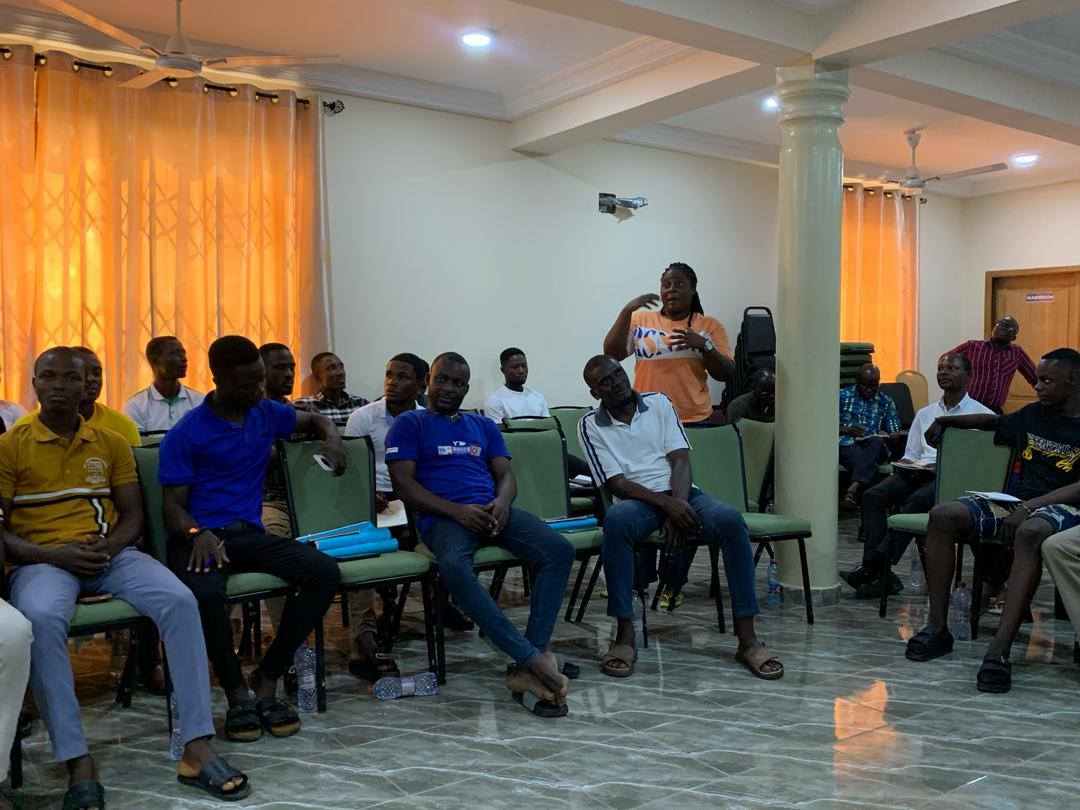
    The Sora Kaufman Fellowship, a flagship program by Advocates for Community Alternatives (ACA) to establish a network of African leaders and practitioners in the field of community-driven development and advocacy, has commenced in earnest with the six pioneer fellows going through a month-long orientation at Asiakwa near Kyebi in the Eastern Region of Ghana.

    The six Fellows, who are practitioners who collaborate with relevant stakeholders to deal with community and systematic challenges that hinder accessibility and involvement of citizens in decision-making, are undergoing a rigorous orientation within the period ahead of the implementation of each one’s innovative project, which must be community-driven and in line with the objectives of the fellowship program.

    Depending on the project chosen, each Fellow shall receive a $5,000 to $10,000 grant toward the implementation of their projects.

    Welcoming the Fellows at the Daasebre Hotel at Asiakwa, where the month-long orientation is underway, Nana Ama Nketia-Quaidoo, ACA’s Director of Community-Driven Development (CDD) Department, explained that the Sora Kaufman Fellowship is a 12-month project meant for people who have love for community-driven initiatives and are passionate about seeing communities develop holistically.

    “This not a school, it’s an engagement session, we’re all here to learn from each other, share experiences, and so we’re expecting that your one-month stay here is going to be more engaging. Let’s be open-minded and share among ourselves the success stories at our workplaces vis-à-vis the challenges so that at the end of the day we all draw useful lessons from them”, she emphasised.

    She said community development is practiced differently in various parts of the country and Africa based on the interpretation of what constitutes community development “but how are we improving on the systems we have created for our own community, how have you used your community service to improve on the existing structures and systems.

    “For community development, we always say that we are not there to change culture, which is unique to each group of people practicing it, but to use the knowledge we have or acquired to improve on the existing systems.”

    She said ACA anticipates rolling out the Sora Kaufman Fellowship program across Africa in the long term and congratulated the pioneer participants for setting the pace for others to follow.

    Earlier, ACA’s Project Manager, Mr. Godfred Osei Nimako, provided an overview of the one-month orientation for the Fellows.

    According to him, the training will involve field trips to some ACA partner communities to interact with the people, spend some days in those communities and later meet with the Head of Local Government Service in Accra as well as engage in some entertainment activities.

  • ACA participates in 3rd African Business and Human Rights Forum in Nairobi

    ACA participates in 3rd African Business and Human Rights Forum in Nairobi

    The 3rd African Business and Human Rights Forum has ended in Nairobi, Kenya, under the theme: “Promoting Responsible Business Conduct in a Rapidly Changing Context.”

    The three-day program brought together stakeholders from across Africa who took stock of progress and discussed challenges and opportunities for promoting responsible business and human rights conduct and corporate accountability in the region.

    It was co-organized by the United Nations Development Program (UNDP), the Office of the High Commissioner for Human Rights (OHCHR), the Working Group and UNICEF, in close collaboration with local and regional, continental and international actors.

    Advocates for Community Alternatives (ACA), a human right focused non-profit-making organization operating in West-Africa, was represented at the forum by its Legal Officer, Mustapha Mahamah, and co-hosted a side session on access to remedies as provided under the Organization for Economic Cooperation and Development (OECD) guidelines.

    This year, ACA joined OECD-Watch to co-host a session at the sidelines of the conference to foster policy dialogue and peer-to-peer learning on responsible business conduct (RBC) and the human rights implications of the emerging African and global regulatory and policy landscape in Africa, generating crucial insights as well as key recommendations for the adoption of strong regulatory and policy frameworks and business models that promote ethical and sustainable practices, in line with internationally agreed norms and principles.

    Outcomes

    At the end of the forum, different ways of using OECD guidelines were developed. These included a big push to move from voluntary initiatives and standards to hard law and policies on corporate accountability.

    The EU’s corporate sustainability due diligence directive was a big topic for discussion, with participants exploring both the challenges it may result in for African businesses as well as the opportunities it may present to raise the bar for accountability across value chains between the EU and Africa.

  • Akrofufu Chief, others donate towards FCAP implementation

    Akrofufu Chief, others donate towards FCAP implementation

    The chiefs and people of ten communities in the Atiwa West District of the Eastern Region have expressed their commitment toward the timely and successful implementation of all projects under the Facilitated Collective Action Process (FCAP), also called “Oman yie die” in Ghana.

    To this end, the Chief of Akrofufu, Osabarima Adugye Gyamfi and his elders are supporting the construction of a 500-bed capacity dormitory for the Akrofufu Technical Institute, which is one of the new projects being implemented under FCAP, with Gh.c 10,000.

    In addition, the chief and his elders have resolved to support the construction of the project with communal labour to ensure that the project is completed on schedule.

    The project, according to them, will not increase enrollment at the Akrofufu Technical Institute but will further boost Technical and Vocational Education and Training (TVET) in the area and the country as a whole.

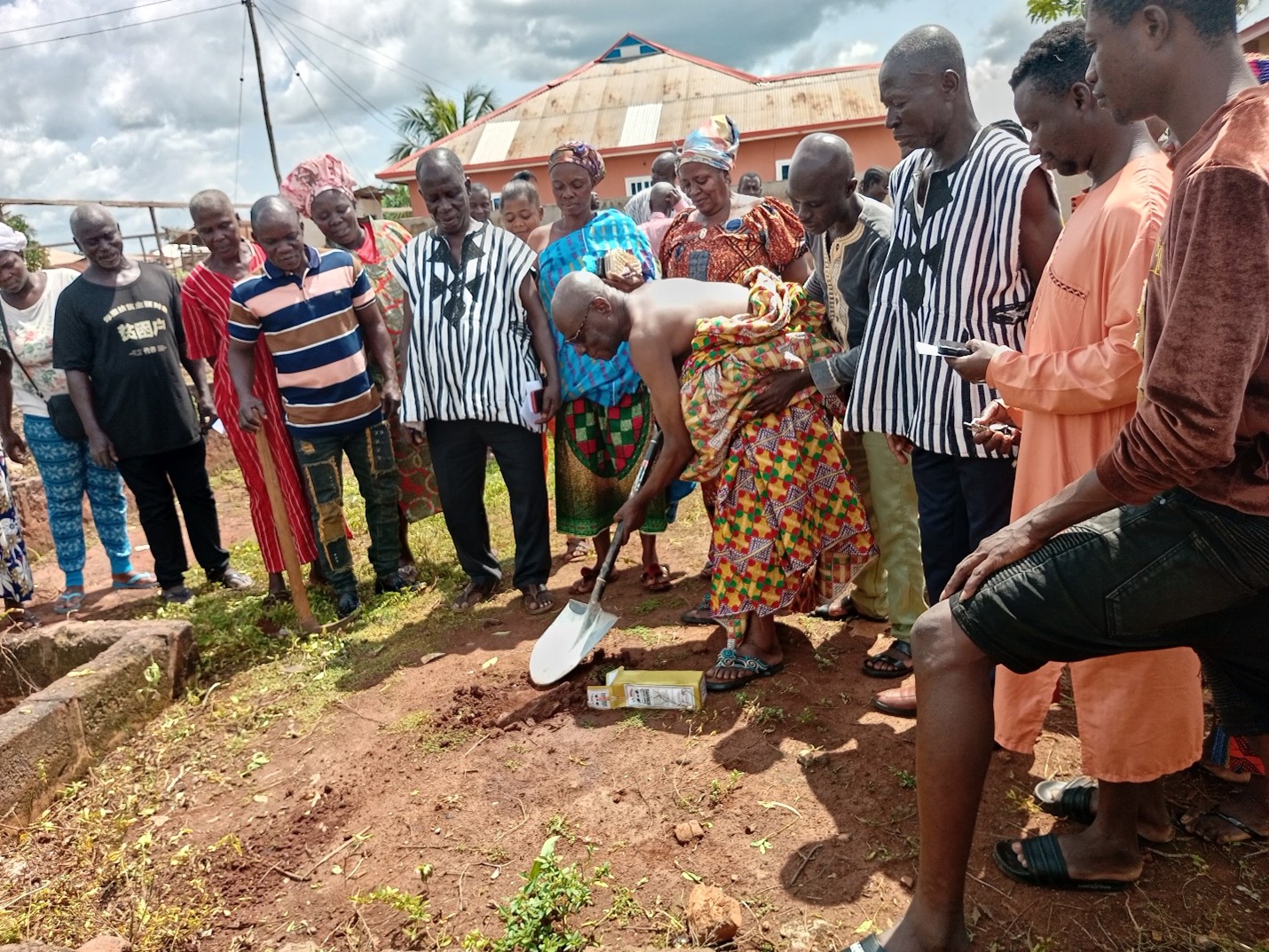
    At a ceremony at Akrofufu to symbolically signify the commencement of construction works on FCAP project in Asunafo, Muoso, Ekorso Akwadum, Akwasuaso and Akrofufu, Osabarima Adugye Gyamfi commended the Atiwa West District Assembly and Advocates for Community Alternatives (ACA), an Accra-based non-profit-making organization, for their collaboration which has resulted in several other projects across the area.

    A similar ceremony was held at Awenare to signify the commencement of projects in Pameng, Amonom, Banso, Akyem Akropong and Awenare.

    Madam Lordina Ofori-Atta, a native of Awenare, who was the Special Guest of Honour, donated Gh.c 10,000 toward the construction a 3-unit classroom block for the local Roman Catholic Junior High School and further pledged to galvanize support from Awenare citizens abroad in connection with other developmental initiatives in the town.

    The Atiwa West District Chief Executive, Douglas Puddy Amponsah described the collaboration with ACA as “very timely as it will not only bring visible improvements to the lives of residents but also carry the entire community along a development path that is in line with the Assembly’s Medium Term Development Plan.”

    He entreated people in the beneficiary communities to support the implementation of the projects with communal labour to augment the financial support from ACA and the District Assembly.

    “Any community member who does not participate in communal work in relation to this project willfully will be severely dealt with”, he emphasized.

    Geoffrey Fummey, a Community Trainer of ACA, recounted how the journey of community engagement to discuss, plan and choose a project of benefit to all started in March 2024 and with dedication, commitment and sacrifice of some devoted community members, the projects are finally being implemented.

    “I therefore encourage every community represented here to get to work immediately the sod is cut to finish their projects in good time. Remember we have just December 2024 as the deadline to complete all projects”, he stated.

    Background

    Advocates for Community Alternatives (ACA), a non-profit-making organization, has partnered with four District Assemblies in Ghana to implement the Facilitated Collective Action Process (FCAP), also called “Oman yie die” in 45 communities.

    The 45 communities in Abuakwa South, Fanteakwa South and Atiwa West District of the Eastern Region and Nkoranza South Municipality in the Bono East Region, as part of the partnership, have pledged to adopt FCAP as a community development tool to implement all community-based projects in line with their Medium-Term Development Plans.

    “Oman yie die” encourages communities to create a common development vision and equips them with skills and financial resources – including a $9,000 microgrant – to pursue it.

    As part of the collaboration, each district assembly is to provide supervision, technical support as well as counterpart funding of $1,000 towards each of the projects.

    Projects being provided under this partnership include laboratory, mechanized boreholes, markets, classroom blocks, a dormitory, teachers’ quarters, CHPS Compound, OPD facility, foot bridges, extension of electricity, water and the construction of community centers.

    Also being implemented in some of the communities are livelihood enhancement projects such as palm-oil production centre, pastries-making centre, corn-mill operations and a pig farm.

  • 45 communities implement ‘Oman yie die’ in Ghana

    45 communities implement ‘Oman yie die’ in Ghana

    Advocates for Community Alternatives (ACA), a non-profit-making organization, has partnered with four District Assemblies in Ghana to implement the Facilitated Collective Action Process (FCAP), also called “Oman yie die” in 45 communities.

    The 45 communities in Abuakwa South, Fanteakwa South and Atiwa West District of the Eastern Region and Nkoranza South Municipality in the Bono East Region, as part of the partnership, have pledged to adopt FCAP as a community development tool to implement all community-based projects in line with their Medium-Term Development Plans.

    “Oman yie die” encourages communities to create a common development vision and equips them with skills and financial resources – including a $9,000 microgrant – to pursue it.

    As part of the collaboration, each district assembly is to provide supervision, technical support as well as counterpart funding of $1,000 towards each of the projects.

    Projects being provided under this partnership include laboratory, mechanized boreholes, markets, classroom blocks, a dormitory, teachers’ quarters, CHPS Compound, OPD facility, foot bridges, extension of electricity, water and the construction of community centers.

    Also being implemented in some of the communities are livelihood enhancement projects such as palm-oil production centre, pastries-making centre, corn-mill operations and a pig farm.

    “This collaboration with ACA is very timely as it will not only bring visible improvements to the lives of residents but also carries the entire community along a development path that is in line with the Assembly’s Medium Term Development Plan”, Douglas Puddy Amponsah, the Atiwa West District Chief Executive, said at a ceremony held at Akrofufu and Awenare to kick-start the implementation of project.

    He entreated people in the beneficiary communities to support the implementation of projects with communal labour to augment the financial support from ACA and the District Assembly.

    “Our long-term goal is to have FCAP adopted as the main development tool by all district assemblies in the country. ACA is committed to supporting mobilizing threatened West African communities around a future they can fight for, through the power of law and community-driven development”, Nana Ama Nketia-Quaidoo, ACA’s Director of Community-Driven Development (CDD) said.

    “By rolling out Oman yie die at scale, we will show that CDD is the most sustainable, cost-effective way to give wings to communities’ dreams for development and protect them from threats to their lives and livelihoods. We want to see government authorities across Ghana cooperating with all of Ghana’s communities to make sure that local people are empowered to pursue their own vision for the future.”

    Last year, ten communities namely Abompe, Saaman, Bososo, Kplandey, Nsutam, Dome, Dwenase and Heman in Fanteakwa South District; and Asikam and Ahwenease in Abuakwa South Municipality began implementing FCAP as part of CDD’s expansion. This was after the successful piloting of the project in Donkro Nkwanta, Nwoase, Salamkrom and Kyeredeso in the Bono East region as well as Juaso, Sagyemase and Nsuapemso.

    There are plans to further expand to a lot more communities around the country.

  • Tribunal Judiciaire in Paris begins hearing Zogota massacre victims

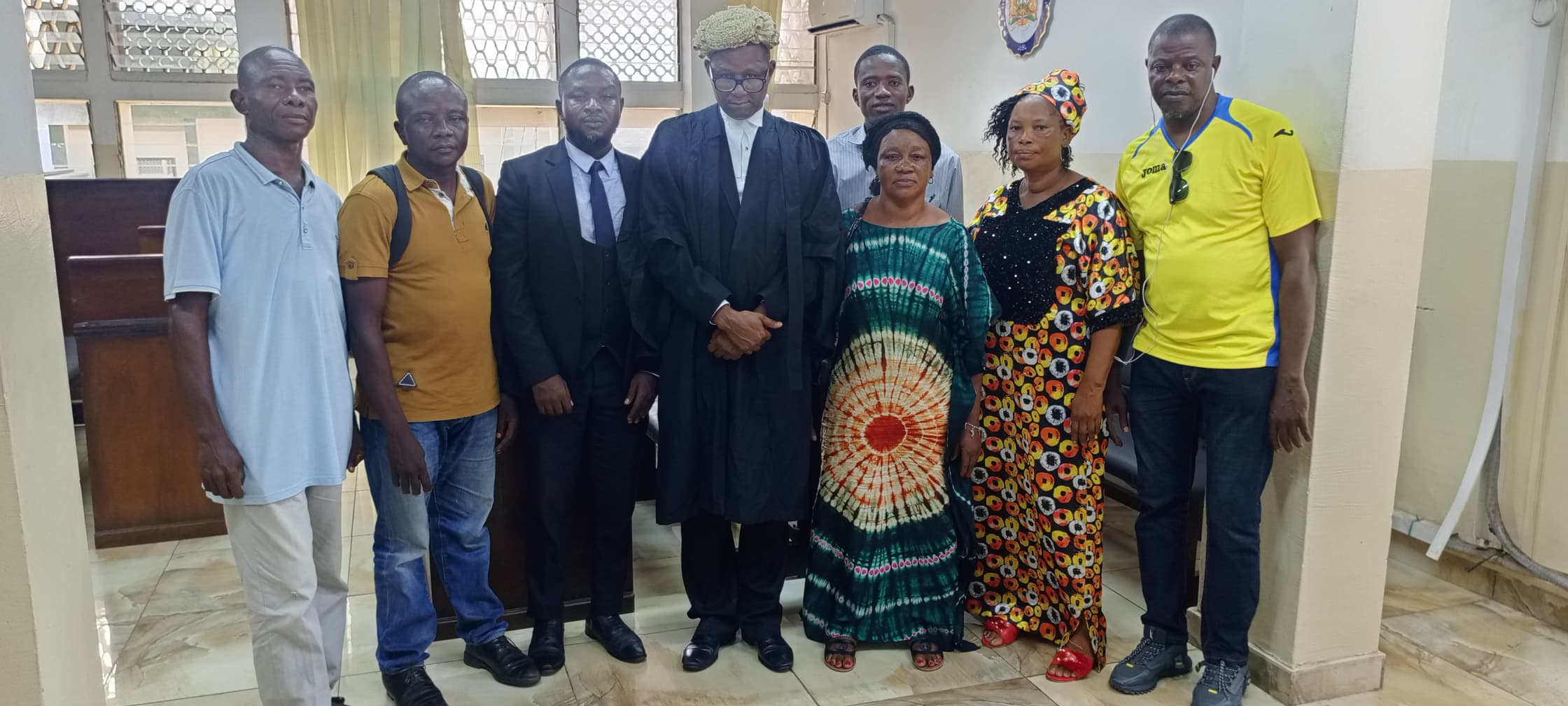
    The Tribunal Judiciaire in Paris, France has begun hearing the case brought before it by the survivors of the 2012 massacre by state security forces in the village of Zogota in the West African country of Guinea.

    The hearing was inconclusive as the government of Guinea was not represented, and as such not many arguments took place at the courtroom.


    The Presiding Judge said she would deliver her final decision on October 9, but it is still possible that she would reopen the arguments and give both sides a chance to submit more documentation and arguments.


    Among others, the judge asked lawyers for the plaintiffs to submit originals of some key documents and demonstrate that the government of Guinea was notified of the legal action.


    According to the lawyers, the Guinean government has been notified of the legal action while efforts are underway to furnish the court with the key documents being requested for.

    Exequatur suit

    In October last year, some survivors of the 2012 massacre by state security forces in the village of Zogota in the West African country of Guinea run to the Tribunal Judiciaire in Paris, France, to seek justice through a lawsuit against the Guinean state.

    Earlier in 2018, these survivors brought their case to the Abuja-based ECOWAS Court of Justice after their complaints were repeatedly stalled and ignored in the Guinean courts.  The ECOWAS Court found that Guinea had violated its international human rights obligations and ordered it to pay 4.56 billion Guinean francs (then approximately $436,000) to the plaintiffs, but the government is yet to comply.

    This led to an exequatur suit filed by the massacre survivors at the tribunal in Paris, which they hope will grant exequatur, or recognition, of the ECOWAS Court judgment.  The purpose of the exequatur suit is to recognize that the ECOWAS Court decision is enforceable in France, on an equal basis with judgments of the French courts.

    Exequatur, if granted, would allow the massacre survivors to locate and seize certain Guinean state assets in France to satisfy the ECOWAS Court’s compensation order.

    One of the biggest weaknesses in the international justice system for human rights abuses is the difficulty in enforcing human rights tribunals’ judgments against states, so this exequatur action could fill a major accountability gap.”

    High stakes

    The stakes in this action are high because not only could success make the difference that allows the Zogota massacre survivors to finally receive justice, but it would also pioneer an important new strategy for victims of grave abuses worldwide.

    “The exequatur procedure seems appropriate to us because it will allow the rights of victims of this atrocity to be restored. This is because of the refusal of the Republic of Guinea to execute the judgment of the ECOWAS Court of Justice”, Foromo Frederic Loua, one of the Lawyers for victims said in an interview.

    For his part, one of the village chiefs stated that: “We have suffered a lot from this atrocity, we lost close relatives, fathers, children and friends. And for a very long time we have continued to suffer, we have had no support from the Guinean authorities to date, we are asking for compensation for our losses and know that we can count on French justice.”

  • Tribunal Judiciaire in Paris hears Zogota massacre victims today

    Survivors of the 2012 massacre by state security forces in the village of Zogota in the West African country of Guinea are keeping their fingers crossed as hearing of their Exequatur suit begins today at the Tribunal Judiciaire in Paris, France.

    The stakes in this action are high because not only could success make the difference that allows the Zogota massacre survivors to finally receive justice, but it would also pioneer an important new strategy for victims of grave abuses worldwide.

    In October last year, some survivors of the 2012 massacre by state security forces in the village of Zogota in the West African country of Guinea run to the Tribunal Judiciaire in Paris, France, to seek justice through a lawsuit against the Guinean state.

    Earlier in 2018, these survivors brought their case to the Abuja-based ECOWAS Court of Justice after their complaints were repeatedly stalled and ignored in the Guinean courts.  The ECOWAS Court found that Guinea had violated its international human rights obligations and ordered it to pay 4.56 billion Guinean francs (then approximately $436,000) to the plaintiffs, but the government is yet to comply.

    This led to an exequatur suit filed by the massacre survivors at the tribunal in Paris, which they hope will grant exequatur, or recognition, of the ECOWAS Court judgment.  The purpose of the exequatur suit is to recognize that the ECOWAS Court decision is enforceable in France, on an equal basis with judgments of the French courts.

    Exequatur, if granted, would allow the massacre survivors to locate and seize certain Guinean state assets in France to satisfy the ECOWAS Court’s compensation order.

    One of the biggest weaknesses in the international justice system for human rights abuses is the difficulty in enforcing human rights tribunals’ judgments against states, so this exequatur action could fill a major accountability gap.