Category: Home Slider

  • ACA’s community advocacy yields positive results as George Asante is fully compensated by Kibi Goldfields

    ACA’s community advocacy yields positive results as George Asante is fully compensated by Kibi Goldfields

    Mr. George Owusu Asante of Akyem Juaso, the National Vice-President of the Citizens Committee Network (CiCoNet), was in a state of disbelief when ACA’s Legal Officer, Mustapha Mahamah, broke the news to him that Kibi Goldfields Ltd (KGL) have finally fully compensated him for his lost lands, which were taken about two and half years ago by Kibi’s sub-contractor, BSD Mining Services.

    “I’m speechless, and I don’t even know what to say except to thank God and ACA for the relentless fight for my rights all these years. The advocacy mounted by the Citizens Committee Network (CiCoNet) has really paid off, and I’m so grateful”, Mr Asante said.

    Mr. Asante is among several people in Juaso and nearby communities, such as Sagyemase and Nsuapemso, who lost their farmlands to mining companies in the past few years. In most of the cases, several of the affected landowners were paid only a small fraction of the replacement cost of their land and crops as compensation, and the mining companies failed to respect the procedures for acquiring land as set out in Ghana’s Minerals and Mining Act 2006, Act 703.  The loss of land without adequate compensation has deprived entire households of their main sources of livelihood.

    Background

    On behalf of the people of Juaso, Advocates for Community Alternatives (ACA) addressed petitions to the Minerals Commission and the Ministry of Lands and Natural Resources in July 2022, complaining that KGL and its subsidiaries and sub-contractors had repeatedly violated laws and regulations relating to the public disclosure of mining plans on community land, as well as the prior negotiation and adequate compensation of those whose surface rights are disturbed by new mining operations.  The Ministry responded with a promise to hold KGL and other mining companies to account but has yet to take concrete action.

    In 2023, the CiCoNet of Juaso and the nearby communities of Sagyimase and Nsuapemso filed a complaint with the Minerals Commission about mining companies’ unfilled mining pits.  The Minerals Commission undertook a tour of the affected sites and ordered KGL and others to remediate them.

    Media campaign

    In July 2023, CiCoNet led a team of Ghanaian journalists to some mining areas in Juaso and Nsuapemso to witness the devastating effects of mining activities in these areas, especially with regard to the havoc created by uncovered mining pits, diversion of water bodies, the destruction of farmlands and mining activities close to settlements.

    This elicited immediate response from the Minerals Commission, which then began engaging ACA, CiCoNet and the mining companies on the way forward. BSD Mining Services initially agreed to fully compensate Mr George Owusu Asante for taking over his farmlands for mining activities, but the company ultimately closed its operations and left the site without fulfilling this promise.

    ACA’s legal team then reached out to Kibi Goldfields, which is ultimately responsible for compliance with all laws – including on compensation – within its concession.  On Tuesday April 2, 2024, Kibi officially issued the cheque to ACA’s Legal Officer, Mustapha Mahamah, who in turn presented it to Mr. George Owusu Asante, the following day.

    ACA is an Accra-based non-profit-making organization that supports West African communities threatened by extractive activities by multinational entities to take control of their own development and give them the tools to advocate for their own vision of the future.
  • Training on air quality for CiCoNet members ends at Asiakwa

    Training on air quality for CiCoNet members ends at Asiakwa

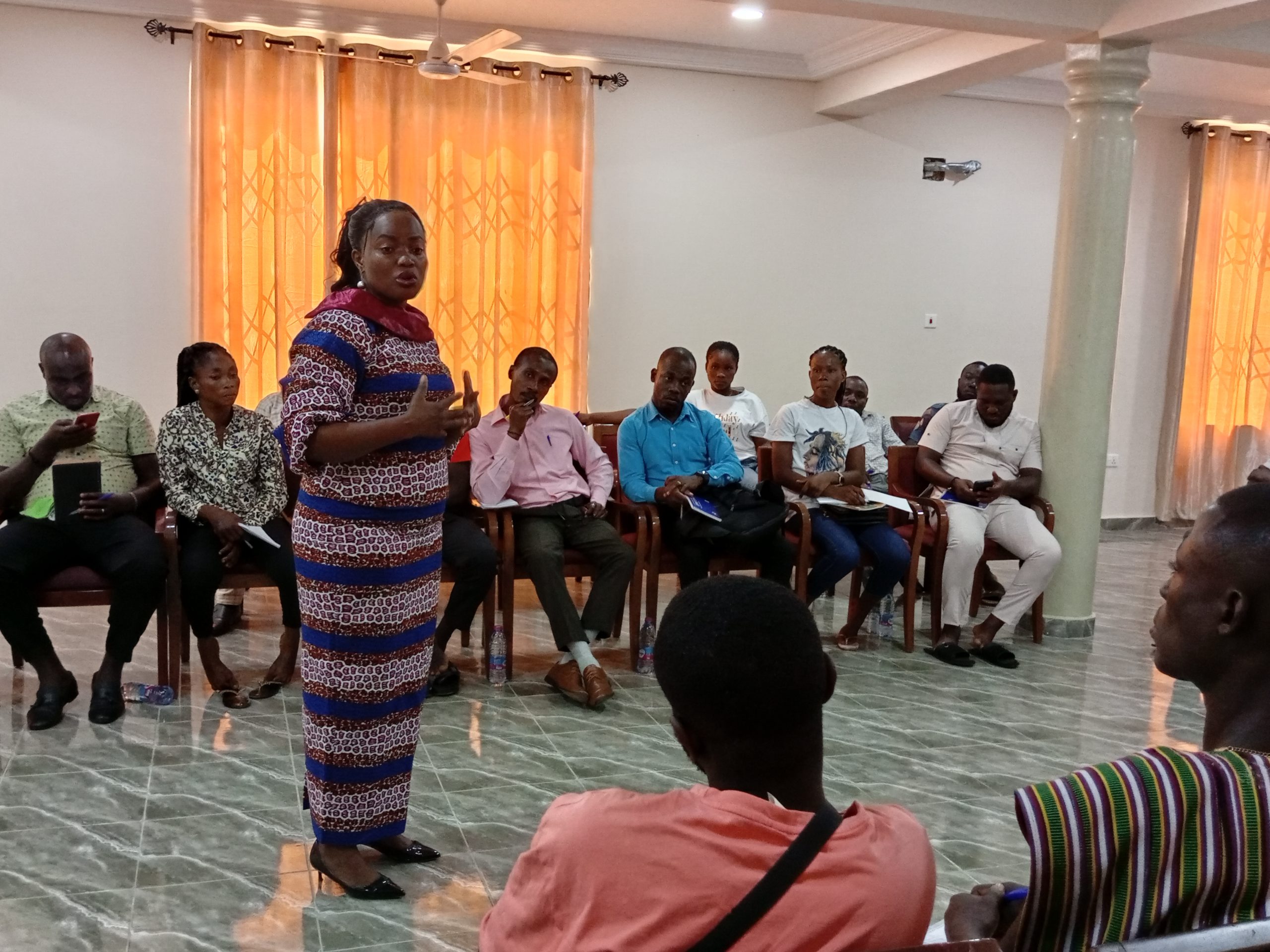
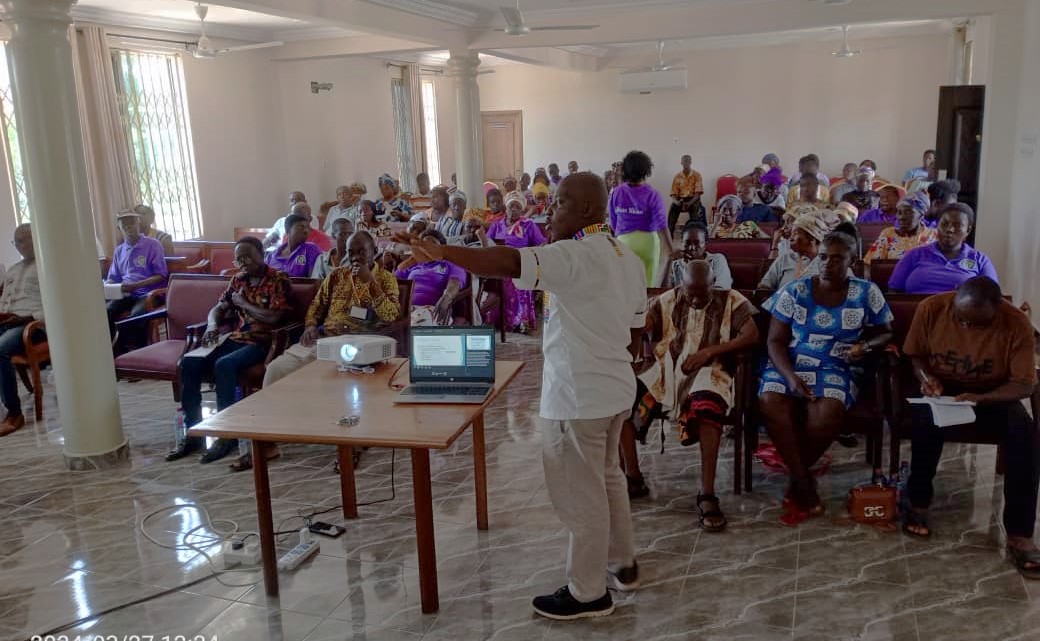
    It was a mixture of education and entertainment as about 90 members of the Citizens Committee Network (CiCoNet) in Fanteakwa South, Abuakwa South and Atiwa West districts of the Eastern region were taken through a day’s training program on the basics of air quality.

    CiCoNet members from Juaso, Nsuapemso, Sagyemase, Abompe, Dwenase, Hemang, Dome, Saamang, Nsutam, Kplandey, Bososo, Ahwenease and Asikam converged at Asiakwa for the training organized by Advocates for Community Alternatives (ACA), an Accra-based non-profit-making organisation that supports West African communities threatened by extractive activities by multinational entities to take control of their own development and give them the tools to advocate for their own vision of the future.
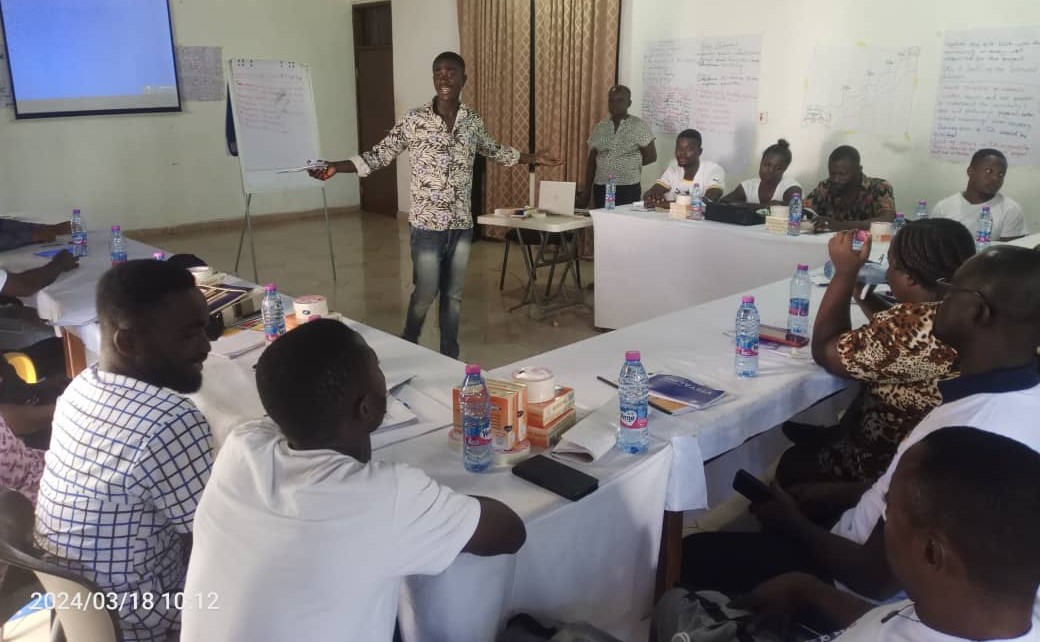
    ACA’s Science Advisor, Dr. Kwabina Ibrahim, took the participants through topics such as Conventional Air Pollutants, Climate Pollutants and Health Effects of Air Pollution, among others.

    He explained that some human activities have adverse impacts on the ozone layer thereby contributing to the much talked about climate change.

    Sharing what she learnt from the workshop, Madam Gladys Adwoa Aso of Nsutam CiCoNet noted that the program had taught her that poor air quality has adverse health implications on crops and rainwater.

    “I learnt that the quality of rainwater has changed over time due to the change in the environment and so going forward, I won’t be drinking rainwater as I used to do due to is associated the health implications.”

    Another participant, Juliet Konama of Sagyemase CiCoNet, described the workshop as an eye opener as she learnt a lot about how various household activities contribute to air pollution.

    “I do set fire on my refuse every day, and I’ve learnt today that the smoke emanating from such fires do contribute to air pollution and so I need to figure out better ways of disposing off my refuse. Even if I should continue setting fire on my refuse, I must wear nose-mask to protect myself against any infections”, she explained.

    For her part, Miss Gertrude Oppong of Asikam CiCoNet said she had learnt to report any organisation or an individual that engages in activities which pollute the environment to the Environmental Protection Agency (EPA) for the appropriate action to be taken.

    About CiCoNet

    Citizens’ Committee Network (CiCoNet) is ACA’s answer to the threat that our partner communities face from powerful economic interests.  Whereas FCAP gives communities hope for a better economic future, CiCoNet is an interface group of concerned citizens who help protect the communities’ development vision.  CiCoNet members are trained to speak with government officials and other stakeholders on behalf of their communities, raising concerns in ways that allow local authorities to help resolve key community concerns.

    Through CiCoNet, our communities have won key victories, such as prompting the suspension of a highly polluting mining company’s operating permit and inducing companies to fill abandoned pits that endangered the welfare of children and livestock.

  • Community-Based Facilitators in Nkoranza South share lessons learnt after training

    Community-Based Facilitators in Nkoranza South share lessons learnt after training

    Community-Based Facilitators (CBFs) play a lead role in the implementation of the Facilitated Collective Action Process (FCAP), which aims at strengthening local participation in the implementation of the medium-term development plans of some selected district and municipal assemblies in Ghana.

    These CBFs are responsible for mobilizing their communities and monitoring projects being implemented under FCAP, otherwise known as “Oman yie die.”

    They usually undergo a week-long training prior to the implementation of the FCAP in their respective communities. One of such training programmes has taken place at Nkoranza in the Bono East region for some staff of the Nkoranza South Municipal Assembly and CBFs from Asuano, Barnofour, Abountem, Akuma, Brahoho, Nkwabeng, Akumsa Domase, Bonso and Bredi, all in Nkoranza South as well as Akwabuoso and Ekorso Akwadum in the Atiwa West district of the Eastern region.

    The training was organised by the Community-Driven Development (CDD) department of Advocates for Community Alternatives (ACA), a non-profit-making organisation which supports West African communities facing threats to their human rights at the hands of multinational corporations.

    There were presentations, focused-group discussions, role-plays and field visits to selected communities which have successfully implemented FCAP, among others. At the end of the training session, some of the participants shared their views about the lessons they had learnt. We bring you excerpts of views shared by some of the participants after the training program in Nkoranza.


    Gifty Acheampong, Assistant Planning Officer, Nkoranza South Municipal Assembly

    This training has taught me that we can implement projects by paying less when we involve the community members because when they are being involved, they own the project and can support us in so many ways that we cannot even quantify in monetary terms to undertake the project as we want it to look like.


    John Tuffuor, Community-Based Facilitator, Akuma, Nkoranza South, Bono East

    If for nothing at all, I have learnt to be bold when leading a group of people and as the CBF for my community, this would help me in my daily work. Also, I noticed that community-driven projects undertaken through FCAP is cost-effective as compared to similar projects executed by the government so I will recommend to the government to critically study this concept and replicate it in the various districts. I think government can collaborate with ACA to make this happen. This concept of community development carries the entire community along, with community members assisting with communal labour so it’s helpful.


    Kwame Bonsu, Community-Based Facilitator, Baanofour, Nkoranza South, Bono East

    Before coming to this training session, I didn’t know how to speak at a gathering. I always found it difficult speak out in public but today I can boldly speak and express myself anywhere I find myself, thanks to this training by ACA. So, for me, that is one of the main benefits I have derived from the training program.


    Eric Owusu, Community-Based Facilitator, Akumsa Domase, Nkoranza South, Bono East

    Through this training, I have learnt that even as an individual, I should be able to mobilize and organize my community for development. I have learnt how to lead discussions about development initiatives in my community and I’m positive that I’m going to live up to expectation and help push the development of my community forward.


    Peter Donkor, Community-Based Facilitator, Bredi No.1, Nkoranza South, Bono East

    One thing I have picked up from this training is that there is power in unity. If a community comes together with one accord, there is a lot they can do to turn their fortunes round.


    Abraham Ayisa, Community-Based Facilitator, Ekorso Akwadum, Atiwa West district (Eastern Region)

    The need to encourage women’s participation in decision-making at the community level was key at the training programme. In view of this, there is the need to deeply involve women in all the discussions about the planning, execution, monitoring and completion of the project.


    Felicity Acquah, Community-Based Facilitator, Akwabuoso, Atiwa West district (Eastern Region)

    Through this training, I have come to the realization that if the local government authority would allow communities to have a say in project identification and implementation, it would go a long way to galvanize more support and enthusiasm from the people in the process. This will also ensure that the community members will embrace the project and support its execution whole-heartedly.


    Prince Kwabena Owusu, Community-Based Facilitator, Nkwabeng, Nkoranza South, Bono East

    This training has had enormous benefits in us as participants. First of all, it has instilled in us the spirit of communalism and also engendered networking among people from other communities, which will help us a lot, going forward. I have learnt that once there is unity of purpose among us as a community, devoid of divisive tendencies, we can really achieve a lot.


    Benjamin Opoku, Community-Based Facilitator, Brahoho, Nkoranza South, Bono East

    ACA has really supported several communities to take control of their futures and I am of the conviction that my community will soon be able to reach that level of development when we also start the implementation of FCAP.


    Seth Owusu Boadi, Unit Head, Community Development, Nkoranza South Municipal Assembly

    This training reminds me of a quote by Ghana’s first president, Dr. Kwame Nkrumah, that: “The black man is capable of managing his own affairs.” What this this means to us is that the communities can take their destinies into their own hands, have a common vision and pursue it to their own benefit without necessarily waiting for the government. One lesson here is that, when the community initiates and leads in the implementation of a project, that project becomes very successful and very useful.

  • Government asked to adopt FCAP for accelerated development

    Government asked to adopt FCAP for accelerated development

    Government has been asked to adopt the Facilitated Collective Action Process (FCAP) as the most effective tool in planning and executing development projects in the various district, municipal and metropolitan areas in the country.

    The call was made by Community-Based Facilitators (CBFs) after they had undergone a week-long training at Nkoranza in the Bono East region as part of preparations towards the implementation of FCAP in parts of the Nkoranza South municipality and the Atiwa West district of the Eastern region.

    Also called “Oman yie die”, FCAP aims at strengthening local participation in the implementation of the medium-term development plans of beneficiary districts in Ghana through the active involvement of the community members and is currently being implemented in Fanteakwa South, Abuakwa South, Atiwa West and Nkoranza South by Advocates for Community Alternatives (ACA), a non-profit-making organization which supports West African communities facing threats to their human rights at the hands of multinational corporations.

    FCAP is a community-driven tool that keeps decision-making and community development in the hands of the local community members. It is a tool widely used by Spark Micro-grant, ACA’s partner NGO, in countries such as Uganda, Rwanda, Burundi and Congo to stimulate and accelerate community development initiatives.

    The main goal of this initiative is to have it replicated in all districts in the country in the long-term.

    The Community-Based Facilitators (CBFs) play a lead role in the implementation of FCAP and are responsible for mobilizing their communities and monitoring projects being implemented.

    Cost-effective

    In an interview, the Community-Based Facilitator (CBF) for Akuma near Nkoranza, John Tuffuor, called on the government to collaborate with ACA to replicate FCAP in the rest of the country.

    “I noticed that community-driven projects undertaken through FCAP is cost-effective as compared to similar projects executed by the government so I will recommend to the government to critically study this concept and replicate it in the various districts”, he said.

    He added: “I think government can collaborate with ACA to make this happen. This concept of community development carries the entire community along, with community members assisting with communal labour so it’s helpful.”

    Community ownership

    Another participant, Gifty Acheampong, the Assistant Planning Officer of the Nkoranza South Municipal Assembly, noted that FCAP ensures that communities own the project and thus provide all the needed support required for its implementation.

    “This training has taught me that we can implement projects by paying less when we involve the community members because when they are being involved, they own the project and can support us in so many ways that we cannot even quantify in monetary terms to undertake the project as we want it to look like”, she said.

    “I have come to the realization that if the local government authority would allow communities to have a say in project identification and implementation, it would go a long way to galvanize more support and enthusiasm in the process. This will also ensure that the community members will embrace the project and support its execution whole-heartedly”, Felicity Acquah, the CBF for Akwabuoso in the Atiwa West district of the Eastern region also said.

    The participants were drawn from Asuano, Barnofour, Abountem, Akuma, Brahoho, Nkwabeng, Akumsa Domase, Bonso and Bredi, all in Nkoranza South of the Bono East region as well as Akwabuoso and Ekorso Akwadum in the Atiwa West district of the Eastern region.

  • ACA team meets Similimi community over ECOWAS Court ruling amidst rich cultural display

    ACA team meets Similimi community over ECOWAS Court ruling amidst rich cultural display

    Similimi Community welcomed Advocates for Community Alternatives (ACA) staff for a combination of jubilation and serious discussions on the outcome of a recent ruling by the ECOWAS Court of Justice, which condemned the Republic of Côte d’Ivoire for failing to halt the negative impacts of manganese mining in the area.

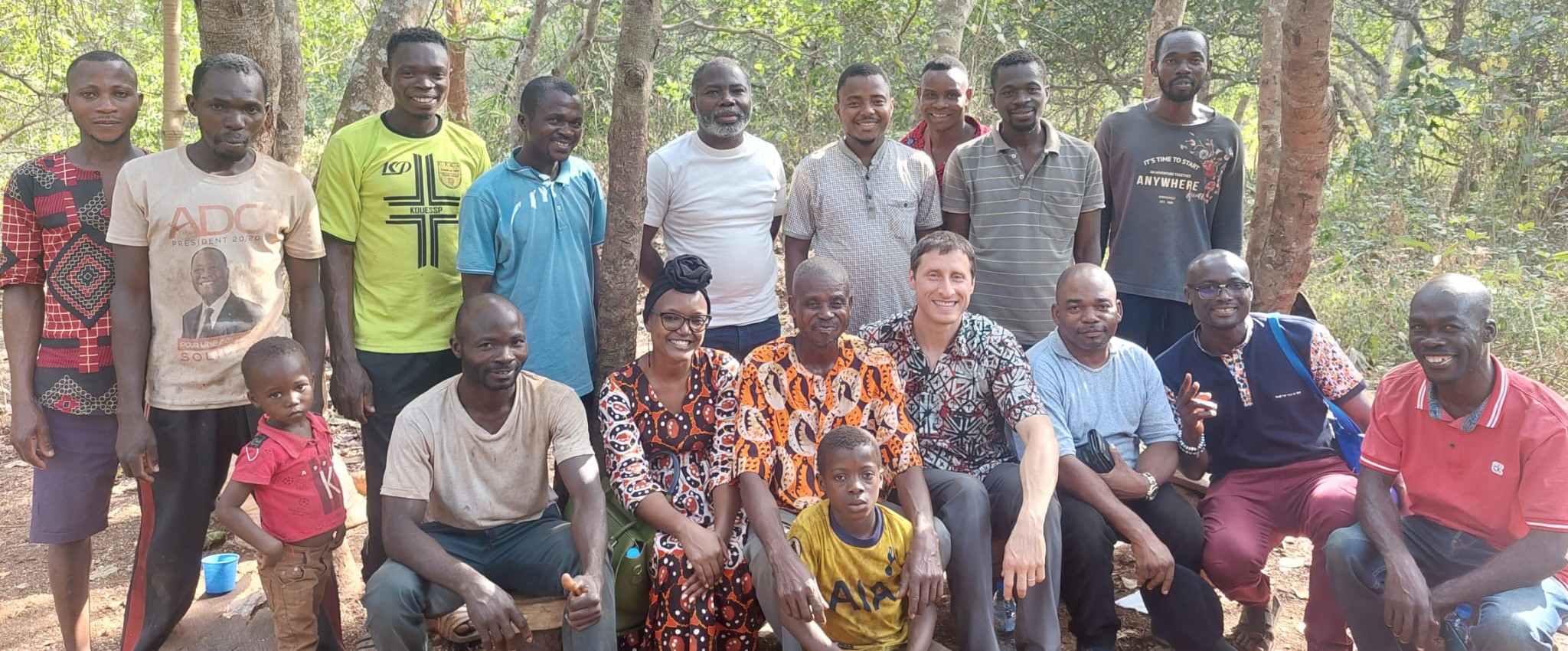
    African culture was at its best.  Jonathan G. Kaufman, the Executive Director of ACA, and Lalla Toure, ACA’s Legal Coordinator, were treated to a rich cultural display and mouth-watering local dishes as the community celebrated the Court’s decision of November 30, 2023 in Adou Kouame and 14 others v. Côte d’Ivoire, which validated the claims of 14 representative inhabitants of Similimi, along with a communal self-help organization.  Festivities included dancing, drumming, and a todjo, a traditional meal prepared by men in the bush.

    The court found the Ivorian government culpable of human rights violations in connection with destructive mineral extraction on their traditional lands by Bondoukou Manganese Ltd, an Indian-owned mining company. The government was ordered to pay 20 million CFA Francs to eleven individual plaintiffs, repair environmental damage, resettle the community, and prosecute the authors of the environmental destruction at Similimi.

    The ACA team was joined by representatives of Groupe de Recherche et de Plaidoyer sur les Industries extractives (GRPIE), a non-profit organization that advocates for democratic, transparent, and responsible management of natural resources for sustainable socio-economic development in Côte d’Ivoire and globally.  GRPIE has been working on behalf of Similimi and other communities affected by the operations of Bondoukou Manganese for over a decade.

    The Hopeful Path Ahead

    Celebration aside, ACA’s visit to Similimi was an opportunity to explain the decision of the Court to Adou Kouamé, a key figure in the matter and his people, and to discuss the way forward in the matter.

    The team commended the entire community of Similimi for their tireless efforts at pursuing the case to its conclusion and encouraged them to remain united towards their common good.  Given the constant delays that many successful claimants face in executing ECOWAS Court decisions, however, they should not anticipate that the 20 million CFA Francs awarded by the court to each of the eleven individual plaintiffs and the order to repair the environmental damage caused by the mining project will be honored immediately.

    ACA, GRPIE, and community members all agreed that the Court’s award to the eleven claimants should be managed in a way that benefits the entire community.

    The Fight for Justice

    14 representative inhabitants of Similimi, along with a communal self-help organization, filed a complaint in the ECOWAS Court of Justice in April 2020. The communities were supported by ACA and GRPIE in their capacity as members of the Public Interest Lawyering Initiative for West Africa (PILIWA). The plaintiffs accused the Côte d’Ivoire of illegal expropriation, non-compliance with the rules of due diligence, and complicity in environmental, economic, and cultural damage.

    The Court’s November 30 ruling determined that the State was responsible for violations of Similimi residents’ rights to a healthy environment, to health, to an adequate standard of living, to private and family life, and to freedom of worship and religion. The Court dismissed the Applicants’ claim that their right to property was violated, for lack of sufficient evidence of ownership.  “Even if the Court did not recognize our proprietary right to our ancestral lands, we are indeed happy that our voices were heard by a regional tribunal and that the suffering that we have endured over the years has not been in vain,” said Adou Kouamé, one of the complainants.

  • Njala University in Sierra Leone benefits from ACA’s Community Science training

    About 50 students and faculty members of Njala University in Sierra Leone have benefitted from a day’s training on Community Science facilitated by Advocates for Community Alternatives (ACA), Ghana-based NGO which supports West African communities facing threats to their human rights at the hands of multinational corporations.

    The primary goal of the training was to introduce the participants to the concept of community science so they could practice it in communities they find themselves.

    ACA’s Science Lead, Dr Kwabina Ibrahim, introduced the concept of community science to the participants during which he explained the various relevant aspects of the concept, especially with regards to the involvement community members in the design of sampling protocols, the need to discuss and present technical data to communities, and the importance of validating results with local communities to ensure accuracy and uptake.

    He expressed his organization’s commitment to collaborating with scientists to assist communities with scientific knowledge.

    “Community participation in the production of scientific knowledge about their land, soil, and water is key to ensuring that they are in control of their own future, especially when they come under threat from extractive activities,” said Dr. Ibrahim.  “ACA is thankful to the students and staff of the Njala University for helping to ensure that young scientists are prepared to involve communities in their fieldwork.”

    In his remarks, the Head of the Chemistry Department, Dr. Yahaya Kudush Kawa, expressed his appreciation to ACA for the training which, according to him, has enhanced the capacity of the participants as scientists, adding that it will go a long way to enable them to initiate their own community science projects in future.

    Dr Kawa was of the view that the training would greatly enrich research activities of the university, going forward, and appealed to ACA to routinely hold such sessions in the university owing to its enormous benefits to the students.

    Professor Juana Paul Moiwo, the Director of Research of Njala University, who assisted in moderating the training session, described ACA’s Community Science concept as “science for everybody” saying: “it allows both professional scientists and community members to work together for the good of the community.”

    He was also of the view that this concept is an opportunity for scientists to collaborate with communities to enhance their research works, especially with regards to making their research findings acceptable to community.

    Some participants, who shared their views about the training were very excited about content and acknowledged that it had greatly enhanced their knowledge in community science.

  • Newly trained Community-Based Facilitators poised for action

    Newly trained Community-Based Facilitators poised for action

    In line with its resolve to continue impacting positively on communities, Advocates for Community Alternatives (ACA) has trained 66 Community-Based Facilitators (CBFs) drawn from 19 communities in Atiwa West and Abuakwa South districts of the Eastern region of Ghana on the effective implementation of the Facilitated Collective Action Process (FCAP).

    Also called Oman yie die, FCAP is a partnership between ACA and partner the district assemblies as part of measures to strengthen local participation in the implementation of the Assemblies’ medium term development plans.

    The training program, which took place at Asiakwa, was also attended by 16 officials of the two district assemblies.

    The participants, which included 16 staff of the two partner district assemblies, were equipped with knowledge on participatory approach to development, conflict resolution and the need to accord maximum respect to their communities’ voices on pertinent issues affecting their welfare.

    ACA’s Director of Community-Driven Development (CDD), Nana Ama Nketia-Quaidoo led her team to take the participants through a number of presentations, role-plays and group discussions, among others.

    The CBFs were drawn from Ehiamankyene, Dadetsunya, Ahenkwa, Ahinkwa Sisi, Bepoase, Asedja, Nsuta, Nkankama, Subrima, Gyampomani, Awenare, Akropong, Pameng, Banso, Asunafo, Amonom, Akrofufu, Muoso, Akukuso, Akwaboaso and Asiakwa.

    The rest of the communities represented at the eight-day training programme were Adadientem, Apapam, Akwadum, Apedwa, Adortowa, Bonposo No. 1, Addonkwanta, Operko, Latemu, Agyapomaa, Amanfrom, Maase Payaase, Oboperkunya and Asafo.

  • Abompe embarks on economic transformation journey through poultry business

    Abompe embarks on economic transformation journey through poultry business

    More jobs are expected to be created soon in Abompe and its environs through the poultry business value-chain and turn around the socio-economic fortunes of residents, especially the youth.

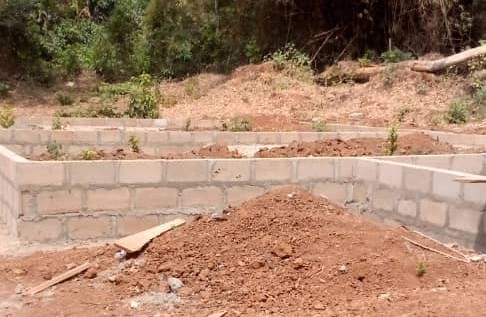
    To this end, the entire community of Abompe led by Barima Kwabena Addo, the chief of the area, has commenced construction works on key structures that will house the poultry and other auxiliary structures.

    The project has just commenced with concrete works being done on the sub-structure, after which construction works on the main building (the super structure) will continue.

    This local economic transformation journey by the chief and people of Abompe in the Fanteakwa South district of the Eastern region of Ghana is anchored through the Facilitated Collective Action Process (FCAP), which aims at strengthening local participation in the implementation of the Assembly’s medium term development plan.

    Also called Oman yie die, the project is a partnership between Advocates for Community Alternatives (ACA), a non-profit-making organisation, which helps West African communities that are threatened by the destructive impacts of extractive projects to take control of their futures, and the Fanteakwa South District Assembly.

    ACA is supporting the Abompe Poultry Business with a $9,000 micro-grant.

    “As a community, we resolved to also contribute towards this laudable project by mobilizing ourselves to provide the basic structures to be used as the poultry farm so that the funds expected from ACA can be channeled mainly into the poultry business, we have envisioned for ourselves”, Barima Kwabena Addo said in an interview.

    “As the chief of Abompe, I’m leaving no stone unturned to ensure the successful completion of this project owing to the invaluable benefits it holds for both the present and the future generations of the town.”

  • ACA supports Saamang community to renovate local R/C school block

    ACA supports Saamang community to renovate local R/C school block

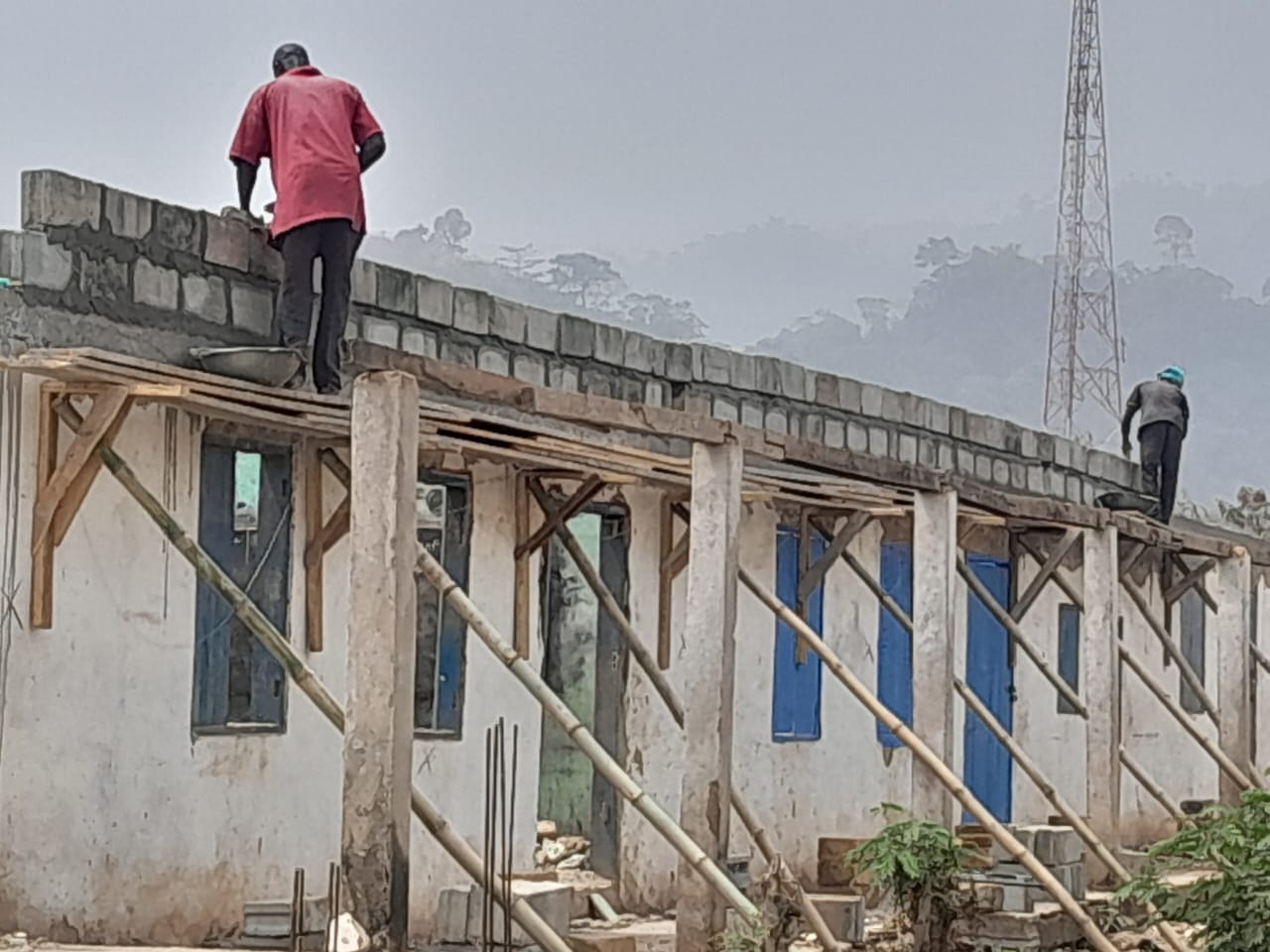
    Renovation works on eight classrooms and an office for the local Roman Catholic basic school at Saamang in the Fanteakwa South District of the Eastern region of Ghana are progressing steadily under the Facilitated Collective Action Process (FCAP), a partnership between the district assembly and Advocates for Community Alternatives (ACA), a non-profit-making organisation, which helps West African communities that are threatened by the destructive impacts of extractive projects to take control of their futures.

    When completed, the renovated block will provide a more convenient teaching and learning environment for the kindergarten and the primary sections of the school and ultimately contribute to the overall improvement in educational standards in the district.

    Moreover, the enrolment is expected to increase by 10% one year after it has been completed and put to use, reduce dropout rate by 5% as well as reduced the cost of education for pupils in Saamang by 15%.

    So far, the entire roof of the school has been demolished while new beams with iron rods are being fixed. Also, the pillars are being replaced with stronger ones before the building is re-roofed.

    Out of its $9,000 (approximately Gh.c 108,000) microgrant earmarked for the project under FCAP, the community has so far spent Gh.c 60,000 (approximately $4,500).

    Also called Oman yie die, FCAP is a partnership between ACA) and the Fanteakwa South District Assembly as part of measures to strengthen local participation in the implementation of the Assembly’s medium term development plan.

    In an interview, the Assembly member for the Saamang Electoral Area, Desmond Ofori Abrokwa, said the state of the school block prior to the start of the renovation works was deplorable and adversely affected enrolment as well as effective teaching and learning.

    “It is our hope that when the renovation works are completed, our kids will have a much better conducive environment to go about their studies. Also, teachers will be happy to give of their best when they have good classrooms to teach and an office to hold meetings and mark assignments”, he said.

    According to him, every effort is being made to ensure that all the remaining renovation works are completed before the beginning of next term so that the pupils can use the facility as early as possible.

  • Work progresses on Kplandey water project under FCAP

    Work progresses on Kplandey water project under FCAP

    The lack of adequate sources of potable water in the Eastern region town of Kplandey will soon be a thing of the past following the on-going works on the provision of two mechanized boreholes under the Facilitated Collective Action Process (FCAP), a partnership between the Fanteakwa South District Assembly and Advocates for Community Alternatives (ACA), a Non-profit-making organization.

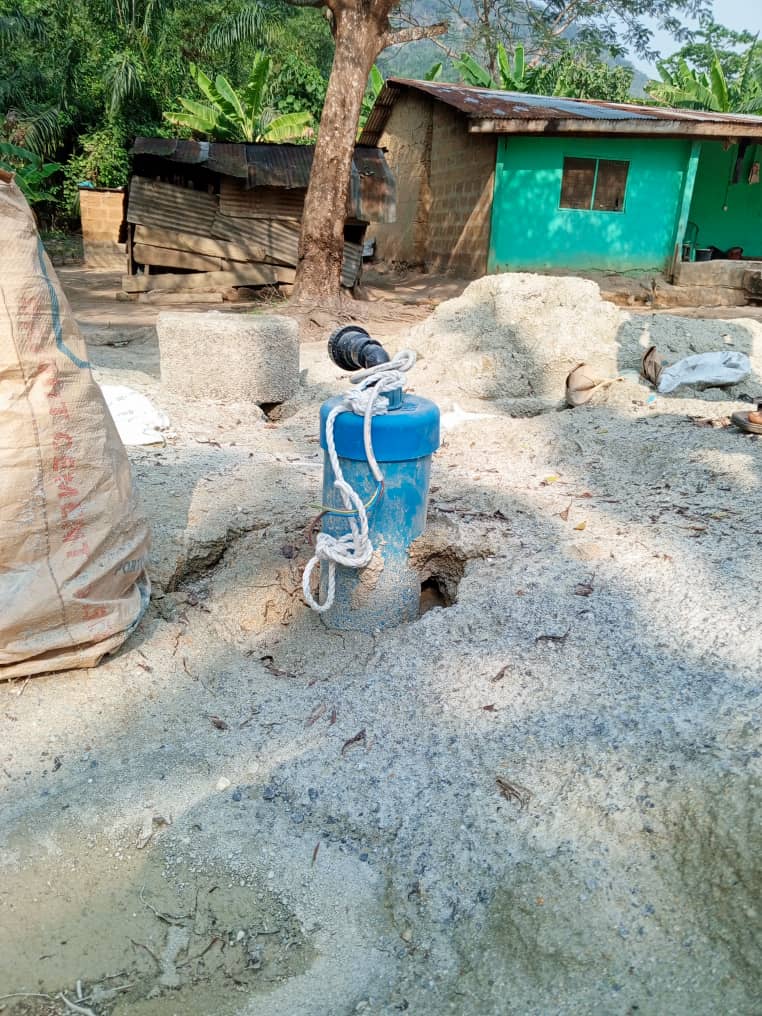
    Now, the boreholes have successfully been drilled while pumping machines have also been installed.

    “We are now left with the erection of pillars so we can place tanks on them. I’m so happy about the speed with which construction works are progressing and I’m sure that the projects will be complete and put to use by the end of the second quarter of this year”, said Mr. Joseph Teye, Chairman of Kplandey FCAP Implementation Committee.

    It is expected that after the pillars are erected and tanks are mounted on them, they will be connected to electricity to enable the pumps supply water into the tanks. Also, a management committee would be constituted to ensure the maintenance and effective management of the facilities before they are finally put to use.

    “Residents currently depend on a manual borehole and some nearby streams for water supply and so when the project is complete, it will bring a great relieve to us, especially women and children because they would no longer have to walk long distances in search of water.”

    With a $9,000 microgrant, the community members are drilling two boreholes at vantage points in the town in partnership with ACA and the Abuakwa South Municipal Assembly. The community has so far spent approximately $5,000 of its microgrant to reach this far.

    SDG 6

    Sustainable Development Goal 6 is about “clean water and sanitation for all.” It is one of the 17 Sustainable Development Goals established by the United Nations General Assembly in 2023. According to the United Nations, the goal is to: “Ensure availability and sustainable management of water and sanitation for all.

    Safe and readily available water is important for public health, whether it is used for drinking, domestic use, food production or recreational purposes. Improved water supply and sanitation, and better management of water resources, can boost countries’ economic growth and can contribute greatly to poverty reduction.