Category: Home Slider

  • Italian energy superpower ENI and Nigerian community reach historic agreement to mitigate chronic flooding of village

    Italian energy superpower ENI and Nigerian community reach historic agreement to mitigate chronic flooding of village

    Joint Press Release

    Port Harcourt, Benin City, Accra, Rome, Paris – 8 October 2019 — After years of battle, residents of the community of Aggah in Rivers State, Nigeria, finally have hope for relief from the floods that have plagued them for five decades, thanks to a ground-breaking agreement with Italian energy company ENI S.p.a published on 2 October 2019. A community association, Egbema Voice of Freedom (EVF), and its representatives, Advocates for Community Alternatives (ACA) and Chima Williams & Associates (CWA), had filed a complaint against ENI in front of Italy’s OECD National Contact Point on 15 December 2019, with the support of the International Federation for Human Rights (FIDH).

    The complaint stressed the devastating impacts the flooding had on the health, property, livelihoods and environment of the Aggah community. It was submitted under the OECD Guidelines, which establish international standards of corporate conduct to which Italy and its corporations are committed. In a rare successful case before an OECD National Contact Point (NCP), the agreement addresses the essential concern of the complainants, i.e. the urgent construction of drainage solutions to mitigate the flooding and a potential resort to a technical expert if more efforts are needed.

    “We are celebrating this news in Aggah.  The agreement is an achievement that follows years of battle to get ENI and its subsidiary NAOC to act to resolve the flooding they have created. We remain however vigilant on how the company and its Nigerian subsidiary will implement the agreement,” affirmed Pastor Evaristus Nicholas, spokesperson for Egbema Voice of Freedom.

    “The community had been asking NAOC, ENI Nigerian subsidiary, to fix the flooding problem for years, but to no avail,” said Jonathan Kaufman, Executive Director of ACA.  “The game changed when we went to Italy on the basis of the OECD Guidelines, which apply to all Italian companies, and asked ENI to take responsibility for what was happening on the ground in Aggah.”

    ENI has drilled for oil in and around the town of Aggah since the 1960s. The complaint alleges that the company built elevated roadways, embankments and platforms that completely block natural streams that used to flow through Aggah, causing violent annual flooding of large swathes of farmland and residential areas since 1970. According to a survey of over two thousand Aggah residents, 90% of households have lost agricultural products while over 65% reported severe health problems as a result of the flooding. Several people have drowned in the floodwaters – including one villager who died just last month. Floods also destroy sewage systems, resulting in vast pollution and harm to the ecosystem.

    “This is particularly positive news. First, because the community’s central demand is finally acknowledged by ENI. Second, because successful cases for victims before the OECD complaint mechanism are extremely rare. This is the result of a relentless and joint effort by the community, advocates and NGOs to get the company to act,” said Giacomo Cremonesi, Italian lawyer and FIDH representative in the procedure before the Italian NCP.

    After the complaint was deemed admissible, the Italian NCP opened a mediation procedure between the parties in the presence of a third-party Conciliator; the process led to an agreement that was made public on Wednesday 2 October 2019. The terms of settlement provide for the urgent construction of new culverts/drainage channels and maintenance and management of the existing ones to avoid flooding. It also indicates the verification of the impact of those measures in the presence of a technical expert, to determine whether further action should be taken. NAOC’s surveyors have already entered the community to determine the setting of any new construction.

    “This success story shows that it is possible, when victims properly coordinate with their advocates and present their cases with strong evidentiary backing, and when the NCP does its job to make companies – no matter how mighty –  listen and act accordingly. This further underscores the benefits of following due process and the rule of law rather than the rule of self help,” said Prince Chima Williams of CWA, the Nigerian law firm representing the complainant (EVF).

    Press contacts:

    Advocates for Community Alternatives (ACA)

    Jonathan Kaufman: jonathan@advocatesforalternatives.org   +233 55 555 0377

    International Federation for Human Rights (FIDH)
    Sacha Feierabend:
    sfeierabend@fidh.net   +33 6 85 12 24 53

    Chima Williams & Associates (CWA)
    Prince Chima Williams:
    princewchima@yahoo.co.uk; +2348023649890.

    Egbema Voice of Freedom (EVF)
    Pastor Nicholas Evaristus:
    royalgraceassembly_evarist@yahoo.com; +2348064329322.

  • Sierra Leone Villagers Seek Mining Justice at ECOWAS Court

    Sierra Leone Villagers Seek Mining Justice at ECOWAS Court

    29 August 2019 – The government of Sierra Leone shot and beat protesters and helped a mining company pollute and unjustly grab traditional lands, according to a human rights lawsuit filed by residents of Koidu, Sierra Leone at the ECOWAS Court of Justice.  The plaintiffs are asking for proper relocation, enforcement of the Mining Lease Agreement between the government and mining company, investigation of incidents of violence in 2007 and 2012, and compensation for their suffering and losses.

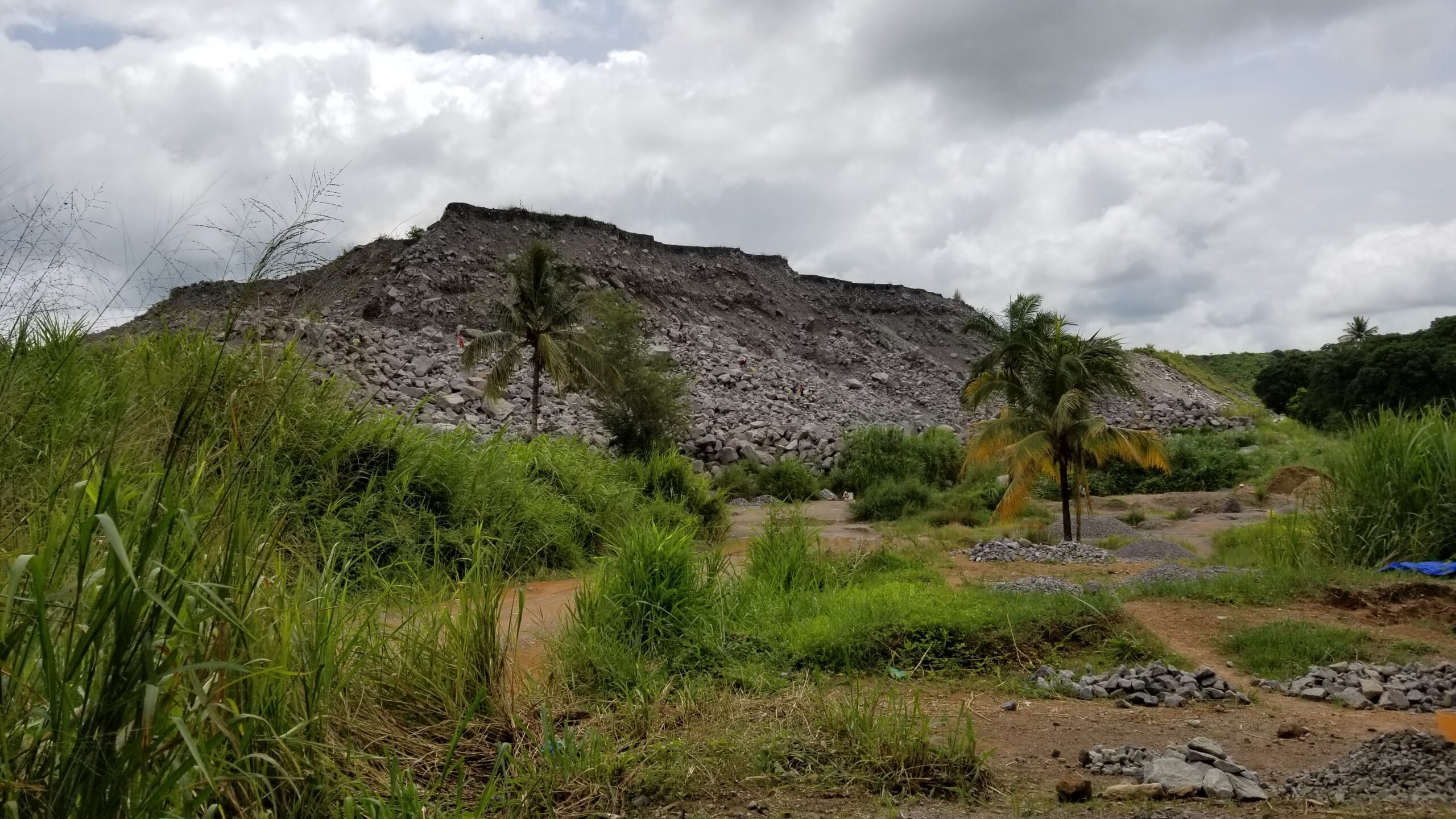
    Many Koidu residents live in the shadow of the immense waste dump of a diamond mine operated by the Octea Group. These individuals have been awaiting relocation for over a decade, with no end in sight. The proximity of the mine to their homes means mining activities have disrupted their livelihoods and access to basic living necessities. Explosions from the mine have sent rubble flying onto their farmland and crashing through their roofs. With support from the State, the company has diverted water onto their land, flooding it. Women who previously farmed small plots have lost that land and are now reduced to taking rocks from the company’s giant rubble pile and breaking them into gravel to sell to construction crews. “This back-breaking work is ruining my health, but what choice do I have?” complained Aminata Bangura, leader of the cooperative of women stone-breakers. “I can barely make enough to feed my kids, but I don’t have land to grow food for them anymore.”

    Madam Kumba King, Tankoro Queen Mother and representative of the Marginalized Affected Property Owners Association, lamented the destruction of their community. “We used to farm and live in peace, but now our lands and water sources are poisoned and covered in rubble. Our homes are shaken by explosives every day.” Tremors from blasting cracks residents’ walls and collapses their ceilings. Throughout the community, those who once had ready access to well water now find their wells dry during the dry season because the mine has disturbed the water table.

    Despite the residents’ complaints, the government has failed in its legal obligation to ensure the relocation of these individuals and the proper replacement of their land and homes. Even those that have received relocation report that the resettlement site lacks basic living essentials.  Their new houses are smaller than their old homes and have already started crumbling after just a matter of months due to poor construction.

    The complaint further alleges that the Sierra Leone repeatedly committed unjustified violence against demonstrators in Koidu.  According to several witnesses, police officers used firearms to disperse peaceful protesters, resulting in two deaths and several grave injuries in 2007 and again in 2012. After the shooting in December 2007, the government created the Jenkins-Johnston Commission of Inquiry, which found the government and the company to be jointly responsible for the violence and recommended important police reforms. Although the government officially accepted these proposals, it failed to implement any of them, and violence struck again in December 2012. For both incidents, the government did not hold any security officers responsible, nor did it provide assistance to the victims and their family members, who continue to wait for justice to this day. The community is represented by a consortium of West African lawyers from the Public Interest Lawyering Initiative for West Africa (PILIWA), as well as C&J Partners of Makeni, Sierra Leone.

  • Sierra Leone communities win right to sue Octéa mining companies jointly in local courts

    Sierra Leone communities win right to sue Octéa mining companies jointly in local courts

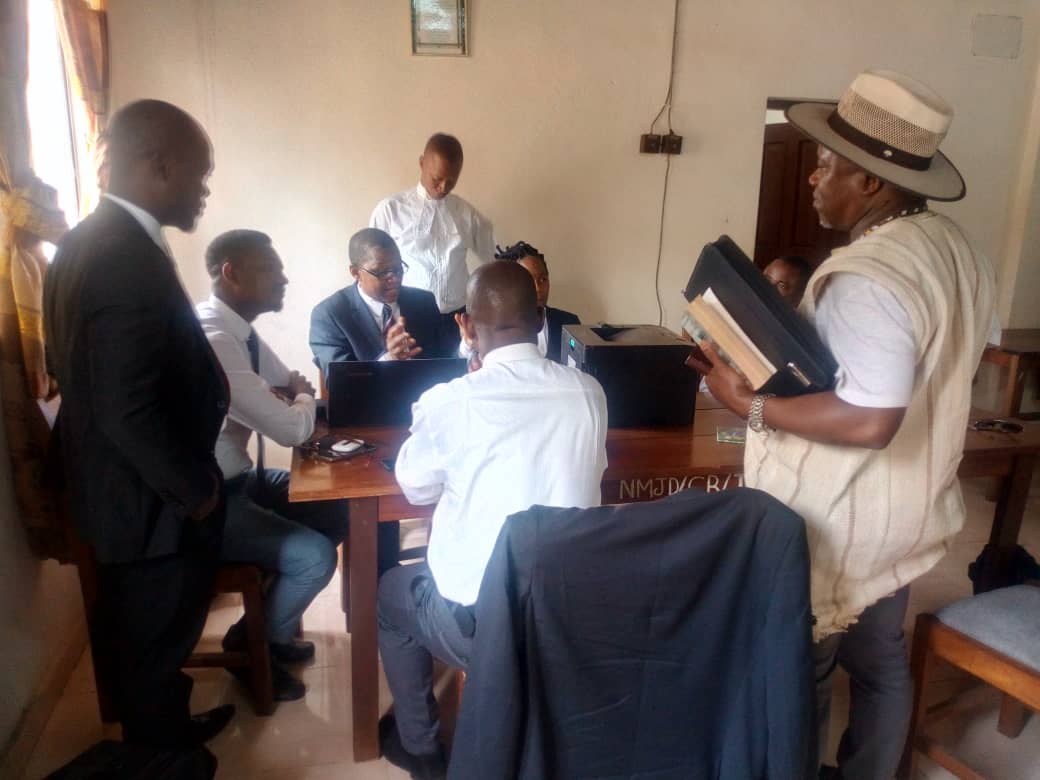
    Plaintiffs from Gbense and Tankoro Chiefdoms near Koidu City in Kono District, Sierra Leone, have won an ex parte ruling allowing them to serve lawsuit documents on six companies of the Octéa Group and their Managing Directors at Koidu Limited’s address in Freetown.  This court order will allow them to sue all six companies together, despite their attempts to avoid service by failing to register in Sierra Leone.

    The National Movement for Justice and Development (NMJD), a Sierra Leone non-profit that has worked with the Koidu communities for years, and Benedict Jalloh of C&J Partners filed this action on behalf of the communities on March 6, 2019. The judge delivered a judgment in their favor a week later on March 13, 2019.

    In order to commence a lawsuit against the defendants, the plaintiffs first needed to serve the Octéa companies with papers informing them of the legal action. However, they were initially barred from taking this first step. “Before we could even begin our lawsuit, we had to jump a major hurdle,” said Daniel Fofanah, Legal Officer NMJD. “Most of the defendants had no listed address in Sierra Leone, even though we know they operate here.” Lawyers for the plaintiffs tried to contact the defendants through normal channels but did not receive a response. The lawyers thus filed an originating summons so that the Octéa group could not avoid legal repercussions by hiding behind its corporate structure.

    The evidence presented to the judge included documents from the Panama Papers in which an Octéa parent company’s bankers discussed sending important documents to the company’s “operational” address that it shares with Koidu Ltd. in Freetown, the capital of Sierra Leone. With the court’s recent ruling, NMJD and C&J Partners can now serve documents on all the defendants at this same address. “We told the Court that the Octéa companies were trying to avoid being served with lawsuits, and the Court agreed,” said Benedict Jalloh, Principal of C and J Partners and attorney for the plaintiffs.  “Now we can serve papers on all the defendants at the address of Koidu Ltd., and they won’t be able to argue that they’re all separate entities.”

    ACA supported this legal action by providing strategic advice, international law research, and analysis of evidentiary submissions (such as the Panama Papers documents).  NMJD is the beneficiary of a grant from the Public Interest Lawyering Initiative for West Africa that supports the legal fees and covers logistical costs for the case.


    Documents: