Category: Sierra Leone

  • Supreme Court Dismisses Appeal in Koidu Mining Case 

    Supreme Court Dismisses Appeal in Koidu Mining Case 

    The communities of Koidu have secured an important legal victory in their fight for justice.

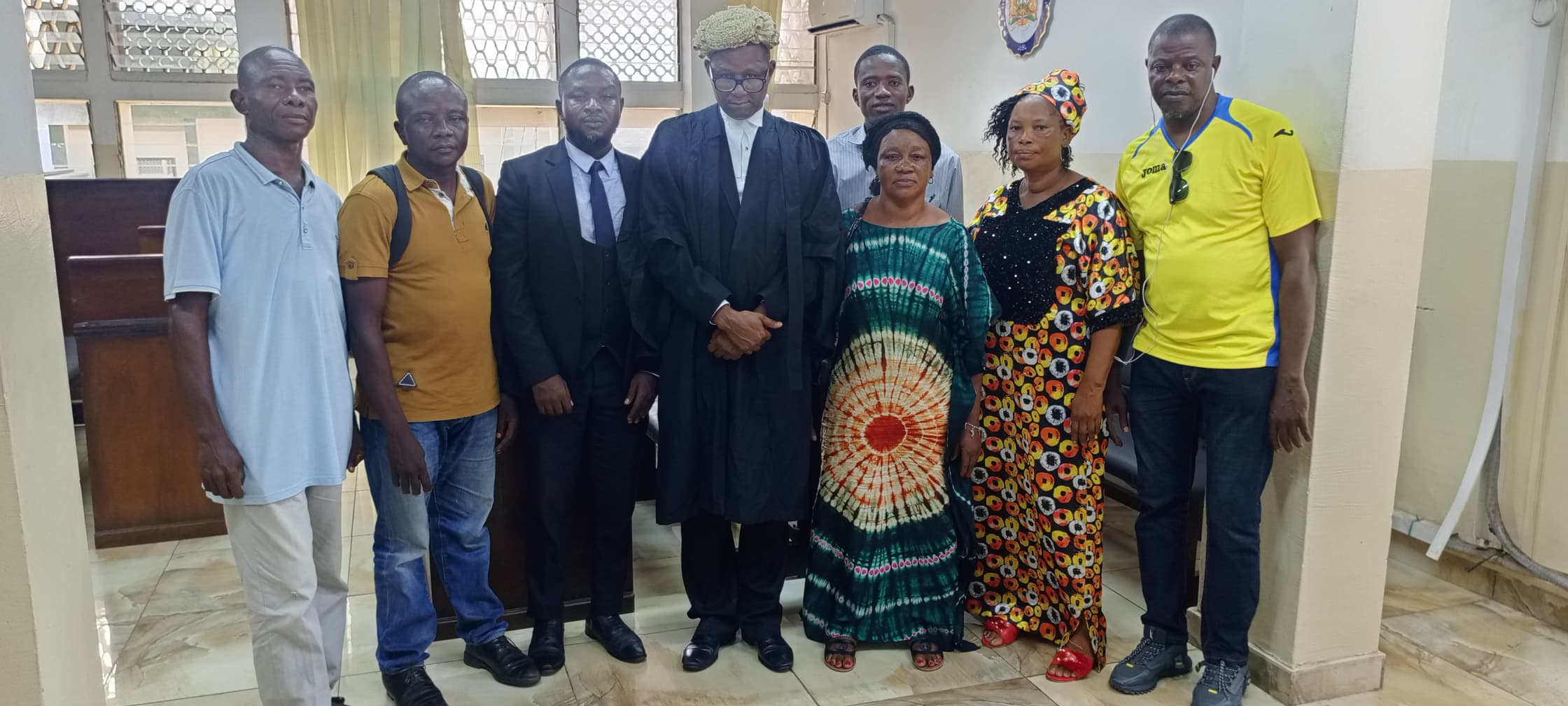
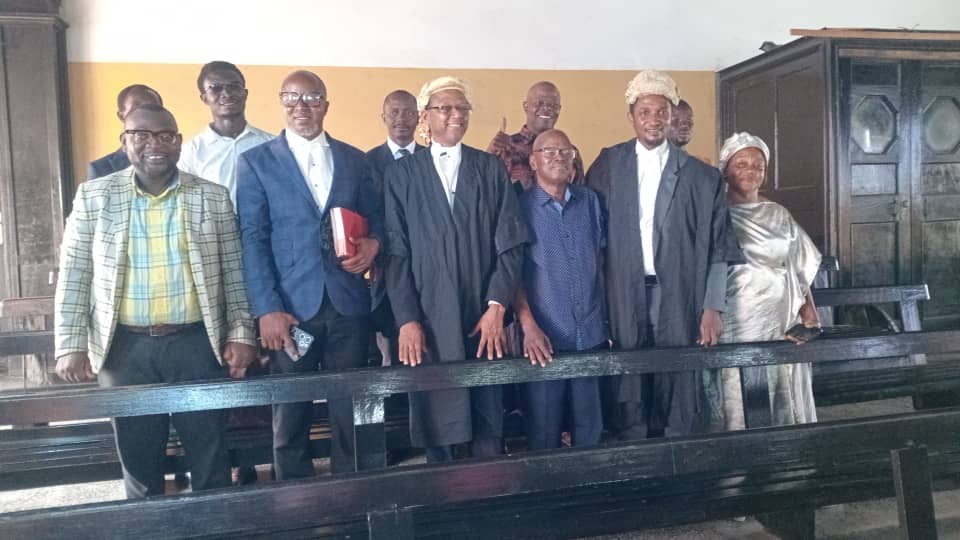
    On 28 May 2026, the Supreme Court of Sierra Leone dismissed an appeal filed by Octea Limited and other defendants in a long-running case brought by residents affected by diamond mining operations in Kono District. The decision means that an earlier Court of Appeal ruling in favour of the communities remains in place and that the case can now move forward to trial before the High Court in Koidu.

    This is the latest development in a legal battle that began in 2019, when 74 residents filed a lawsuit against Koidu Limited, its parent and related companies, and company officials.

    The residents say that years of mining activities have damaged their land, affected their health, reduced their ability to farm, and harmed their livelihoods. They are seeking justice and compensation for the impacts they say they have suffered.

    A Victory Built on an Earlier Court Decision

    The Supreme Court’s decision follows a major victory for the communities in October 2025. At that time, the Court of Appeal overturned a High Court decision that had dismissed the case. The Court of Appeal ruled that the communities had the right to bring their claims before the courts and that their concerns deserved to be heard. The judges also recognized that people living on customary land should be able to seek justice when their rights are affected, even if they are not the formal owners of the land.

    The Court also ordered that the companies’ assets remain frozen while the case continues. The defendants later appealed that decision to the Supreme Court. The Supreme Court has now dismissed that appeal, allowing the Court of Appeal judgment to stand.

    Why the Communities Went to Court

    Residents of Koidu have raised concerns about the impact of diamond mining operations for many years. Community members say mining waste has covered parts of their farmland, making it difficult to grow crops and support their families. Others say frequent blasting has damaged homes and disrupted daily life.

    Many residents have also reported health problems that they believe are linked to dust, pollution, and mining activities in the area. Some families were relocated, but many have complained that the new housing was inadequate and did not provide the same opportunities to earn a living. For years, affected residents have called for accountability and fair compensation for the losses they say they have suffered.

    What Happens Next?

    With the appeal now dismissed, the case will return to the High Court in Koidu, where the communities will finally have the opportunity to present their claims in full.While the legal process is not yet over, the Supreme Court’s decision is an important step forward.

    For the people of Koidu, it means that after years of delays and legal challenges, their fight for justice continues — and their voices will be heard in court.

    Français

    La Cour suprême rejette l’appel dans l’affaire de la mine de Koidu — Divi

    Les communautés de Koidu ont remporté une victoire juridique importante dans leur combat pour la justice.

    Le 28 mai 2026, la Cour suprême de Sierra Leone a rejeté l’appel déposé par Octea Limited et d’autres défendeurs dans une affaire de longue date intentée par des résidents touchés par des opérations d’extraction de diamants dans le district de Kono. Cette décision signifie qu’un jugement antérieur de la Cour d’appel en faveur des communautés reste en vigueur et que l’affaire peut désormais aller jusqu’au procès devant la Haute Cour de Koidu.

    Il s’agit de la dernière évolution en date dans cette bataille juridique qui a débuté en 2019, lorsque 74 résidents ont porté plainte contre Koidu Limited, sa maison mère, ses sociétés affiliées et ses dirigeants.

    Les résidents affirment que des années d’activités minières ont endommagé leurs terres, affecté leur santé, réduit leurs capacités agricoles et nui à leurs moyens de subsistance. Ils réclament justice et réparation pour les préjudices qu’ils déclarent avoir subis.

    Une victoire fondée sur une décision de justice antérieure

    La décision de la Cour suprême fait suite à une victoire majeure remportée par les communautés en octobre 2025. À cette époque, la Cour d’appel avait annulé une décision de la Haute Cour qui avait classé l’affaire. La Cour d’appel avait tranché que les communautés avaient le droit de porter leurs revendications devant les tribunaux et que leurs préoccupations méritaient d’être entendues. Les juges avaient également reconnu que les personnes vivant sur des terres coutumières devaient pouvoir demander justice lorsque leurs droits sont lésés, même si elles n’en sont pas les propriétaires formels.

    La Cour avait aussi ordonné le maintien du gel des avoirs des entreprises pendant la durée de la procédure. Les défendeurs avaient ensuite fait appel de cette décision devant la Cour suprême. La Cour suprême vient de rejeter cet appel, laissant ainsi subsister le jugement de la Cour d’appel.

    Pourquoi les communautés ont saisit la justice

    Les résidents de Koidu expriment leurs inquiétudes quant à l’impact des opérations d’extraction de diamants depuis de nombreuses années. Des membres de la communauté affirment que les déchets miniers ont recouvert des parties de leurs terres agricoles, rendant difficile la culture des sols et le subsistance de leurs familles. D’autres expliquent que les tir à l’explosif fréquents ont endommagé des habitations et perturbé leur vie quotidienne.

    De nombreux résidents ont également fait état de problèmes de santé qu’ils estiment liés à la poussière, à la pollution et aux activités minières dans la région. Certaines familles ont été réinstallées, mais beaucoup se sont plaintes que les nouveaux logements étaient inadéquats et ne leur offraient pas les mêmes possibilités de gagner leur vie. Depuis des années, les habitants touchés réclament des comptes et des indemnisations équitables pour les pertes qu’ils disent avoir subies.

    Quelle est la prochaine étape ?

    L’appel étant désormais rejeté, l’affaire va retourner devant la Haute Cour de Koidu, où les communautés auront enfin l’occasion de présenter l’intégralité de leurs demandes. Bien que le processus judiciaire ne soit pas encore terminé, la décision de la Cour suprême constitue une avancée cruciale.

    Pour les habitants de Koidu, cela signifie qu’après des années de retards et de recours juridiques, leur combat pour la justice se poursuit — et que leur voix sera entendue devant le tribunal.

  • MAPO and NMJD Renew Call for Justice Over Koidu Mining Abuses in Sierra Leone

    MAPO and NMJD Renew Call for Justice Over Koidu Mining Abuses in Sierra Leone

    A press conference held in Freetown, Sierra Leone, last Friday brought together members of the Marginalized Affected Property Owners Association (MAPO), their legal representatives, and senior officials of the Network Movement for Justice and Development (NMJD), to renew calls for justice for mining-affected communities in Kono District.

    The event highlighted years of alleged abuse, injustice, and environmental destruction linked to the operations of Koidu Limited, a diamond mining company operating in eastern Sierra Leone.

    Voices from the Affected Communities

    MAPO Chairlady, Mrs. Sia Janet Bayoh, delivered an emotional account of her community’s ordeal and described how Koidu Limited forcefully seized their lands and flooded her home to compel her family to relocate.

    “We were moved to a new place without water, without schools, without a clinic,” she said. “They call it resettlement, but it was more like abandonment.”

    Mrs. Bayoh also recounted how frequent blasting by the company, often done without notice, damaged their houses and endangered lives. “My own son’s head was seriously injured by a flying rock,” she said tearfully, accusing Koidu Limited of refusing to take responsibility for the incident.

    MAPO Chairman, Mr. Tamba Prince Boima, spoke of the “monumental destruction” caused by mining activities to their farms, rivers, and livelihoods. He detailed a pattern of intimidation, bribery attempts, and undue pressure from company agents, government officials, and traditional authorities aimed at silencing their movement.

    “They tried to buy our conscience,” Boima said. “But we refused. We are poor, but we are not for sale. We will continue this fight for justice — for our land, our children, and our dignity.”

    Painful journey

    NMJD’s Executive Director, Mr. Abu Brima, reflected on the long struggle for justice within Sierra Leone’s mining sector, describing it as “a painful journey of resistance, deceit, and systemic failure.”

    He recalled NMJD’s early interventions, including research conducted with Partnership Africa Canada (now IMPACT), which established the link between the country’s decade-long civil war and the illicit diamond trade.

    Mr. Brima emphasized that the findings of that research inspired the creation of the Kimberley Process Certification Scheme (KPCS), a global initiative aimed at preventing conflict diamonds from entering the mainstream market and ensuring that diamond revenues contribute to community development.

    However, he lamented that “despite Sierra Leone’s participation, the objectives of the Kimberley Process have been betrayed by persistent injustice, exploitation, and government complicity.”

    Failures of Accountability and Governance

    Mr. Brima accused Koidu Limited of consistently violating national laws and community rights and stated that the company’s non-compliance with social and environmental obligations triggered MAPO’s ongoing court case.

    He also criticized the World Bank for what he described as “biased interventions” through its Multilateral Investment Guarantee Agency (MIGA), arguing that their involvement was designed to protect corporate interests rather than national welfare.

    The NMJD Director further condemned the role of certain local chiefs, alleging that they had become “beneficiaries” of the company’s operations and had turned a blind eye to the suffering of their people.

    He also recounted two fatal incidents in Kono involving state security forces and protesting residents.

    In December 2007, two demonstrators were shot dead during a peaceful protest against Koidu Holdings. The subsequent Jenkins Johnston Commission of Enquiry found the company guilty and issued 17 recommendations — none of which were ever implemented. Five years later, in a similar protest, two more lives were lost, yet justice was again denied.

    “Every year, government officials attend Kimberley Process meetings abroad and present deceitful reports of compliance,” Mr. Brima said. “But if there were real compliance, these injustices wouldn’t persist.”

    Judicial Delays and Obstacles

    The speakers also described the slow pace of justice, citing repeated changes in court venues, long adjournments, and missing case files — challenges that have prolonged their legal struggle for years. These obstacles, they said, have drained the affected families emotionally and financially, but their resolve remains firm.

    Landmark judgment

    Dr. Chernor M. Benedict Jalloh of C&J Partners and Lead Counsel for the plaintiffs all residents of Kono District told the media that Court of Appeal of Sierra Leone has delivered a landmark judgment in the case of Aiah Fengai & 73 Others v. Octea Limited & Others, overturning a 2022 High Court decision that had dismissed the plaintiffs’ claims for lack of jurisdiction.

    He said the ruling, announced by a three-member panel led by Justice Fynn, found that the High Court erred in law when it denied the plaintiffs legal standing to sue, and further granted an interlocutory injunction freezing the defendant companies’ assets pending trial.

    The case, according to Dr. Jalloh, was filed by 74 class plaintiffs, 14 additional class plaintiffs, and nine individual plaintiffs — all residents of Kono District — who allege that Octea Limited’s mining operations caused extensive environmental destruction, unlawful deprivation of property, economic displacement, and emotional distress.

    He explained that their multiple suits were consolidated into one action at the High Court but struck out in October 2022 on the grounds that the plaintiffs lacked the capacity to sue and were not parties to any relevant contracts.

    Dr. Jalloh further said the trial judge failed to acknowledge their property and personal rights protected under law, even on customary lands owned by traditional chiefs.

    “The plaintiffs therefore challenged the court’s insistence that they exhaust a non-functional corporate grievance mechanism before seeking judicial redress. The Court of Appeal agreed, holding that damages for personal injury, property loss, emotional harm, and environmental nuisance were valid claims”, the Lead Counsel added.

    “In a decision hailed as groundbreaking, the Court affirmed that residents of customary lands have the right to sue for violations affecting those lands, even when legal title rests with local chiefs. Drawing inspiration from Ghanaian jurisprudence, the Court stated that restricting such rights to chiefs alone “would be absurd,” adding that traditional authorities are not immune from accountability.”

    According to him, the ruling allows the case to proceed to trial at the High Court and sets an important precedent in Sierra Leone’s legal history. It broadens access to justice for communities impacted by extractive industries and establishes, for the first time, that citizens can bring human rights–related lawsuits against multinational corporations for abuses tied to mining and environmental harm.

    A Call to Action

    The press conference concluded with a renewed appeal to the Government of Sierra Leone, the international community, and civil society actors to take decisive action to ensure accountability in the mining sector and protect the rights of affected communities.

    “Justice delayed is justice denied,” Brima stated. “The people of Kono have waited too long. It is time for the government to act, not to protect corporations, but to defend its citizens.”

  • Court of Appeal Overturns High Court Ruling in Landmark Human Rights and Environmental Case

    Court of Appeal Overturns High Court Ruling in Landmark Human Rights and Environmental Case

    The Court of Appeal of Sierra Leone today delivered a significant judgment in the matter of Aiah Fengai & 73 Others v. Octea Limited & Others, overturning a prior High Court decision that had struck out the plaintiffs’ claims for lack of jurisdiction.

    In a unanimous ruling delivered by a three-member panel of Justices of the Court of Appeal presided over by Justice Fynn, the Court found that the High Court had erred in law when it ruled that the plaintiffs lacked the legal standing (locus standi) to bring the case and granted an interlocutory injunction freezing the companies’ assets.  The case will now return to the High Court for trial.

    Background

    The case involves 74 plaintiffs, all residents of Kono District, who had initially filed multiple writs of summons against Octea Limited and other associated parties, alleging a wide range of environmental, economic, and personal harms arising from the defendants’ mining operations. These claims included allegations of unlawful deprivation of property, environmental degradation, economic displacement, and emotional distress. The writs were consolidated into one action at the High Court.

    However, on 27th October 2022, the High Court struck out the consolidated action, holding that it lacked jurisdiction to hear the matter on the basis that the plaintiffs had no legal capacity to sue, and were not privy to any contract that would entitle them to claim under the relevant mining and environmental laws.

    Appeal and Findings

    Dissatisfied with that decision, the plaintiffs, represented by C and J Partners, with Dr. Chernor M. Benedict Jalloh as the Lead Counsel, sought and were granted leave to appeal to the Court of Appeal. The appeal was based on several key errors in the High Court’s decision, notably:

    • Failure to recognize that many of the plaintiffs’ claims arose from personal damages (rather than contractual claims) for which legal standing could not be denied.
    • Failure to recognize that plaintiffs had property rights that were protected under law, even if the ownership of their land was vested in traditional Chiefs.
    • The need to extend Sierra Leone law to recognize universal standing to enforce environmental rights and obligations.
    • Unwarranted imposition on the plaintiffs of an obligation to use an internal corporate grievance mechanism before coming to court, despite recognition that the grievance mechanism was not actually functional.

    After careful consideration of all the submissions, the Court of Appeal issued a judgment that resoundingly vindicates the plaintiffs’ rights to justice for the harm they suffered.  Quoting the famous maxim that: “where there’s a wrong there must be a remedy,” the Court criticized the trial judge for striking out all the plaintiffs’ claims and held that damages for personal injury, property deprivation, emotional harm, and nuisance (environmental harms that affect residents’ peaceful enjoyment of their property) could go forward.

    Breaking new legal ground, the Court of Appeal also concluded that the plaintiffs had the right to sue for violations of the rights they hold to the traditional lands they inhabit, even if those lands belong to the Chiefs by law.  Noting that giving Chiefs the exclusive right to account for the land their subjects occupy “does not sit easily on our mind,” and giving credit to the courts of Ghana for recognizing the same principle, the Court decided that residents of customary lands should be able to sue for infringements on that land when their Chiefs decline to do so.  “Monarchs are now seldom found to be absolute, and their conduct comes under scrutiny regularly the World over.  It is our opinion that the attempts to make the right to sue or be sued with respect to customary land exclusive to the chiefs have lost its allure … We opine that to hold anything to the contrary would be absurd.”

    The Court also criticized the trial court for accepting unsubstantiated arguments that agreements between the Chiefs and the company had deprived the plaintiffs of their right to sue, and for requiring the plaintiffs to use Octea’s corporate grievance mechanism without giving them the chance to prove that the mechanism was inoperative.

    Finally, the Court granted an interlocutory injunction, extending the interim freezing order that it had imposed on the companies’ assets until a final judgment in the case is reached.  The Court recognized that this measure was necessary to prevent the company from stripping its assets from Sierra Leone in advance of the trial.

    Implications

    This decision paves the way for the plaintiffs to return to the High Court and have their claims fully heard on their merits. It marks a significant development in access to justice for affected communities in resource-rich regions and expands the scope of legal standing for land rights claims on customary lands in Sierra Leone.

  • Marginalized Affected Property Owners (MAPO) enjoins Koidu Ltd, Octea group of Companies

    Marginalized Affected Property Owners (MAPO) enjoins Koidu Ltd, Octea group of Companies

    The Sierra Leonean Court of Appeal today extended an interim injunction brought against the Koidu Limited Mining Company, a major mining company operating in Koidu City Tankoro Chiefdom, Kono District to next Monday July 28th, 2025. The injunction application, brought before the court by the Marginalized Affected Property Owners (MAPO) was first upheld last Thursday in Freetown.

    The court’s order prohibits the company (Koidu/Octéa mining company limited) from selling, disposing of or in any way alienating any of its properties.

    On Thursday 17th, July 2025, the court granted an interim injunction against Koidu Limited Mining Company, a major mining company operating in Koidu City Tankoro Chiefdom, Kono District.

    This legal action was initiated following a request made by the lawyering firm C&J Partners, working with the Network Movement for Justice and Development (NMJD), with support from the Advocates for Community Alternatives (ACA).

    The injunction is a temporary measure, pending further legal proceedings. The court has scheduled a hearing for Monday 21st, July 2025, where both the complainants and the defendants will present oral or electronic arguments, each side allocated 20 minutes to state their case.

    This case is expected to have broader implications for corporate accountability and community rights in Sierra Leone’s mining communities.

    At today’s hearing, the motion was converted to inter partes. Counsel for the company pleaded that due to the other injunctions pending against the company, he would like the court and the applicants to be served with those papers in the form of an affidavit in opposition.

    Counsel for the applicants are expected to file an affidavit in reply.

    Brief background

    Koidu Limited is a diamond mining company that operates in Sierra Leone and is privately owned by BSG Resources Limited (BSGR) through its subsidiary, Octéa Limited. The company is accused of degrading the living conditions of people living near its mining operations and failing to properly relocate them or compensate them for their losses.

    Residents who have not been relocated find it increasingly difficult to farm because waste rock and rubble from Koidu Ltd.’s operations have covered much of their farmland. “Koidu Limited has destroyed our lives,” said Mr. Prince Boima, Chairman of the Marginalized Affected Property Owners Association. “We used to farm and live in peace, but now our lands and water sources are poisoned and covered in rubble. Our homes are shaken by explosives every day.”

    Residents also report that their health has suffered. Dust from the mining operations often cover the community and causes headaches, difficulty breathing, and a burning sensation in the residents’ eyes. The operations have also contaminated the water, and many residents develop skin rashes and digestive problems they did not previously experience. High stress from living with frequent blasting further causes headaches, high blood pressure, heart palpitations, and respiratory problems in the community.

    Despite promising to properly relocate affected community members in advance of expanding its mining operations, Koidu Ltd. has left the people to suffer.  Many community members have neither been relocated, nor compensated for the damage to their properties, health, and livelihoods.  Others have been relocated to a new area, but the conditions of relocation have been incommensurate with what they lost.

    In all these, Koidu Limited had closed the mine, laid off all its workers, and was stripping valuable machinery from the site. The mine site is currently stripped of everything of value except for the power plant and is abandoned except for a token detachment of police officers who are keeping guard. This prompted the plaintiffs to freeze the company’s assets to ensure that there would be enough left to satisfy an eventual judgment in favor of their favour.

    The community is supported in its fight for justice by Advocates for Community Alternatives (ACA), a Ghana-based human rights organization, and Network Movement for Justice and Development (NMJD), a Sierra Leonean civil society organization that organizes communities for a more just society in the face of natural resource extraction.

  • Freetown hosts conference on African-focused climate, environmental and natural resources rights and protection

    Freetown hosts conference on African-focused climate, environmental and natural resources rights and protection

    Members of the Public Interest Lawyering Initiative for West Africa (PILIWA), a regional movement of lawyers driven by social justice to serve threatened communities, have rounded up their conference in Freetown, Sierra Leone.

    It was a collaborative conference for PILIWA, Environmental Rights Africa (ERA), Africa Climate Platform (ACP) and Mano River Union Civil Society Platform (MRUCP) to share updates on their activities and explore further ways of supporting each other.

    Exchange of contextual experiences, legal advocacy, strategic planning and enhancing regional collaboration and collective advocacy for environmental justice were some of the key issues that took center stage during the conference.

    Among others, the conference called for strengthening regional networks and collaboration by formalizing and expanding the collaborative networks.

    The conference emphasized the strengthening of PILIWA as a regional hub for public interest lawyers to coordinate on environmental cases while the Mano River Union Civil Society Platform on Natural Resources should be enhanced to step up cross-border advocacy.

    It further called for the establishment of regular communication channels through focal persons (monthly calls, online forums) and annual meet-ups to sustain the momentum in view of the fact that through the sharing of information and tactics in real time, activists could respond faster and more effectively to emerging environmental threats.

    The conference provided PILIWA an opportunity to share its experiences in the West African sub-region about some successes and challenges over the years, especially on access to information and enforcement of judicial decisions.

    These experiences were well received as participants considered them very relevant to their respective organisations and therefore had further deliberations regarding them.

    Participants also focused their attention on protecting environmental defenders and resolved to develop and implement measures to protect them and other activists who face risks due to their work.

    The conference therefore recommended that African governments, in partnership with civil society, should establish protocols or focal points for defender protection – such as emergency contact networks or rapid response units to investigate and address threats or abuses against activists.

    The conference also called for the establishment of solidarity networks, where defenders in different regions support each other’s safety through visibility and advocacy, should be nurtured.

    Touching on capacity building, the conference emphasized the need to invest in continuous capacity building for those working on environmental rights. This includes training more community paralegals and public Interest lawyers at the grassroots to empower local communities with legal knowledge. Workshops and exchange programs for lawyers and NGO staff should be organized, covering topics like environmental law litigation techniques, scientific evidence collection, and negotiation skills.

    Participants further recommended the creation of mentorship programs where seasoned public interest attorneys can guide younger lawyers in developing strategic cases.

    Another area of concern to the participants was community engagement and public awareness. Here, they stressed the need to enhance efforts in community engagement and raising public awareness on environmental rights.

    They emphasized the need to amplify environmental education at the community level— through local workshops that explain rights in local languages and through school programs that teach youth about conservation and climate change.

    The participants called on NGOs and community groups to employ creative media (community radio, theater, storytelling) to make complex issues understandable and relatable.

    On the promotion of corporate accountability mechanisms, participants encouraged the adoption of robust corporate accountability mechanisms and proposed to African states to tighten environmental regulations—for instance, by requiring companies to post reclamation bonds for mining (so funds are available for cleanup), and by increasing fines or penalties for violations to truly deter harmful practices.

    The conference encouraged civil society to advocate for governments to sign on to international initiatives for openness in oil, gas, and mining revenues, and to support the development of a binding international treaty on business and human rights.

    A further recommendation by the conference is the setting up of independent monitoring bodies, possibly with civil society participation, that can conduct audits of corporate environmental performance. Meanwhile, NGOs can make use of existing tools like the OECD complaint procedure or bring cases to international platforms when local remedies fail; building expertise in these processes is advised. Naming and shaming through public campaigns remains a powerful tool—creating “scorecards” or reports ranking companies on environmental criteria can pressure them to improve.

    Some of the key outcomes of the conference centered on Natural Resource Governance as participants underscored the critical need for transparent, accountable management of natural resources and advocated robust legal frameworks that guarantee community participation and equitable benefit sharing.

    On legal advocacy and litigation, the conference agreed to develop and disseminate legal toolkits for public interest litigation as a way of empowering communities to hold both state and corporate actors accountable for environmental degradation and human rights abuses.

    Participants further resolved to form a coalition to monitor and report environmental abuse by multinational corporations, ensuring that companies are held to internationally recognized standards and face appropriate legal consequences to ensure corporate accountability.

    They also reiterated that climate justice is not merely a legal issue but a moral imperative and endorsed the formulation of a comprehensive policy package, which includes lobbying for increased climate finance, enhancing adaptation strategies, and ensuring that the principles of equity and justice guide all climate-related policymaking.

    The Legal Clinic team of the Caleb University, as part of the conference, presented a gift to ACA for its immense support in setting up the clinic. ACA’s Executive Director, Jonathan Kaufman, received the gift on behalf of the organization.

  • Kono residents unperturbed about adjournments by Sierra Leone’s Court of Appeal

    Kono residents unperturbed about adjournments by Sierra Leone’s Court of Appeal

    Members of the Marginalized Affected Property Owners Association (MAPO), a civil society group based in Kono in the Eastern Region of Sierra Leone, say they are unperturbed about the frequent adjournments of their case pending at the Court of Appeal in Freetown and have vowed to relentlessly pursue their case despite the frustrations.

    “Even if they ask us to come here a hundred times, we shall come. We’re determined to fight for our rights and to seek justice through the legal process. Even though we’re not happy about the continuous dragging of our case at the courts, we are not intimidated by any attempts to frustrate us”, they said after Sierra Leone’s Court of Appeal again adjourned their case to November 14, 2025.

    Last Thursday, the Court of Appeal again adjourned hearing Kono community’s human rights claims, which seek to determine whether the community members can legally take on a multinational diamond mining company for causing harm to their livelihoods, health, and their traditional lands.

    The community members and their partners left the court premises disappointed and helpless but remained resolute in their bid to relentlessly fight for their rights in a case which has dragged on for five years amidst several court adjournments. One of the three-member panel of judges, Hon. Justice Emily Wright, was unavailable, leading to the latest adjournment.

    The matter is adjourned to Thursday 14th November 2024. Counsels for the two parties agreed before the Hon. Justice Reginald Fynn (JA) and the Hon. Justice Sulaiman Bah (JA), in Chambers, that if for any reason the matter is unable to proceed, the Defence Counsel will file written submission while the Counsel for the Appellant will file a written reply to his submission. Under this arrangement, the matter will then be withdrawn for ruling, meaning no further hearings after the 14th of November 2024.

    “We keep travelling all the way from Koidu, and other parts of Kono to Freetown, a 12-hour return trip any time the Court decides to sit on our case. We keep coming in our numbers to court and they also keep adjourning our case, but I can assure everyone that we are never going to retreat or surrender, but rather, we’re going to soldier on despite the adjournments”, Mr. Prince Boima, the MAPO Chairman, said after the court announced yet another adjournment on Thursday.

    The Lead Counsel for the plaintiffs, Dr. Chernor Mamoud Benedict Jalloh urged the justice system to ensure that justice is delivered in a timely manner in this matter because “justice delayed is justice denied to all parties in this litigation.”

    The hearing of the Koidu community’s human rights became possible after a ruling on Thursday February 29, 2024, that struck out preliminary objections filed by the defendant mining company, Koidu Limited.

    The Appeals Court’s ruling last February brought a new life into the Koidu plaintiffs’ case, which was dismissed by the High Court in Makeni on 27th October 2022, on the basis that the plaintiffs were not qualified to press their claims in court.  The dismissal order also ruled that the plaintiffs should have used a non-judicial grievance mechanism before going to court, despite also recognizing that the grievance mechanism did not actually exist.

    Brief background

    Koidu Limited is a diamond mining company that operates in Sierra Leone and is privately owned by BSG Resources Limited (BSGR) through its subsidiary, Octéa Limited. The company is accused of degrading the living conditions of people living near its mining operations and failing to properly relocate them or compensate them for their losses.

    Residents who have not been relocated find it increasingly difficult to farm because waste rock and rubble from Koidu Ltd.’s operations have covered much of their farmland. “Koidu Limited has destroyed our lives,” said Mr. Prince Boima, Chairman of the Marginalized Affected Property Owners Association. “We used to farm and live in peace, but now our lands and water sources are poisoned and covered in rubble. Our homes are shaken by explosives every day.”

    Residents also report that their health has suffered. Dust from the mining operations often covers the community and causes headaches, difficulty breathing, and a burning sensation in the

    Residents’ eyes. The operations have also contaminated the water, and many residents develop skin rashes and digestive problems they did not previously experience. High stress from living with frequent blasting further causes headaches, high blood pressure, heart palpitations, and respiratory problems in the community.

    Despite promising to properly relocate affected community members in advance of expanding its mining operations, Koidu Ltd. has left the people to suffer.  Many community members have neither been relocated, nor compensated for the damage to their properties, health, and livelihoods.  Others have been relocated to a new area, but the conditions of relocation have been incommensurate with what they lost.

    The community is supported in its fight for justice by Advocates for Community Alternatives (ACA), a Ghana-based human rights organization, and Network Movement for Justice and Development (NMJD), a Sierra Leonean civil society organization that organizes communities for a more just society in the face of natural resource extraction.

  • FCAP microloan turns many lives around in Sierra Leone

    FCAP microloan turns many lives around in Sierra Leone

    Several women in the Sierra Leonean town of Koidu in the Kono District of the Eastern Region, have been sharing their testimonies about how their socio-economic lives have been transformed in the last few years following the disbursement of microloans to them under the Facilitated Collective Action Process (FCAP).  But for FCAP, most of these women would not have any financial freedom and would probably be wallowing in abject poverty and become a burden on their families and society at large. Five beneficiaries of FCAP microloan in Koidu have been sharing their success stories about this intervention, which is being implemented by Advocates for Community Alternatives (ACA) in partnership with the Network Movement for Justice and Development (NMJD) in Sierra Leone.

    ACA is an Accra-based non-profit-making organization that helps West Africa communities are threatened by the destructive impacts of extractives-led development to take control of their own futures while NMJD is a Sierra Leonean civil society organization that engages in advocacy and strengthens the capacity of civil society organizations to effectively engage women, men, children, communities, government and other actors for the transformation of society.

    Here are excerpts of testimonies of five of the FCAP beneficiaries in Koidu whose lives have been impacted positively by the intervention and are currently using their skills acquired to impact the lives of other women in their respective communities.

    Finda Moiwo 46years, 7 dependents

    Life was extremely difficult for me and my family prior to my encounter with FACP. In fact, it was very challenging to even provide food at home.

    Breaking stones for construction works was my main occupation but I was unable to make any reasonable income out of this to support the upkeep of my home primarily due to the lack of funds to acquire the requisite tools and get additional hands to undertake this business. 

    I was therefore very excited to be part of the training organised for beneficiaries of the FCAP microloan. Before the grant was given to us, we were trained in strategies required to run a business and financial management skills, among others.

    As a result, when the microloan was finally advanced to me, I was able to buy my working tools and hire additional casual staff to help in breaking more stones daily.

    I can confidently say today that I’m now able to effectively take care of my children. I can say without any equivocation that the microgrant I received under FCAP has turned my fortunes around and I will encourage my colleague women who are currently benefitting from it to attach maximum seriousness to the project for their own good.


    Alice Komeh, 56years, 7 dependents

    I was engaged in backyard gardening (a mini farm), which obviously yielded a very small quantity of foodstuff. Life was difficult but there was nothing I could do because I didn’t have any capital to start any business. 

    With as many as seven dependents, the FCAP microloan therefore came as a great relief as it enabled me to venture into trade. When I received the microloan, I quickly started trading in palm oil – both retail and wholesale.

    My life has never been the same since I ventured into this business as I have no problem at all taking good care of my children and other dependents.

    I am currently considering an expansion of the scope of my trade to include other items so I’m also looking at acquiring a shop that can accommodate my wares.

    Fatu Finda Ali, 40 years, five (5) dependents

    I have been into the palm oil business for quite some time. I was mainly into the sale of oil on a retail basis due to my low working capital. I was unable to trade in good quality palm oil because of my poor financial state and this led to low patronage of my products. I always wished to expand my business, but it remained a wish until the FCAP microloan came to my rescue. 

    For me, the business training that preceded the microgrant was an eye-opener because it enabled me to quickly expand my business as soon as I accessed the grant. Also, the training inculcated in me the need to develop savings habit, which has secured my future against any possible eventualities.

    Today, I’m now in the position to deal in good quality palm oil and vegetables and I’ve progressed from being a retailer to a wholesaler. Indeed, this intervention has led to an improvement in my standard of living, and I can take good care of myself and my children.


    Mabel Sia Ellie, Seamstress & trader, 50years, 9 dependents

    Even though I was working as a seamstress by profession, life was extremely difficult because of my low customer base. Only a few people used to frequent my shop to sew their dresses, and this really made life quite unbearable for me.

    It was therefore heart-warming when the news came that FCAP was coming to my aid through a microloan. Together with other women in my community, ACA and NMJD took us through training on various business strategies, record-keeping, among others. The training equipped me with the requisite skills which have helped me to effectively manage my work.

    I must say that in addition to my dress-making business, I’ve now added the sale of palm oil and other assorted items in my shop. This has really given me financial independence and enhanced my living conditions. 

    The fact that there is no interest on the microloan makes it unique in my opinion. What really matter most are your time and dedication in attending meetings. I’m proud to say that I’ve started imparting the knowledge I gained during the training on others.

    Esther Moiwa, 55years, 7 dependents

    Before my encounter with the FCAP intervention, I was engaged in petty trade in assorted items. I could not keep any records of my business, and this really had a toll on sales and my entire work. I simply lacked the basic skills to keep any records.

    However, upon the completion of the training given to us ahead of the disbursement of the microloan, I am now able to manage, maintain and keep proper records of my business.

    Besides, there is vast improvement in my business because I’ve been able to add rice, oil, palm oil and other items. More importantly, I’m able to support my husband financially and gradually, I could realize that I’m becoming financially independent.

    About FCAP

    Advocates for Community Alternatives (ACA) is a non-profit-making organization devoted to championing the course of West African communities which are threatened by the devastating effects of extractive activities to chart a new path of development through various assistance.

    One of the ways through which ACA supports communities to chart a new course of development and take control of their futures is through the Facilitated Collective Action Process (FCAP), a process developed and popularized in East Africa by Spark MicroGrants, a partner organization of ACA.

    (This write-up was co-authored by Richard Boahen of ACA, Accra, Ghana, and Francess Finda Gbondo of NMJD, Kono District, Sierra Leone with support from FCAP team)

  • Sierra Leone Court of Appeal continues hearing on Kono Community’s human rights claims

    Lawyers for the Marginalized Affected Property Owners (MAPO), a community association seeking justice for harmful mining practices in Kono, Sierra Leone, concluded their marathon of argument before the Court of Appeal in Freetown last Thursday, May 30, 2024.

    The Court of Appeal is determining whether Kono community members and associations can take Koidu Limited, a multinational diamond mining company, to court for causing harm to their livelihoods, health, and their traditional lands.

    At the court last Thursday, the lead counsel for the plaintiffs, Dr. Chernor Mamoud Benedict Jalloh, completed presenting arguments for the Plaintiffs, after which counsel for the mining company and its affiliates commenced his arguments.  Dr. Jalloh argued, among other things, that all citizens should have the right to sue to enforce Sierra Leone’s environmental laws, as environmental pollution affects everyone.

    On Thursday June 6, 2024, when the court reconvenes, counsel for the respondents will be expected to conclude his arguments, after which the court will schedule a date for its judgement.

    For now, the Kono community members and their civil society partners are keeping their fingers crossed, hoping that the Court of Appeal will expedite work on the case.  If the appellate court sides with the community, then the way will be clear for them to take Koidu Limited and its related companies to trial regarding alleged human rights abuses.

    The hearing of the Koidu community’s appeal has become possible after a ruling on Thursday February 29, 2024, that struck out preliminary objections filed by the defendant mining company, Koidu Limited.

    Last week’s hearing comes on the heels of the Court of Appeal’s ruling of February 29, 2024, which breathed new life into the Koidu plaintiffs’ case by granting their right to appeal.  The case was dismissed by the High Court in Makeni on October 27, 2022, on the basis that the plaintiffs were not qualified to press their claims in court.  The dismissal order also ruled that the plaintiffs should have used a non-judicial grievance mechanism before going to court, despite also recognizing that the grievance mechanism did not actually exist.

  • Koidu Appeals Court hearing begins at last

    Koidu Appeals Court hearing begins at last

    After several adjournments, on Tuesday May 21, 2024, the Sierra Leone Court of Appeal began hearing human rights claims that will determine whether community members can legally take on Koidu Limited, a multinational diamond mining company, for causing harm to their livelihoods, health, and their traditional lands.

    At the court hearing in Freetown on Tuesday, the lead counsel for the plaintiffs, Dr. Chernor Mamoud Benedict Jalloh, advanced cogent arguments before the panel of judges on the 12 grounds of appeal.

    His argument mainly centered whether the company can force residents to submit all their complaints to an internal grievance office instead of going to court, whether members of the public can sue to hold companies to environmental laws and commitments.  The stakes are high: if the defendants’ arguments are upheld, then communities could lose their rights to sue when mining companies harm them and instead be required to let the company resolve all complaints internally.

    The other grounds of appeal will be dealt with on May 30, 2024, when the court will reconvene to continue its sitting on the matter.

    The hearing of the Koidu community’s appeal became possible after a ruling on Thursday February 29, 2024, that struck out preliminary objections filed by the defendant mining company, Koidu Limited and allowed the appeal to go forward.  This ruling breathed new life into the Koidu plaintiffs’ case, which was dismissed by the High Court in Makeni on 27th October 2022, on the basis that the plaintiffs were not qualified to press their claims in court.  The dismissal order also ruled that the plaintiffs should have used a non-judicial grievance mechanism before going to court, despite also recognizing that the grievance mechanism did not actually exist.

    Kono community members and their civil society partners were in court in their numbers, hoping that the Court of Appeal will quickly rule that their claims were wrongly dismissed by the High Court and send the case for a speedy trial.

  • Sierra Leone Court of Appeal again adjourns hearing on Kono Community’s human rights claims

    Sierra Leone Court of Appeal again adjourns hearing on Kono Community’s human rights claims

    Kono community members in Sierra Leone and their civil society partners were alarmed by the result of an Appeals Court hearing on Thursday May 9, 2024, which produced yet another delay in their case against diamond-mining company Koidu Limited.

    The community members and their partners left the court premises disappointed and helpless in a case which has dragged on for five years amidst several court adjournments.

    Last Thursday, the Sierra Leone Court of Appeal again adjourned hearing Kono community’s human rights claims which seek to determine whether the community members can legally take on a multinational diamond mining company for causing harm to their livelihoods, health, and their traditional lands. The new date for hearing of the case is 21 May 2024.

    Although the Presiding Judge, Justice R.S Fynn, was ready for proceedings, one of the judges, Justice Amy Wright, pleaded that she was ill-prepared for the hearing due to some administrative tasks she had been performing about the arrival of the ECOWAS delegation to the country.

    It is anticipated that the ECOWAS delegation will be out of the country by the new date set by the court.

    “It is extremely worrying that the people of Kono would be made to go through this frustration over the years at the hands of the powers that be without any clear sign of hope for them. Is it the case that the government is behind this delay, or it is the Koidu Limited that is pulling some strings behind the scenes to drag the case?”, Mr. Prince Boima, Chairman of the Marginalized Affected Property Owners Association, said after the court announced yet another adjournment on Thursday.

    The lead counsel for the plaintiffs, Dr. Chernor Mamoud Benedict Jalloh urged the justice system to ensure that justice is delivered in a timely manner in this matter because “justice delayed is justice denied to all parties in this litigation.”

    The hearing of the Koidu community’s human rights became possible after a ruling on Thursday February 29, 2024, that struck out preliminary objections filed by the defendant mining company, Koidu Limited.

    The Appeals Court’s ruling last February brought a new life into the Koidu plaintiffs’ case, which was dismissed by the High Court in Makeni on 27th October 2022, on the basis that the plaintiffs were not qualified to press their claims in court.  The dismissal order also ruled that the plaintiffs should have used a non-judicial grievance mechanism before going to court, despite also recognizing that the grievance mechanism did not actually exist.

    Brief background

    Koidu Limited is a diamond mining company that operates in Sierra Leone and is privately owned by BSG Resources Limited (BSGR) through its subsidiary, Octéa Limited. The company is accused of degrading the living conditions of people living near its mining operations and failing to properly relocate them or compensate them for their losses.

    Residents who have not been relocated find it increasingly difficult to farm because waste rock and rubble from Koidu Ltd.’s operations have covered much of their farmland. “Koidu Limited has destroyed our lives,” said Mr. Prince Boima, Chairman of the Marginalized Affected Property Owners Association. “We used to farm and live in peace, but now our lands and water sources are poisoned and covered in rubble. Our homes are shaken by explosives every day.”

    Residents also report that their health has suffered. Dust from the mining operations often covers the community and causes headaches, difficulty breathing, and a burning sensation in the

    residents’ eyes. The operations have also contaminated the water, and many residents develop skin rashes and digestive problems they did not previously experience. High stress from living with frequent blasting further causes headaches, high blood pressure, heart palpitations, and respiratory problems in the community.

    Despite promising to properly relocate affected community members in advance of expanding its mining operations, Koidu Ltd. has left the people to suffer.  Many community members have neither been relocated, nor compensated for the damage to their properties, health, and livelihoods.  Others have been relocated to a new area, but the conditions of relocation have been incommensurate with what they lost.

    The community is supported in its fight for justice by Advocates for Community Alternatives (ACA), a Ghana-based human rights organization, and Network Movement for Justice and Development (NMJD), a Sierra Leonean civil society organization that organizes communities for a more just society in the face of natural resource extraction.