Category: Sierra Leone

  • Community Members Seek Evidence Against Octea Ltd.

    Community Members Seek Evidence Against Octea Ltd.

    August 19, 2021 – New York – If Sia Janet Bayoh and other members of the Marginalised Affected Property Owners (MAPO) have their way, a trove of documents produced in a multi-billion-dollar battle between international mining giants will help them rebuild their lives and livelihoods, which have been shattered by the abusive diamond mining operations of Octea Ltd.

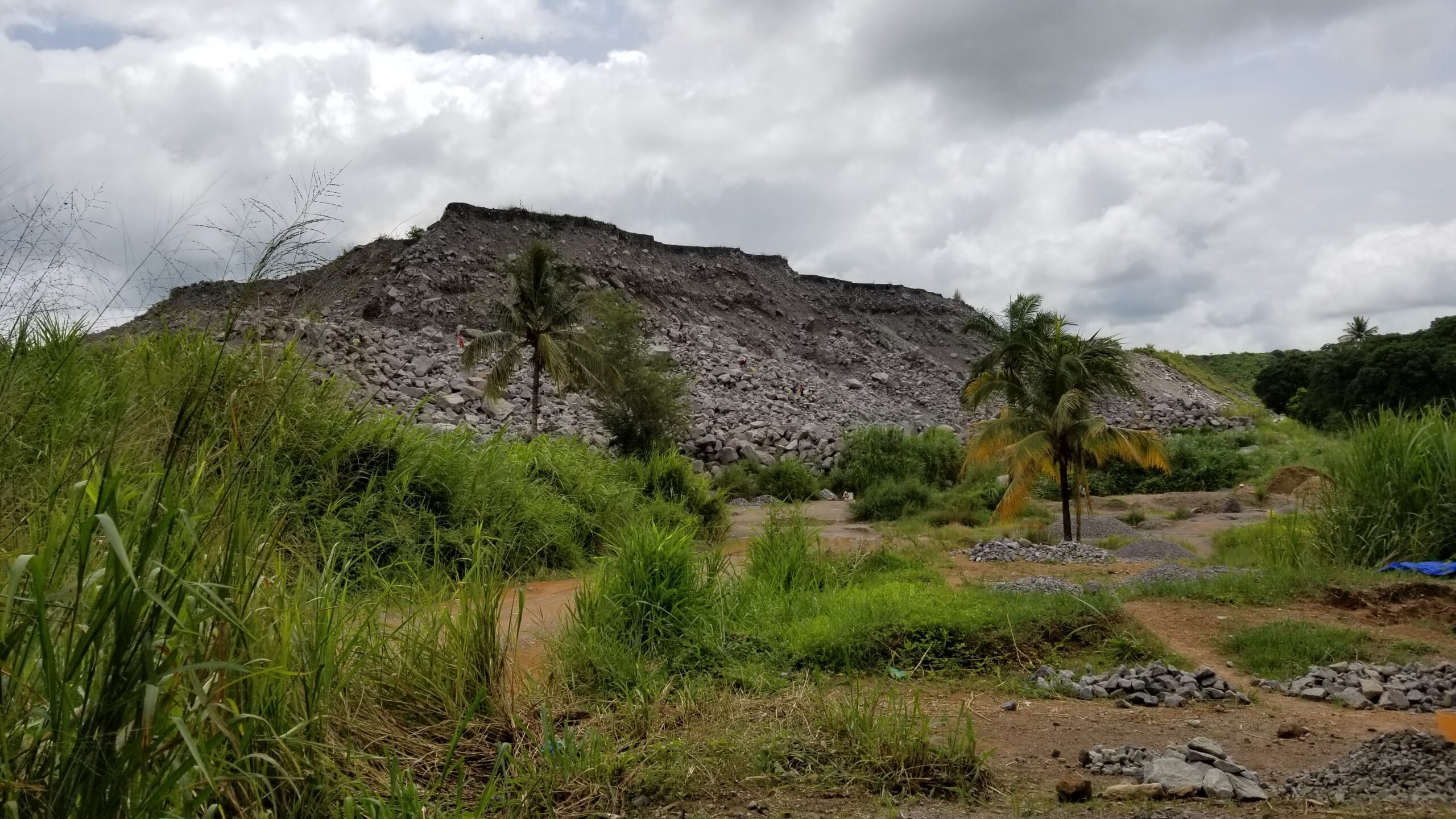
    For years, the members of MAPO – residents of Gbense and Tankoro Chiefdoms in Koidu, Sierra Leone, have lost their homes, farms, and livelihoods, and suffered pollution and health problems, due to the Koidu Mine, operated by Octea subsidiary Koidu Ltd.  Bayoh lamented the destruction of the community: “We used to farm and live in peace, but now our lands and water sources are poisoned and covered in rubble. Our homes are shaken by explosives every day.”

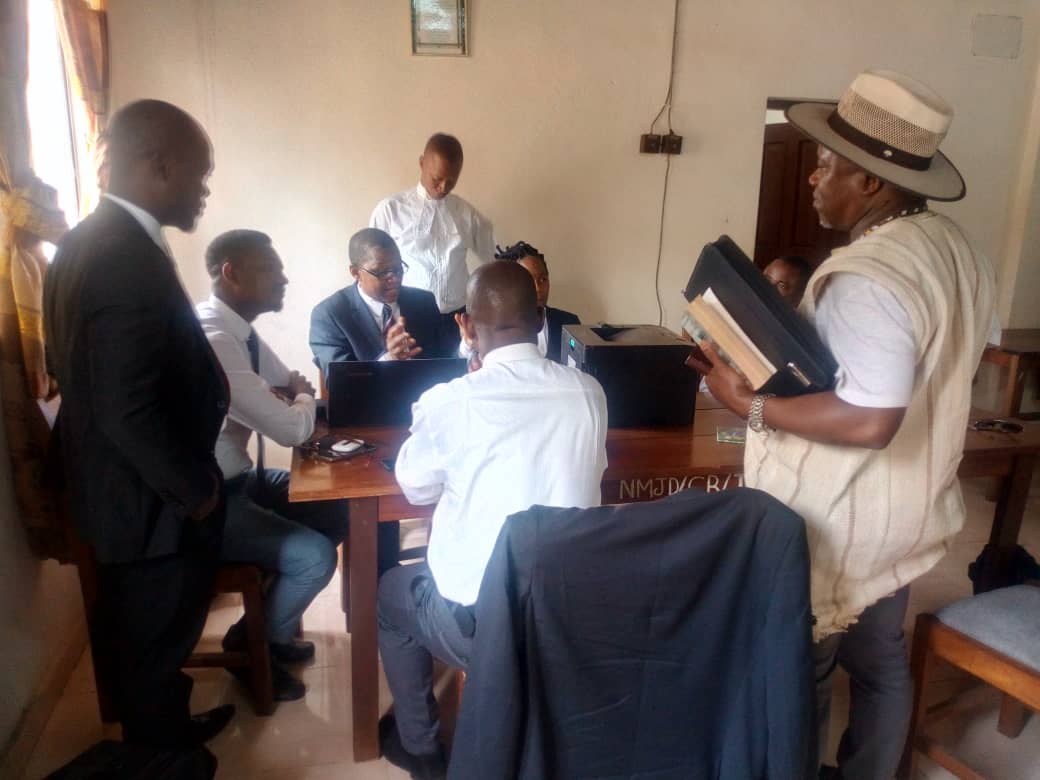
    In April 2019, MAPO and many of its members filed suit against Octea and Koidu Ltd., several of their affiliates, and their Managing Directors, in the courts of Sierra Leone.  But the convoluted structure of the BSG Resources Group, which includes the defendant companies and stretches across several notorious offshore secrecy jurisdictions including the British Virgin Islands, Guernsey, and Liechtenstein, has proven a major challenge.  “Octea has tried to use its international status to hide from its obligations in Sierra Leone before, and we know they’ll do it again if they get the chance,” said Benedict Jalloh, Principal of C&J Partners and counsel for the plaintiffs.


    A move by BSGR to declare bankruptcy in order to avoid its multi-billion-dollar arbitral debt to a former business partner, Brazilian mining giant Vale, further raised alarm bells.  “Courts have found that BSGR moves its subsidiaries around like in a game of Three Card Monte, using its global reach to hide documents and assets from creditors,” said Jonathan Kaufman, Executive Director of Advocates for Community Alternatives, which supports the plaintiffs in their pursuit of justice.  “This bankruptcy is just another strategy to frustrate creditors such as the Sierra Leone plaintiffs, putting assets out of reach and making it impossible to satisfy the judgment in case MAPO wins the lawsuit.”


    As the lawsuit finally moves toward trial by the end of the year, the plaintiffs have filed a Foreign Legal Assistance petition in the federal courts of New York seeking evidence that may be unavailable in Sierra Leone.  “While Octea may be able to hide evidence from the court in Sierra Leone, BSGR couldn’t hide from its in bankruptcy proceedings in New York, where they have turned over copious evidence of how their assets are held, how their Sierra Leone operations are governed, and what their liabilities may be,” said Joseph Ansumana, Kono District Manager for the Network Movement for Justice and Development, which advocates for the local community.  “All this will help us ensure that the right parties are held responsible for the environmental and economic devastation Octea has caused at Koidu.”

    Contact:


    Benedict Jalloh
    C&J Partners
    +232 76 901637
    benedictcmj@gmail.com


    Jonathan Kaufman
    Advocates for Community Alternatives
    +233 55 555 0377
    jonathan@advocatesforalternatives.org


    Joseph Ansumana
    Network Movement for Justice and Development
    +232 76 709268
    joseph.ansumana@nmjdsl.org


    Kate Fried
    EarthRights International
    +1 (202) 257.0057
    kate.fried@earthrights.org
  • ACA teams up with AAAS to help Sierra Leone citizens use science in the pursuit of justice

    ACA teams up with AAAS to help Sierra Leone citizens use science in the pursuit of justice

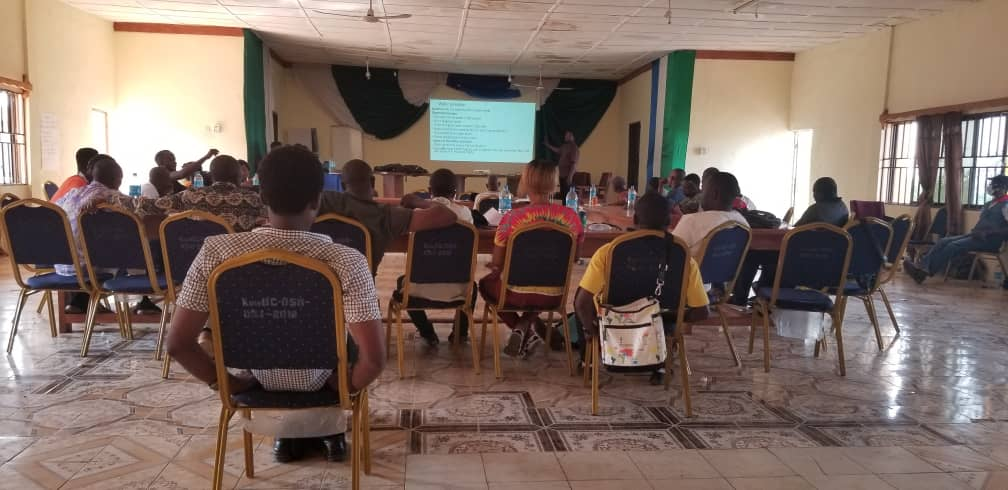
    In March 2021, members of the Marginalized Affected Property Owners (MAPO), a community-based association in Kono District, Sierra Leone, finally learned what a decibel is.

    Of course, as residents of communities that abuts the giant Koidu Kimberlite Mine, whose operator regularly shakes the foundations of their homes with massive blasts of dynamite, MAPO members have long been intimately familiar with the impacts of decibels on their lives.  They also know very well how declining soil fertility affects their crop yields, and how the contamination of water supplies leads to skin conditions and stomach ailments.  But it’s one thing to know something in your gut, and another to understand it, measure it, and use it to advocate for yourself.

    To support the affected communities in their struggle for justice against Koidu Ltd., the operator of the diamond mine, ACA and the Network Movement for Justice and Development (NMJD) organized a five-day citizen science workshop to introduce them to basic concepts and help them gather evidence.  The workshop also benefited from technical advice by the American Academy for the Advancement of Science (AAAS) On-Call Scientist program and the participation of Dr Eric

    Adjei, a soil science expert with Ghana’s Center for Scientific and Industrial Research (CSIR).

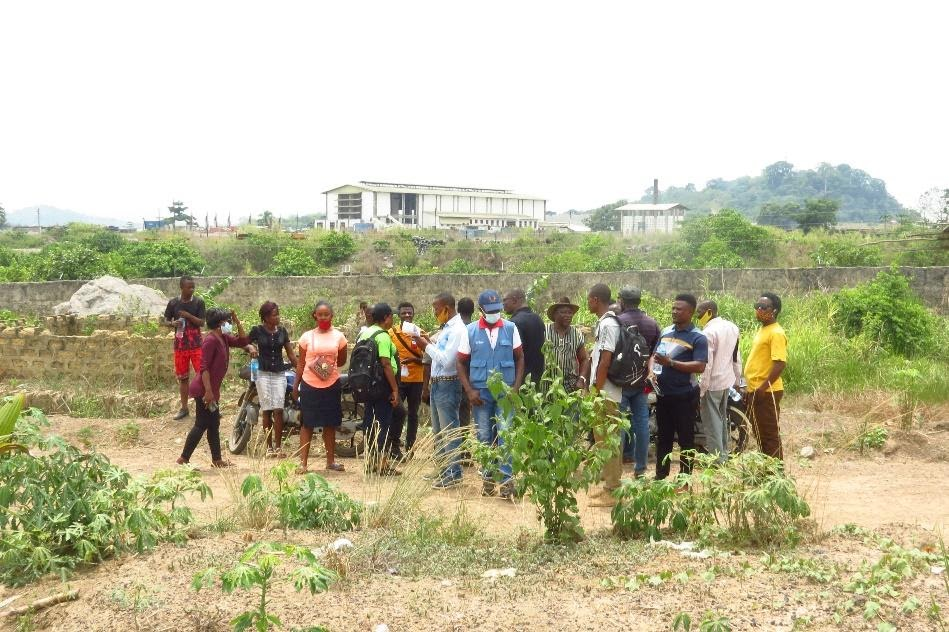
    For three days, workshop participants received an intensive education on the impacts of noise, water and soil pollution.  Then they were put to work, sent out into their own communities with measuring instruments and a detailed questionnaire.

    They were able to make their own detailed observations of their surroundings and report back to the group – how does the water taste, smell, and look?  What is happening in the immediate environment that may affect soil quality?  How noisy is it, and how does the noise affect our physical health or state of mind?  And what levels of noise, water contamination, or soil degradation are considered normal or consistent with human health?

    Thanks to this experience, MAPO members now know – among other things – what a decibel is, and that the number of decibels they are subjected to on a prolonged basis is causing long-term hearing damage.  Armed with this knowledge, MAPO members are creating action plans to further investigate

    and document the state of their natural environment and the environmental impacts of the Koidu mine.  With the assistance of ACA, NMJD, and both national and international scientific experts, they will bridge the gap between community, laboratory, and courtroom to defend and restore the water, soil, and quiet atmosphere of Kono.

  • Sierra Leone Villagers Seek Mining Justice at ECOWAS Court

    Sierra Leone Villagers Seek Mining Justice at ECOWAS Court

    29 August 2019 – The government of Sierra Leone shot and beat protesters and helped a mining company pollute and unjustly grab traditional lands, according to a human rights lawsuit filed by residents of Koidu, Sierra Leone at the ECOWAS Court of Justice.  The plaintiffs are asking for proper relocation, enforcement of the Mining Lease Agreement between the government and mining company, investigation of incidents of violence in 2007 and 2012, and compensation for their suffering and losses.

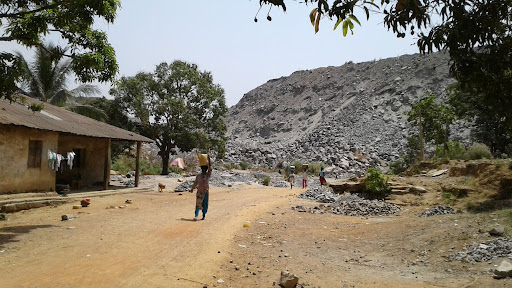
    Many Koidu residents live in the shadow of the immense waste dump of a diamond mine operated by the Octea Group. These individuals have been awaiting relocation for over a decade, with no end in sight. The proximity of the mine to their homes means mining activities have disrupted their livelihoods and access to basic living necessities. Explosions from the mine have sent rubble flying onto their farmland and crashing through their roofs. With support from the State, the company has diverted water onto their land, flooding it. Women who previously farmed small plots have lost that land and are now reduced to taking rocks from the company’s giant rubble pile and breaking them into gravel to sell to construction crews. “This back-breaking work is ruining my health, but what choice do I have?” complained Aminata Bangura, leader of the cooperative of women stone-breakers. “I can barely make enough to feed my kids, but I don’t have land to grow food for them anymore.”

    Madam Kumba King, Tankoro Queen Mother and representative of the Marginalized Affected Property Owners Association, lamented the destruction of their community. “We used to farm and live in peace, but now our lands and water sources are poisoned and covered in rubble. Our homes are shaken by explosives every day.” Tremors from blasting cracks residents’ walls and collapses their ceilings. Throughout the community, those who once had ready access to well water now find their wells dry during the dry season because the mine has disturbed the water table.

    Despite the residents’ complaints, the government has failed in its legal obligation to ensure the relocation of these individuals and the proper replacement of their land and homes. Even those that have received relocation report that the resettlement site lacks basic living essentials.  Their new houses are smaller than their old homes and have already started crumbling after just a matter of months due to poor construction.

    The complaint further alleges that the Sierra Leone repeatedly committed unjustified violence against demonstrators in Koidu.  According to several witnesses, police officers used firearms to disperse peaceful protesters, resulting in two deaths and several grave injuries in 2007 and again in 2012. After the shooting in December 2007, the government created the Jenkins-Johnston Commission of Inquiry, which found the government and the company to be jointly responsible for the violence and recommended important police reforms. Although the government officially accepted these proposals, it failed to implement any of them, and violence struck again in December 2012. For both incidents, the government did not hold any security officers responsible, nor did it provide assistance to the victims and their family members, who continue to wait for justice to this day. The community is represented by a consortium of West African lawyers from the Public Interest Lawyering Initiative for West Africa (PILIWA), as well as C&J Partners of Makeni, Sierra Leone.

  • Sierra Leone communities win right to sue Octéa mining companies jointly in local courts

    Sierra Leone communities win right to sue Octéa mining companies jointly in local courts

    Plaintiffs from Gbense and Tankoro Chiefdoms near Koidu City in Kono District, Sierra Leone, have won an ex parte ruling allowing them to serve lawsuit documents on six companies of the Octéa Group and their Managing Directors at Koidu Limited’s address in Freetown.  This court order will allow them to sue all six companies together, despite their attempts to avoid service by failing to register in Sierra Leone.

    The National Movement for Justice and Development (NMJD), a Sierra Leone non-profit that has worked with the Koidu communities for years, and Benedict Jalloh of C&J Partners filed this action on behalf of the communities on March 6, 2019. The judge delivered a judgment in their favor a week later on March 13, 2019.

    In order to commence a lawsuit against the defendants, the plaintiffs first needed to serve the Octéa companies with papers informing them of the legal action. However, they were initially barred from taking this first step. “Before we could even begin our lawsuit, we had to jump a major hurdle,” said Daniel Fofanah, Legal Officer NMJD. “Most of the defendants had no listed address in Sierra Leone, even though we know they operate here.” Lawyers for the plaintiffs tried to contact the defendants through normal channels but did not receive a response. The lawyers thus filed an originating summons so that the Octéa group could not avoid legal repercussions by hiding behind its corporate structure.

    The evidence presented to the judge included documents from the Panama Papers in which an Octéa parent company’s bankers discussed sending important documents to the company’s “operational” address that it shares with Koidu Ltd. in Freetown, the capital of Sierra Leone. With the court’s recent ruling, NMJD and C&J Partners can now serve documents on all the defendants at this same address. “We told the Court that the Octéa companies were trying to avoid being served with lawsuits, and the Court agreed,” said Benedict Jalloh, Principal of C and J Partners and attorney for the plaintiffs.  “Now we can serve papers on all the defendants at the address of Koidu Ltd., and they won’t be able to argue that they’re all separate entities.”

    ACA supported this legal action by providing strategic advice, international law research, and analysis of evidentiary submissions (such as the Panama Papers documents).  NMJD is the beneficiary of a grant from the Public Interest Lawyering Initiative for West Africa that supports the legal fees and covers logistical costs for the case.


    Documents: