Category: What We Do

  • Akrofufu Chief, others donate towards FCAP implementation

    Akrofufu Chief, others donate towards FCAP implementation

    The chiefs and people of ten communities in the Atiwa West District of the Eastern Region have expressed their commitment toward the timely and successful implementation of all projects under the Facilitated Collective Action Process (FCAP), also called “Oman yie die” in Ghana.

    To this end, the Chief of Akrofufu, Osabarima Adugye Gyamfi and his elders are supporting the construction of a 500-bed capacity dormitory for the Akrofufu Technical Institute, which is one of the new projects being implemented under FCAP, with Gh.c 10,000.

    In addition, the chief and his elders have resolved to support the construction of the project with communal labour to ensure that the project is completed on schedule.

    The project, according to them, will not increase enrollment at the Akrofufu Technical Institute but will further boost Technical and Vocational Education and Training (TVET) in the area and the country as a whole.

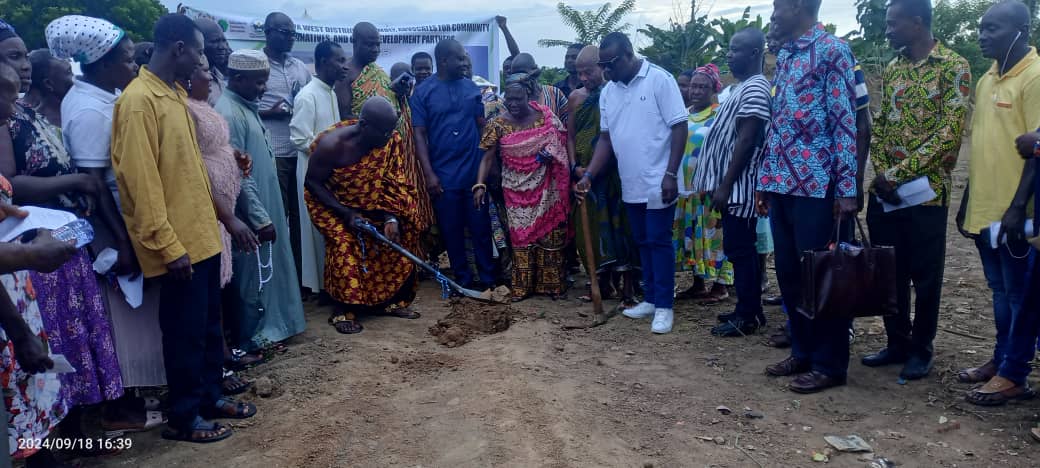
    At a ceremony at Akrofufu to symbolically signify the commencement of construction works on FCAP project in Asunafo, Muoso, Ekorso Akwadum, Akwasuaso and Akrofufu, Osabarima Adugye Gyamfi commended the Atiwa West District Assembly and Advocates for Community Alternatives (ACA), an Accra-based non-profit-making organization, for their collaboration which has resulted in several other projects across the area.

    A similar ceremony was held at Awenare to signify the commencement of projects in Pameng, Amonom, Banso, Akyem Akropong and Awenare.

    Madam Lordina Ofori-Atta, a native of Awenare, who was the Special Guest of Honour, donated Gh.c 10,000 toward the construction a 3-unit classroom block for the local Roman Catholic Junior High School and further pledged to galvanize support from Awenare citizens abroad in connection with other developmental initiatives in the town.

    The Atiwa West District Chief Executive, Douglas Puddy Amponsah described the collaboration with ACA as “very timely as it will not only bring visible improvements to the lives of residents but also carry the entire community along a development path that is in line with the Assembly’s Medium Term Development Plan.”

    He entreated people in the beneficiary communities to support the implementation of the projects with communal labour to augment the financial support from ACA and the District Assembly.

    “Any community member who does not participate in communal work in relation to this project willfully will be severely dealt with”, he emphasized.

    Geoffrey Fummey, a Community Trainer of ACA, recounted how the journey of community engagement to discuss, plan and choose a project of benefit to all started in March 2024 and with dedication, commitment and sacrifice of some devoted community members, the projects are finally being implemented.

    “I therefore encourage every community represented here to get to work immediately the sod is cut to finish their projects in good time. Remember we have just December 2024 as the deadline to complete all projects”, he stated.

    Background

    Advocates for Community Alternatives (ACA), a non-profit-making organization, has partnered with four District Assemblies in Ghana to implement the Facilitated Collective Action Process (FCAP), also called “Oman yie die” in 45 communities.

    The 45 communities in Abuakwa South, Fanteakwa South and Atiwa West District of the Eastern Region and Nkoranza South Municipality in the Bono East Region, as part of the partnership, have pledged to adopt FCAP as a community development tool to implement all community-based projects in line with their Medium-Term Development Plans.

    “Oman yie die” encourages communities to create a common development vision and equips them with skills and financial resources – including a $9,000 microgrant – to pursue it.

    As part of the collaboration, each district assembly is to provide supervision, technical support as well as counterpart funding of $1,000 towards each of the projects.

    Projects being provided under this partnership include laboratory, mechanized boreholes, markets, classroom blocks, a dormitory, teachers’ quarters, CHPS Compound, OPD facility, foot bridges, extension of electricity, water and the construction of community centers.

    Also being implemented in some of the communities are livelihood enhancement projects such as palm-oil production centre, pastries-making centre, corn-mill operations and a pig farm.
  • FCAP microloan turns many lives around in Sierra Leone

    FCAP microloan turns many lives around in Sierra Leone

    Several women in the Sierra Leonean town of Koidu in the Kono District of the Eastern Region, have been sharing their testimonies about how their socio-economic lives have been transformed in the last few years following the disbursement of microloans to them under the Facilitated Collective Action Process (FCAP).  But for FCAP, most of these women would not have any financial freedom and would probably be wallowing in abject poverty and become a burden on their families and society at large. Five beneficiaries of FCAP microloan in Koidu have been sharing their success stories about this intervention, which is being implemented by Advocates for Community Alternatives (ACA) in partnership with the Network Movement for Justice and Development (NMJD) in Sierra Leone.

    ACA is an Accra-based non-profit-making organization that helps West Africa communities are threatened by the destructive impacts of extractives-led development to take control of their own futures while NMJD is a Sierra Leonean civil society organization that engages in advocacy and strengthens the capacity of civil society organizations to effectively engage women, men, children, communities, government and other actors for the transformation of society.

    Here are excerpts of testimonies of five of the FCAP beneficiaries in Koidu whose lives have been impacted positively by the intervention and are currently using their skills acquired to impact the lives of other women in their respective communities.

    Finda Moiwo 46years, 7 dependents

    Life was extremely difficult for me and my family prior to my encounter with FACP. In fact, it was very challenging to even provide food at home.

    Breaking stones for construction works was my main occupation but I was unable to make any reasonable income out of this to support the upkeep of my home primarily due to the lack of funds to acquire the requisite tools and get additional hands to undertake this business. 

    I was therefore very excited to be part of the training organised for beneficiaries of the FCAP microloan. Before the grant was given to us, we were trained in strategies required to run a business and financial management skills, among others.

    As a result, when the microloan was finally advanced to me, I was able to buy my working tools and hire additional casual staff to help in breaking more stones daily.

    I can confidently say today that I’m now able to effectively take care of my children. I can say without any equivocation that the microgrant I received under FCAP has turned my fortunes around and I will encourage my colleague women who are currently benefitting from it to attach maximum seriousness to the project for their own good.


    Alice Komeh, 56years, 7 dependents

    I was engaged in backyard gardening (a mini farm), which obviously yielded a very small quantity of foodstuff. Life was difficult but there was nothing I could do because I didn’t have any capital to start any business. 

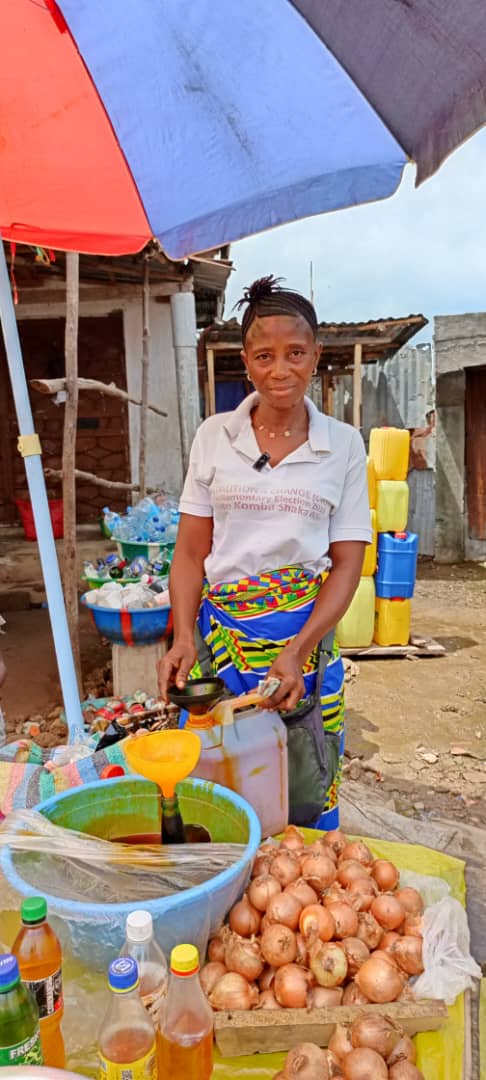
    With as many as seven dependents, the FCAP microloan therefore came as a great relief as it enabled me to venture into trade. When I received the microloan, I quickly started trading in palm oil – both retail and wholesale.

    My life has never been the same since I ventured into this business as I have no problem at all taking good care of my children and other dependents.

    I am currently considering an expansion of the scope of my trade to include other items so I’m also looking at acquiring a shop that can accommodate my wares.

    Fatu Finda Ali, 40 years, five (5) dependents

    I have been into the palm oil business for quite some time. I was mainly into the sale of oil on a retail basis due to my low working capital. I was unable to trade in good quality palm oil because of my poor financial state and this led to low patronage of my products. I always wished to expand my business, but it remained a wish until the FCAP microloan came to my rescue. 

    For me, the business training that preceded the microgrant was an eye-opener because it enabled me to quickly expand my business as soon as I accessed the grant. Also, the training inculcated in me the need to develop savings habit, which has secured my future against any possible eventualities.

    Today, I’m now in the position to deal in good quality palm oil and vegetables and I’ve progressed from being a retailer to a wholesaler. Indeed, this intervention has led to an improvement in my standard of living, and I can take good care of myself and my children.


    Mabel Sia Ellie, Seamstress & trader, 50years, 9 dependents

    Even though I was working as a seamstress by profession, life was extremely difficult because of my low customer base. Only a few people used to frequent my shop to sew their dresses, and this really made life quite unbearable for me.

    It was therefore heart-warming when the news came that FCAP was coming to my aid through a microloan. Together with other women in my community, ACA and NMJD took us through training on various business strategies, record-keeping, among others. The training equipped me with the requisite skills which have helped me to effectively manage my work.

    I must say that in addition to my dress-making business, I’ve now added the sale of palm oil and other assorted items in my shop. This has really given me financial independence and enhanced my living conditions. 

    The fact that there is no interest on the microloan makes it unique in my opinion. What really matter most are your time and dedication in attending meetings. I’m proud to say that I’ve started imparting the knowledge I gained during the training on others.

    Esther Moiwa, 55years, 7 dependents

    Before my encounter with the FCAP intervention, I was engaged in petty trade in assorted items. I could not keep any records of my business, and this really had a toll on sales and my entire work. I simply lacked the basic skills to keep any records.

    However, upon the completion of the training given to us ahead of the disbursement of the microloan, I am now able to manage, maintain and keep proper records of my business.

    Besides, there is vast improvement in my business because I’ve been able to add rice, oil, palm oil and other items. More importantly, I’m able to support my husband financially and gradually, I could realize that I’m becoming financially independent.

    About FCAP

    Advocates for Community Alternatives (ACA) is a non-profit-making organization devoted to championing the course of West African communities which are threatened by the devastating effects of extractive activities to chart a new path of development through various assistance.

    One of the ways through which ACA supports communities to chart a new course of development and take control of their futures is through the Facilitated Collective Action Process (FCAP), a process developed and popularized in East Africa by Spark MicroGrants, a partner organization of ACA.

    (This write-up was co-authored by Richard Boahen of ACA, Accra, Ghana, and Francess Finda Gbondo of NMJD, Kono District, Sierra Leone with support from FCAP team)

  • So Abapa Boateng: My community development practice experiences with ACA

    So Abapa Boateng: My community development practice experiences with ACA

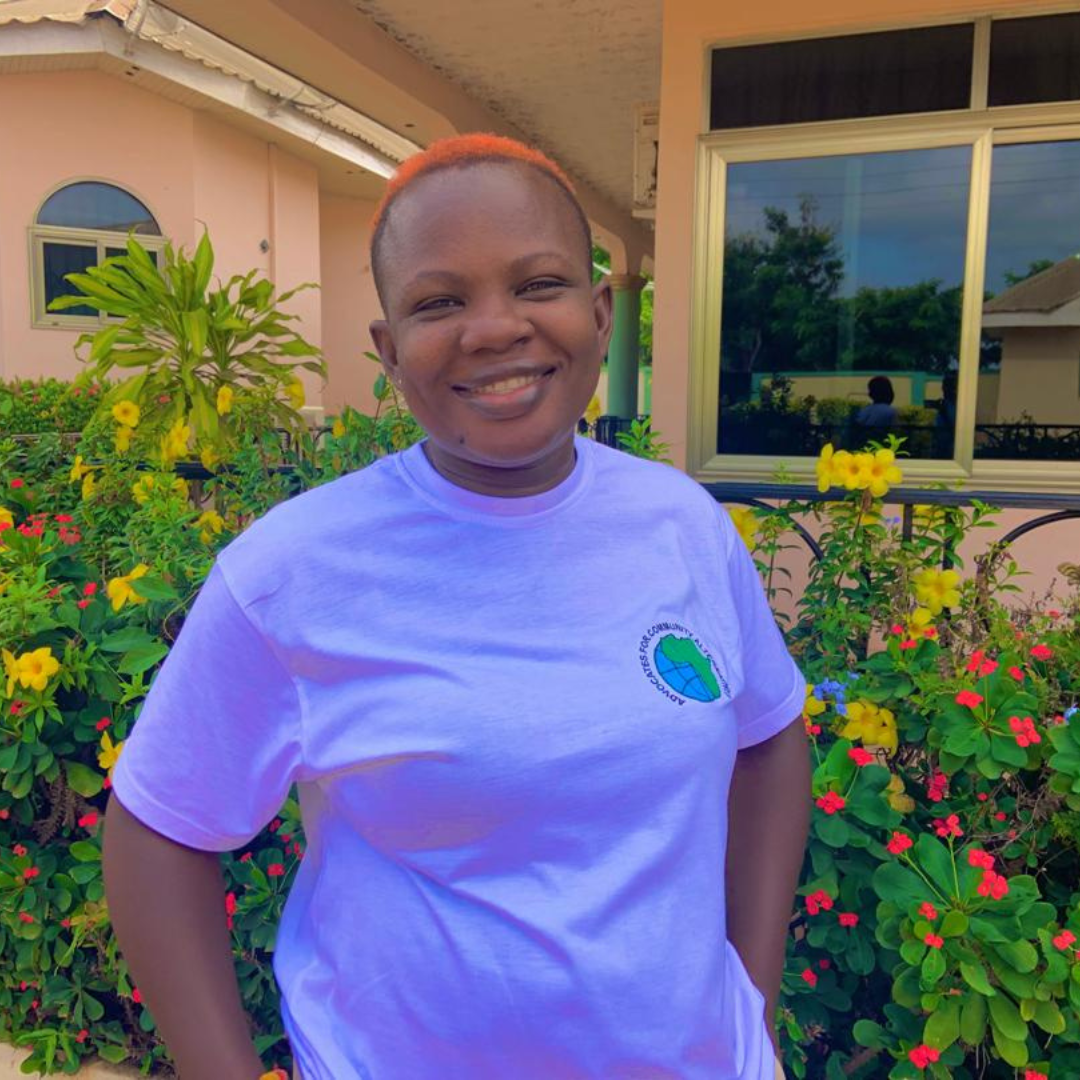
    Today, one of our newly recruited Trainers with the Community-Driven Development Department, So Abapa Boateng, shares her experiences since she joined ACA in February 2024. She says the experiences she gathered in her previous workplace are being sharpened and appreciated in multiple folds in ACA.

    The email read “You are hired”, my joy was out of this world. I screamed, I jumped, I danced to no song; the excitement was indescribable. “Wow”, I was lost for words. “Finally, Finally,” those were my words when I could speak.

    My time with Advocates for Community Alternatives has been very fulfilling and I dare say, it has been worthwhile joining this exciting team of development practitioners.

    “Welcome to our new team members, Geoffrey Fummey Horkpe, Bommie Adamu, Joseph Obeng, Ingrid Frempong and So Abapa Boateng” a beautifully written note placed on the wall in the Osino office welcomed the new staff members. It was heartwarming because I was not quite certain on what to expect on my first day in the office, but the team made it so welcoming, it was as though we knew each other for a very long time before we got to the office.

    The Director of Community-Driven Development, Nana Ama Nketsia-Quaidoo (Mrs), was so welcoming as she clearly outlined what was expected of us as new staff members.

    Osei Nimako, the Project Manager was so excited and did not spare us a minute of laughter and jokes. Francis Manu and George Mpoah were so knowledgeable in their fields, and it made it super easy to understand what ACA does within the various partner communities.

    And oh, the time with the Executive Director, Jonathan Kaufman – I loved the chocolates he got for us. We could make our choices; he was ever ready to answer all the questions on our newly recruited minds.

    It has been smooth sail for the months I have worked with ACA. I am even more enthused that the organization gives room for innovation and creativity because working with the communities is not cast in stone.

    The decision to move out from the Northern region of Ghana where I had practiced community development work since 2008 to Nkoranza in the Bono East region has been very fulfilling. My experiences gathered in Education, Food Security and Livelihood, Entrepreneurship, and Gender, are being sharpened and appreciated in multiple folds in the organization.

    The journey with Advocates for Community Alternatives has just begun and I am looking forward to working with communities to attain their development vision one community at a time.

    I believe that I can be creative in facilitating communities to attain their development vision and I’m always encouraged by the fun and excitement that go with my community-based work.  This spurs me on to do more and always put on my creativity cap. My level of confidence is soaring up higher because the team is always on hand to sharpen the rough the edges, so we get the desired results in the development journey. There are well tailored training tools and manuals to make facilitating trainings, monitoring and evaluating results very detailed and easy.

    Even more fulfilling most of the time is the positive feedback from the community meeting I facilitate. “Madam, not only have we learned how to develop a vision for our community, but I have also learned to use that knowledge for myself. I know I must have a vision I am working towards for my life and family, thank you.” A community member expressed his appreciation after a community meeting.

    I have no doubt that I am going to make a positive impact on ACA and the communities assigned to me while broadening my horizon further by learning from my colleagues and most of the people I encounter through the performance of my duties.