Category: Science

  • Roots of hope: CiCoNet communities in Nkoranza and Osino plant for the future

    Roots of hope: CiCoNet communities in Nkoranza and Osino plant for the future

    In Nkoranza and Osino, members of the Citizens’ Committee Network (CiCoNet) came together to do more than plant trees—they planted resilience. Faced with hotter days, declining soil fertility, and shrinking green cover, these communities, supported by Advocates for Community Alternatives (ACA), joined hands to restore their environment one seedling at a time.

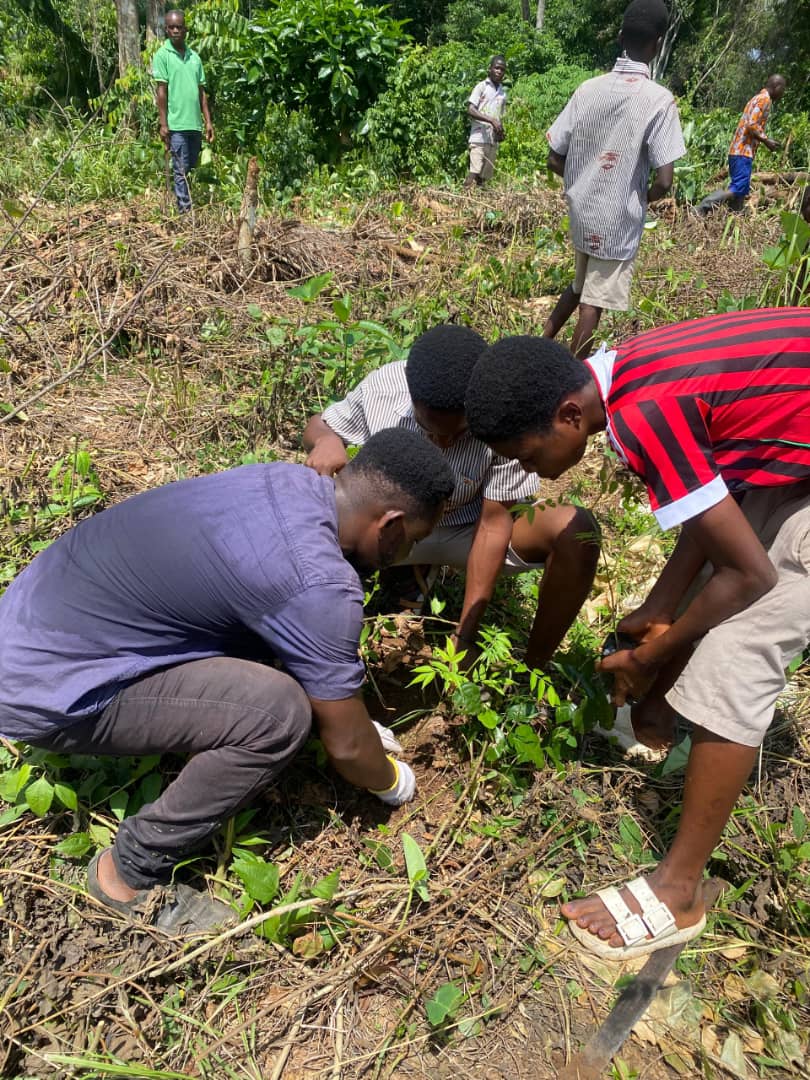
    The exercise blended action with education. CiCoNet members, alongside schoolchildren, farmers, and youth groups, discussed why trees matter: they safeguard water sources, enrich soils, provide shade, and buffer the effects of climate change. The seedlings—chosen carefully for the local environment—included both fast-growing species for soil protection and indigenous trees to restore biodiversity.

    In Nkoranza, the local office of the Forestry Commission supported the exercise by donating and supplying seedlings. Schoolchildren proudly carried these young trees to their planting spots, eager to nurture them into the future. One student declared: “This is my tree. I will water it and watch it grow.”

    In Osino, farmers reflected on the past. An elder recalled: “When I was young, our farms had shade and streams. Today the sun is harsher, and the soil is tired. These trees will bring life back.”

    The training emphasized sustainability as much as planting. CiCoNet members and local committees learned how to care for seedlings, protect them from livestock, and monitor their growth. Follow-up visits were planned to ensure the trees would survive and flourish.

    By the end of the day, hundreds of seedlings had taken root—but something deeper had also been planted: a renewed sense of ownership and hope. For Nkoranza and Osino, tree planting through CiCoNet was not just symbolic. It was a living commitment to climate resilience, stronger communities, and healthier futures for generations to come.
  • Igbogidi community takes action to protect their water

    Igbogidi community takes action to protect their water

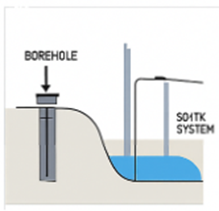
    When Paul Adjekota, a Science Fellow with Advocates for Community Alternatives (ACA), first visited Igbogidi in southern Nigeria, he noticed something alarming: boreholes drilled just a few feet from septic systems.

    Concerned about possible contamination, Paul shared his observation with local leaders. The community agreed — something had to be done.

    The Power of Participation

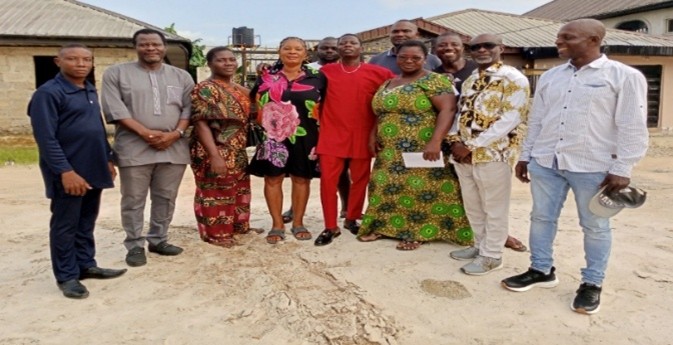
    Over a dozen community members — including farmers, traders, youth, and elderly people, stepped up to be part of the solution. Under the guidance of Professor Oghenero Asuma, a hydrogeologist from Delta State University, they began learning how to collect and test water samples themselves.

    “I don’t have much schooling,” one mother said during their first meeting, “but I know this is important for our children.”

    What the tests revealed

    Water samples from six sources — four boreholes and two wells — revealed some serious concerns:
    • pH levels ranged from 3.8 to 5.3, meaning the water was acidic and unsafe to drink.
    • Coliform bacteria (1–7 cfu/ml) were present in all samples, indicating contamination likely from nearby septic systems.
    • No heavy metals were found, offering some reassurance that there was no dangerous presence of lead, chromium, or nickel.

    From information to action

    Instead of creating fear, the test results sparked a wave of positive change:

    • Families have begun boiling their water or using chlorine drops to make it safer for drinking.
    • Some households have also started experimenting with periwinkle shells, a local resource, to help reduce acidity in their water.
    • The community made a firm decision to enforce safe distances and proper depth when siting in new boreholes.

    One youth leader shared, “If someone wants to drill a borehole tomorrow, I now know the right depth and distance to insist on.” Another added, “Before, I just fetched water. Now, I understand what makes water safe or dangerous.”

    Planning for the future

    Igbogidi isn’t stopping here. The community has committed to:

    • Repeat water testing every three years
    • Share their knowledge with neighboring villages
    • Monitor future water projects closely

    Already, nearby communities are starting to ask questions about their own water sources — a ripple effect of awareness and empowerment.

    A Model for West Africa

    Igbogidi’s experience is a powerful example of what can happen when science meets community action. In many parts of West Africa, poor borehole placement still threatens public health. But by combining expert guidance with local involvement, communities can take control — ensuring clean, safe water for generations to come.

  • Enduring multiple hazards due to railway construction: The sad story of the Sekosuria Community

    Enduring multiple hazards due to railway construction: The sad story of the Sekosuria Community

    The Sekosuria community, located in the Forécariah Prefecture within Guinea’s Kindia Region, continues to suffer the consequences of an ongoing railway and port construction project near the Morebayah estuary, just a few kilometers away. What was once a quiet rural area is now plagued by environmental disruptions that threaten livelihoods, safety, and health.

    Tunnel construction causing alarm

    A tunnel currently being excavated as part of the Simandou iron ore railway project — around 11.8 kilometers from the Kuru Mountains, south of the Fouta Djallon Highlands — is a major source of concern. Residents report persistent blast noise and ground vibrations from the railway work, which they say are damaging their homes.

    Cracks in buildings and a collapsing Health Post

    Community members shared that the constant blasting has caused cracks in both old and newly built structures, weakening them significantly and turning them into potential death traps. During a recent visit, residents pointed out multiple affected buildings, including one that reportedly collapsed due to vibrations.

    Even a newly constructed health post — a critical resource donated to the community — has developed widespread cracks, raising serious safety concerns.
    Noise and water pollution add to woes

    Beyond the structural damage, noise pollution is a daily challenge. The community also reported pollution of their main river, allegedly due to sewage discharge from the construction camp. This issue is particularly noticeable during the rainy season, when runoff becomes more intense.

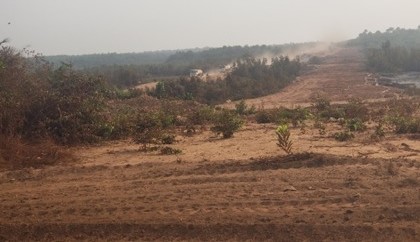
    Dust pollution is another pressing concern. Construction-related vehicles, often moving in convoys, generate thick clouds of dust on the access roads. According to residents, “You must park off the road for them to pass.” They also noted that mud from bridge construction sites is washing into fertile farmland, threatening the stream that supports their vegetable cultivation.

    About the project

    The construction work is part of the Simandou iron ore project, one of the world’s largest undeveloped iron ore reserves. The project, spearheaded by the Winning Consortium Simandou (WCS), involves building a 650-kilometer railway from the Simandou mountain range to a new port near the coast. While the project promises significant economic benefits to Guinea, its environmental and social costs are becoming evident in communities like Sekosuria.

    Despite repeated complaints, residents say their grievances have been ignored by both the project authorities and government officials. As of the time of reporting, attempts to obtain comments from the Winning Consortium Simandou and relevant government representatives have not been successful.

    What can be done?

    Community members are calling for urgent attention and action. Potential steps that stakeholders can take include:

    • Conducting independent environmental and structural impact assessments in affected communities.
    • Providing compensation to families whose homes or farmland have been damaged.
    • Establishing a formal grievance mechanism that allows community members to report issues and receive responses.
    • Implementing dust and wastewater control measures to mitigate environmental damage.
    • Improving communication and transparency between the community, construction teams, and government officials.

    As development projects like Simandou progress, the voices of local communities must not be drowned out by the noise of construction. Without mitigation and inclusion, infrastructure meant to drive national progress could leave some communities behind — or buried beneath it.

  • Simandou-related construction works: Senguelen residents in Guinea share their ordeal

    Simandou-related construction works: Senguelen residents in Guinea share their ordeal

    Some residents of Senguelen, a farming community in Guinea, are worried about the effects of construction works in the area on their lives. The on-going construction of a port and railway facilities at the Morebayah estuary, which is few kilometers to Senguelen, has resulted in direct environmental impacts on their livelihoods.

    Senguelen community members have not been mincing words on their ordeal. At a recent visit to the community to ascertain the veracity of these concerns, it came to light that several farmers who cultivate rice had their rice fields impacted by the construction of the railway.

    Rice farms destroyed

    A road has been constructed across a major river to serve as a platform for laying of the rails without any bridge to allow the free flow of water from upstream to the downstream of the river. This has since prevented water from reaching the rice fields and hence their destruction.

    As a result, these families have not been able to farm for the past three years. According to them, Winning Consortium Simandou (WCS) officials gave them a sack of rice as compensation for the destruction of the rice fields. The contractors later inserted narrow pipes under the platforms on the river to serve as passage for the river water. The pipes were yet to be inserted at some dug out places of the platform across the river at the time of our visit. Some amount of water now flows to the downstream, but its flow pattern has changed and has not been able to restore the productivity of the rice fields.
    Contaminated water

    A rice farmer, Mr. Dawuda Sila, who has been cultivating several acres of rice along the banks of the upstream of the river, complained that he has not been able to farm over the past three years due to the contaminated water which is discharged onto his farm from the construction camp. Our team observed that long pipe connected from the camp discharges wastewater onto Mr. Sila’s farm. The pipe was not flowing at the time of our visit; however, remnants of previous discharge were seen. The soil and water were observed to be oily suggesting the discharge fuel and other oil-based wastewater into his farm which ends up in the river.

    Dust

    Residents also complained about dust from the construction site and from the dusty roads and complained that the heavy-duty vehicles that are being used by the contractor generate a lot of dust any time they use the dusty roads. What makes the situation worse is that the vehicles mostly move in convoys, making the amount of dust generated very intense to the extent that it completely blinds other road users. Besides, the dust enters the houses close to the road. Worst still, it is practically impossible to wear white clothes in this area because of the dust. The contractors have been watering the road but due to the hot weather the water dries up quickly and the problem with the dust continues.

    No compensation

    Mr. Dawud Ahmed complained that portions of his farm were destroyed by the contractor to create an access road and was told that the area has been compensated for the creation of the access road. It later turned out that that was not the route where the access road was supposed to pass and therefore the clearing was discontinued. Mr. Ahmed said he had reached out to the company about the issue which resulted in the destruction of his oil palm and cashew trees but to date e is yet to be compensated for the destruction of his farm. He has followed up several times, but his effort has not yielded any result.

  • Sowing Seeds of Sustainability: CiCoNet Leads tree planting exercise in Nkoranza

    Sowing Seeds of Sustainability: CiCoNet Leads tree planting exercise in Nkoranza

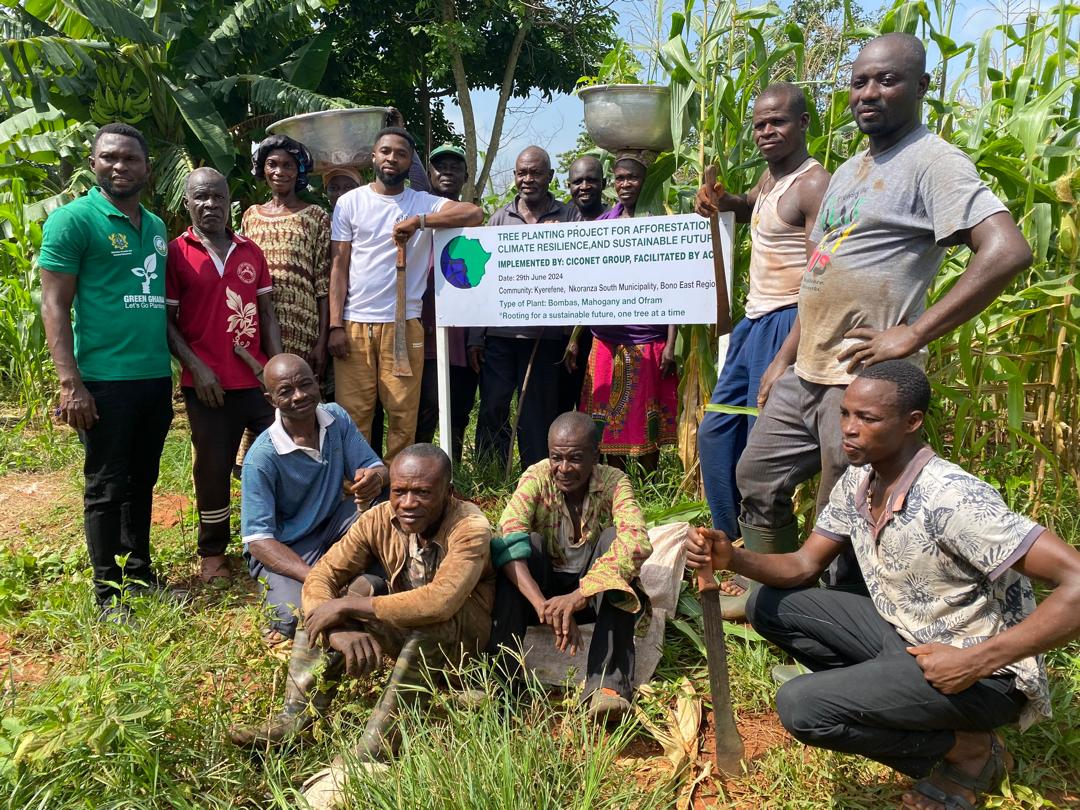
    The Citizens Committee Network (CiCoNet), a community-based organization dedicated to promoting sustainable development, has embarked on a tree planting exercise at Kyerefene, near Donkro Nkwanta, in the Bono East region of Ghana.

    The event, held on Saturday, June 29, 2024, was part of ACA’s citizen science program, which aims at engaging communities in environmental conservation efforts.

    The exercise saw the planting of over 500 tree seedlings, including bombax, mahogany, and ofram species, known for their ecological and economic benefits.

    CiCoNet members, ACA representatives, and a staff of the Forestry Commission, Prince Adu Adjei, joined forces to make the event a success.

    “I am highly elated to be part of this journey and actively get involved in planting trees to safeguard and foster biodiversity in ecosystems in my community,” said Comfort Takyiwaa, a CiCoNet member from Kyeradeso.

    Prince Adu Adjei, the Forest Range Manager, praised the effort, highlighting the significance of tree planting in controlling climate change and its associated consequences.

    ACA’s Project Manager, Mr. Godfred Osei Nimako, and his team ensured the exercise’s success. The Forest Range Manager advised ACA to monitor the planted seedlings to ensure their survival, emphasizing the need for sustainability and preservation of the environment.

    Monitoring

    Given the area’s susceptibility to bush fires during the dry season, the team will conduct regular monitoring visits to assess the seedlings’ growth and health, provide ongoing maintenance, including pruning and watering as needed, engage local community members in the monitoring and maintenance process, establish a system for tracking and reporting on the seedlings’ progress and create a fire belt, a strip of land cleared of flammable materials, around the planted areas to prevent the spread of bush fires.

    The support of Mr. Cudjoe Awudi, Mr. Dickson, and Mr. Raymond Agbontor, all staff of the Forestry Commission, was invaluable to the success of the exercise. Their expertise and guidance ensured that the tree planting exercise was done efficiently and effectively.

    The exercise demonstrated the power of community spirit and environmental stewardship.

    CiCoNet and ACA’s collaboration, with the support of the Forestry Commission, sets an example for others to follow, promoting a greener future for generations to come.

  • Empowering Osino CiCoNet members: The dangers of agro-chemicals and sustainable farming practices

    Empowering Osino CiCoNet members: The dangers of agro-chemicals and sustainable farming practices

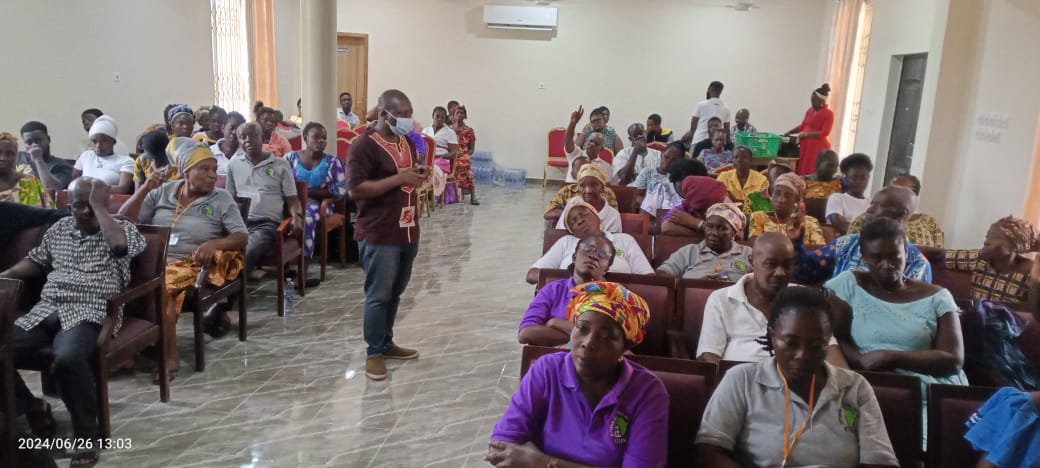
    In a bid to address the rampant misuse of agro-chemicals by farmers in Ghana, about 80 members of the Osino Citizens Committee Network (CiCoNet) gathered at Asiakwa in the Abuakwa South Municipality for an enlightening workshop.

    The meeting, facilitated by Advocates for Community Alternatives (ACA), aimed at educating participants on the proper use of agro-chemicals and sustainable farming practices.

    The continuous application of agro-chemicals by farmers has become a norm, with many unaware of the devastating effects on human health and the environment. Some farmers fail to read instructions on the chemicals, endangering their lives and those of others.

    ACA’s Science Advisor, Dr. Kwabina Ibrahim, delved into the negative effects of agro-chemicals, including respiratory and skin problems, reproductive and nervous system damage, cancer risks, and cognitive impairment. Through a PowerPoint presentation, he demonstrated the dire consequences of improper use and emphasized the need for personal protective gear.

    He introduced participants to Integrated Pest Management (IPM) and organic farming methods, offering a holistic approach to farming without relying on agro-chemicals. These alternatives promote better yields and a healthier environment.

    The workshop received an overwhelmingly positive response, with participants expressing gratitude for the knowledge gained. “I’ve learned a lot today, and I realize we need to be mindful of how we apply agro-chemicals. We’ll share this knowledge with our families and community members,” remarked Mr. George Asante, the out-going Osino CiCoNet Chairman.

    The workshop empowered the Osino CiCoNet members to adopt sustainable farming practices, ensuring a healthier future for themselves, their communities, and the environment.

  • The human cost of progress: Kaback fishermen caught in the wake of Simandou’s iron ore project

    The human cost of progress: Kaback fishermen caught in the wake of Simandou’s iron ore project

    Several concerns are being raised by some communities in the West African country of Guinea over various adverse effects of construction activities meant to pave the way for the kick-off of the Simandou iron ore mining project in Guinea, estimated at over two billion tons on some communities around the area. These construction activities continue to bring untold hardships to a lot of people whose daily lives are being impacted as a result.

    Human rights concerns, health challenges, environmental issues and disturbances on traditional and cultural monuments are key adverse effects of the various preparatory works being undertaken to pave the way for the Simandou project.

    Besides, large-scale mining and infrastructure development could lead to habitat destruction, loss of flora and fauna, and disruption of ecological balance.

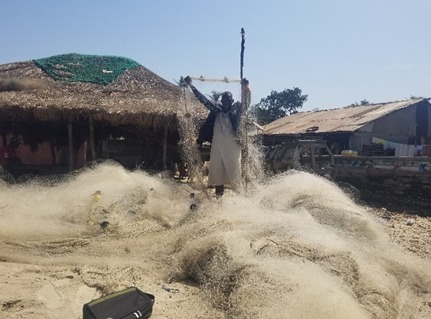
    One community that is having its fair share of the negative effects of the sea dredging and the movement of vessels to the Morebayah port is Kaback, which is a fishing community located along the Atlantic Ocean at the eastern coast of Conakry. Even though there is no construction activity within the Kaback community, it is suffering from impacts of the sea dredging works and the movement of vessels to the Morebayah port.

    During a recent visit to the area by staff of Advocates for Community Alternatives (ACA), some community members took turns to share their frustrations with the NGO, which helps West African communities that are threatened by the destructive impacts of extractive projects to take control of their futures.

    As a predominantly fishing community, the main complaint by Kaback residents has to do with the destruction of their fishing nets as they contended that there was a dredging activity in the sea close to where they have been fishing.

    According to them, the dredging was being carried out by Winning Consortium Simandou (WCS) so that the vessels could sail to the port of Morebayah.

    “After dredging, the rocks were left in the sea instead of carrying them to a safe place along the shore or inland to prevent the rocks from causing harm or injuries to other users of the sea, they left them in the sea”, the community members lamented.

    It was observed during the visit to the community that the areas where the rocks from the dredging were gathered are not demarcated and the this is destroying the nets of the fishermen anytime, they go fishing.

    Even though the Simandou mining project holds high prospects for Guinea’s economy owing to its significance not just for its scale but also because of the high-grade iron ore it aims to extract, much needs to be done to mitigate the environmental and other socio-economic effects on people.