Category: CiCoNet

  • FCAP expansion set to transform 100 communities in West Mamprusi

    FCAP expansion set to transform 100 communities in West Mamprusi

    Advocates for Community Alternatives (ACA), in partnership with SPARK Microgrants, has announced plans to roll out the Facilitated Collective Action Process (FCAP) in the West Mamprusi Municipality of Ghana’s North-East Region beginning September 2026.

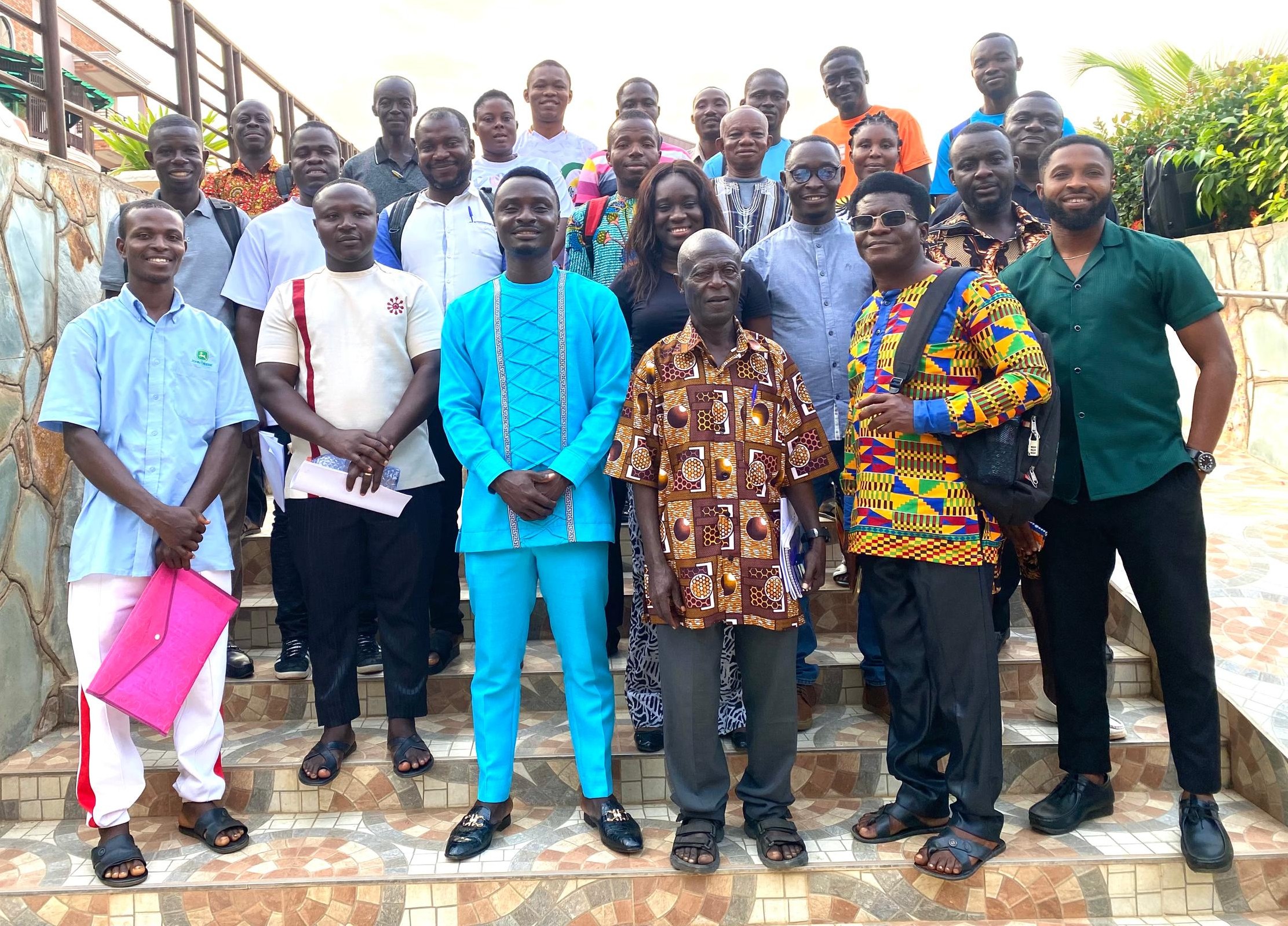
    The announcement follows a successful engagement visit by ACA’s team, including the Director of Community-Driven Development, Nana Ama Nketia-Quaidoo, Project Manager Godfred Osei Nimako, Senior Trainer George Nafiu Mpoah, and Monitoring and Evaluation Manager Jonathan Komla Agbenyega.

    The visit aimed to finalize discussions with the West Mamprusi Municipal Assembly on the implementation of FCAP and to explore possible revisions to the FCAP model, including the introduction of new Key Performance Indicators (KPIs) tailored to the needs of beneficiary communities.

    A major highlight of the visit was the signing of a landmark Memorandum of Understanding (MoU) between ACA and the West Mamprusi Municipal Assembly for the implementation of FCAP projects across 100 communities in the municipality.

    Under the agreement, the Municipal Assembly will contribute counterpart funding of $400 toward each FCAP community project, amounting to a total investment of $40,000. ACA, on the other hand, will provide microgrant support of $8,000 for each community project to drive sustainable community-led development initiatives.

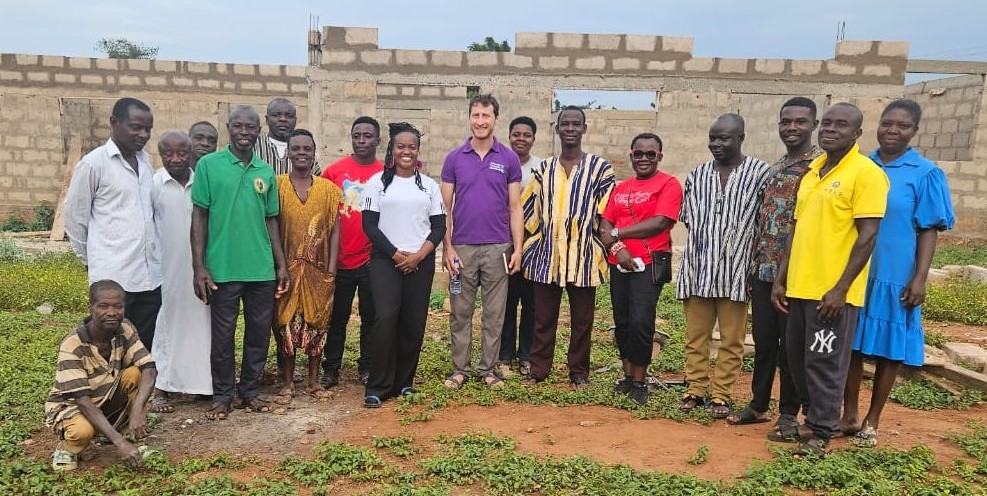
    As part of the engagement, the ACA team visited the communities of Sandan-Fong and Kukua to assess their readiness and commitment toward the implementation of FCAP. The team also held a series of strategic meetings with officials of the West Mamprusi Municipal Assembly.

    Speaking after the visit, ACA’s Director of Community-Driven Development, Nana Ama Nketia-Quaidoo, reaffirmed the organization’s commitment to empowering communities through collective action and sustainable development.

    “We are excited to officially partner with the West Mamprusi Municipal Assembly to implement 100 projects in 100 communities through the Facilitated Collective Action Process,” she said.

    She emphasized the importance of community participation in achieving long-term development outcomes.

    “From my experience, the secret to lasting change is not just funding, but collective action. When communities come together with a shared vision, the impact can be transformational,” she added.

    Project Manager Godfred Osei Nimako also described the visit as demanding but rewarding.

    “It was very stressful but extremely successful,” he noted, adding that he was impressed by the enthusiasm and preparedness demonstrated by the communities ahead of the planned FCAP rollout.

    The upcoming implementation is expected to strengthen grassroots development, enhance local participation, and promote sustainable solutions across the West Mamprusi Municipality.

    Francis

    L’extension du PACF sur le point de transformer 100 communautés dans le district de West Mamprusi

    Advocates for Community Alternatives (ACA), en partenariat avec SPARK Microgrants, a annoncé son intention de déployer le Processus d’Action Collective Facilitée (Facilitated Collective Action Process – PACF) dans la municipalité de West Mamprusi, située dans la région Nord-Est du Ghana, à compter de septembre 2026.

    Cette annonce fait suite à une visite de travail réussie de l’équipe d’ACA, comprenant la directrice du développement communautaire, Nana Ama Nketia-Quaidoo, le chef de projet Godfred Osei Nimako, le formateur principal George Nafiu Mpoah et le responsable du suivi et de l’évaluation Jonathan Komla Agbenyega.

    Cette visite visait à finaliser les discussions avec l’Assemblée municipale de West Mamprusi concernant la mise en œuvre du PACF et à explorer d’éventuelles révisions du modèle, notamment l’introduction de nouveaux indicateurs clés de performance (ICP/KPI) adaptés aux besoins des communautés bénéficiaires.

    L’un des temps forts de cette visite a été la signature d’un protocole d’accord historique entre l’ACA et l’Assemblée municipale de West Mamprusi pour le déploiement des projets du PACF dans 100 communautés de la municipalité.

    Aux termes de cet accord, l’Assemblée municipale apportera un cofinancement de 400 $pour chaque projet communautaire du PACF, soit un investissement total de 40 000$. De son côté, l’ACA fournira une subvention (micro-grant) de 8 000 $ pour chaque projet communautaire afin de soutenir des initiatives de développement durable portées par les communautés.

    Dans le cadre de cette mission, l’équipe d’ACA s’est rendue dans les communautés de Sandan-Fong et Kukua afin d’évaluer leur niveau de préparation et leur engagement envers la mise en œuvre du PACF. L’équipe a également tenu une série de réunions stratégiques avec les responsables de l’Assemblée municipale de West Mamprusi.

    S’exprimant à l’issue de la visite, Nana Ama Nketia-Quaidoo, directrice du développement communautaire chez ACA, a réaffirmé l’engagement de l’organisation à autonomiser les communautés grâce à l’action collective et au développement durable.

    « Nous sommes ravis de nous associer officiellement à l’Assemblée municipale de West Mamprusi pour mettre en œuvre 100 projets dans 100 communautés grâce au Processus d’Action Collective Facilitée », a-t-elle déclaré.

    Elle a souligné l’importance de la participation communautaire pour obtenir des résultats de développement pérennes.

    « Selon mon expérience, le secret d’un changement durable ne réside pas seulement dans le financement, mais dans l’action collective. Lorsque les communautés s’unissent autour d’une vision commune, l’impact peut être transformateur », a-t-elle ajouté.

    Le chef de projet, Godfred Osei Nimako, a également décrit cette mission comme exigeante mais gratifiante.

    « C’était très intense, mais extrêmement réussi », a-t-il noté, se disant impressionné par l’enthousiasme et la préparation dont ont fait preuve les communautés à l’approche du déploiement prévu du PACF.

    Cette mise en œuvre à venir devrait renforcer le développement à la base, accroître la participation locale et promouvoir des solutions durables dans toute la municipalité de West Mamprusi.
  • 143 farmers trained on soil fertility restoration across Osino And Nkoranza

    143 farmers trained on soil fertility restoration across Osino And Nkoranza

    Healthy soils are the foundation of productive agriculture, food security, and sustainable livelihoods. Recognizing the growing concerns among farmers about declining soil fertility and its impact on crop production, ACA recently organized a series of Community Trainings on Soil Fertility Restoration for members of its Citizens Committee Network (CicoNet) in Osino and Nkoranza.

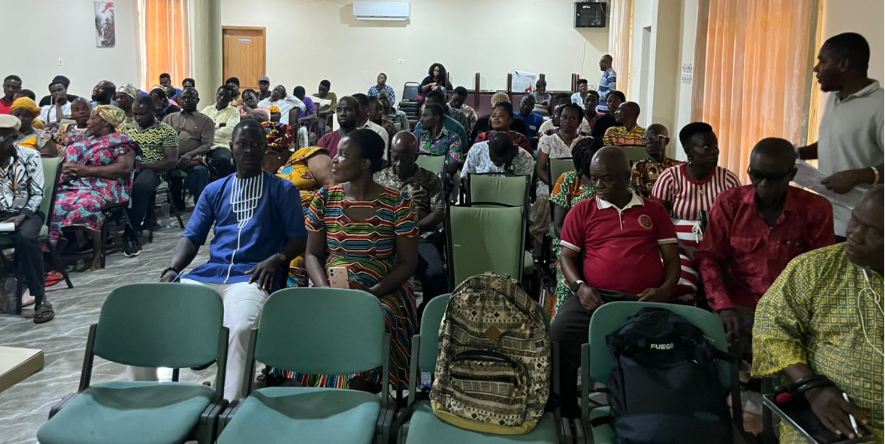
    Held on 28 and 29 May 2026, the trainings brought together a total of 143 farmers – 75 participants in Osino and 68 participants in Nkoranza – to learn practical approaches to improving soil health and restoring soil fertility.

    The trainings were organized in response to requests from farmers who wanted to better understand how to address soil degradation and improve agricultural productivity using affordable and sustainable methods. Through interactive presentations, facilitated discussions, and knowledge assessments, participants explored key topics including soil health, signs of soil degradation, composting, mulching, crop rotation, and good farming practices.

    Farmers actively participated throughout the sessions, sharing experiences from their own farms and discussing challenges related to declining soil fertility. Many participants highlighted the increasing need for practical solutions that can improve yields while protecting the environment and maintaining the long-term productivity of their land.

    Assessments

    Pre- and post-training assessments conducted during both trainings indicated improvements in participants’ understanding of soil fertility restoration practices. The assessments demonstrated that farmers gained valuable knowledge on sustainable soil management techniques that can be applied within their farming systems.

    To support continued learning beyond the training sessions, participants in Osino received a Soil Fertility Restoration Handbook developed by ACA. The handbook serves as a practical guide for farmers seeking to apply the lessons learned on their farms and share knowledge with their families and communities.

    Enthusiasm

    One of the strongest outcomes from the trainings was the enthusiasm shown by farmers to adopt practices such as composting, mulching, and crop rotation. These techniques were particularly well received because they rely largely on locally available materials and can be implemented at relatively low cost.

    Building on this momentum, ACA plans to support participating farmers through practical follow-up activities. Farmers will be organized into smaller learning groups to facilitate hands-on demonstrations, peer learning, and practical application of soil fertility restoration techniques. These activities will help ensure that the knowledge gained during the trainings translates into tangible improvements in soil health and agricultural productivity.

    By strengthening farmers’ knowledge and capacity to manage their soils sustainably, ACA continues to support resilient farming systems, improved food production, and stronger rural livelihoods.

    As farmers in Osino and Nkoranza move from learning to action, they are taking important steps toward healthier soils, better harvests, and more sustainable agricultural futures.

    Français

    143 agriculteurs formés à la restauration de la fertilité des sols à Osino et Nkoranza

    Des sols sains sont le fondement d’une agriculture productive, de la sécurité alimentaire et de moyens de subsistance durables. Consciente des inquiétudes croissantes des agriculteurs face à la baisse de la fertilité des sols et à son impact sur la production agricole, l’ACA a récemment organisé une série de formations communautaires sur la restauration de la fertilité des sols à l’intention des membres de son réseau de comités citoyens (CicoNet) à Osino et Nkoranza.

    Organisées les 28 et 29 mai 2026, ces formations ont rassemblé un total de 143 agriculteurs — 75 participants à Osino et 68 participants à Nkoranza — afin de leur enseigner des méthodes pratiques pour améliorer la santé des sols et restaurer leur fertilité.

    Ces sessions ont été mises en place pour répondre aux demandes des agriculteurs qui souhaitaient mieux comprendre comment lutter contre la dégradation des sols et améliorer la productivité agricole grâce à des méthodes abordables et durables. À travers des présentations interactives, des discussions guidées et des évaluations de connaissances, les participants ont abordé des sujets clés tels que la santé des sols, les signes de dégradation, le compostage, le paillage, la rotation des cultures et les bonnes pratiques agricoles.

    Les agriculteurs ont participé activement tout au long des sessions, partageant les expériences de leurs propres exploitations et échangeant sur les défis liés à la baisse de la fertilité des sols. De nombreux participants ont souligné le besoin croissant de solutions pratiques capables d’améliorer les rendements tout en protégeant l’environnement et en préservant la productivité à long terme de leurs terres.

    Évaluations

    Les évaluations menées avant et après la formation lors des deux sessions ont montré une nette amélioration de la compréhension des participants concernant les pratiques de restauration de la fertilité des sols. Ces évaluations ont démontré que les agriculteurs ont acquis des connaissances précieuses sur les techniques de gestion durable des sols, applicables au sein de leurs propres exploitations.

    Afin d’encourager un apprentissage continu au-delà de ces sessions, les participants d’Osino ont reçu un Guide de restauration de la fertilité des sols développé par l’ACA. Ce manuel sert de guide pratique pour les agriculteurs désireux d’appliquer les leçons apprises sur leurs terres et de partager ces connaissances avec leur famille et leur communauté.

    Enthousiasme

    L’un des résultats les plus marquants de ces formations a été l’enthousiasme manifesté par les agriculteurs à l’idée d’adopter des pratiques telles que le compostage, le paillage et la rotation des cultures. Ces techniques ont été particulièrement bien accueillies car elles reposent principalement sur des matériaux disponibles localement et peuvent être mises en œuvre à un coût relativement bas.

    Sur la lancée de cette dynamique, l’ACA prévoit d’accompagner les agriculteurs participants à travers des activités de suivi pratiques. Les agriculteurs seront regroupés en petits ateliers d’apprentissage afin de faciliter les démonstrations sur le terrain, l’apprentissage entre pairs et l’application concrète des techniques de restauration de la fertilité des sols. Ces activités permettront de s’assurer que les connaissances acquises lors des formations se traduisent par des améliorations tangibles de la santé des sols et de la productivité agricole.

    En renforçant les connaissances et les capacités des agriculteurs à gérer leurs sols de manière durable, l’ACA continue de soutenir des systèmes agricoles résilients, une meilleure production alimentaire et des moyens de subsistance ruraux plus solides.

    Alors que les agriculteurs d’Osino et de Nkoranza passent de la théorie à la pratique, ils franchissent des étapes importantes vers des sols plus sains, de meilleures récoltes et un avenir agricole plus durable.

  • Atiwa West District Assembly delivers Ghc315,000 worth of materials to support FCAP Community Projects

    Atiwa West District Assembly delivers Ghc315,000 worth of materials to support FCAP Community Projects

    The Atiwa West District Assembly has reaffirmed its commitment to improving community infrastructure by providing building materials valued at GH¢315,000 to support projects being implemented under the Facilitated Collective Action Process (FCAP) across eleven communities. This contribution significantly exceeds the Assembly’s initial commitment of GH¢120,000.

    With this milestone, Atiwa West has become the first partner district of ACA to make such a substantial contribution, demonstrating its strong commitment to the initiative despite initial implementation challenges.

    The presentation took place on 4th June 2026 at the District Assembly premises in Kwabeng in Ghana’s Eastern Region.

    The support forms part of the Assembly’s partnership with Advocates for Community Alternatives (ACA), a non-governmental organisation that works closely with local authorities and communities to advance sustainable, community-driven development. The contribution represents the Assembly’s commitment to finance 20 percent of the cost of each community project implemented under the partnership.

    The materials will accelerate the completion of critical infrastructure projects that address pressing needs in education, healthcare, housing, and water access.

    The beneficiary communities received a variety of construction materials, including cement, roofing sheets, floor and wall tiles, door panels, sanitary ware, and other essential supplies. These materials will support the construction and completion of nurses’ quarters, teachers’ accommodation, classroom blocks, kindergarten facilities, and mechanized boreholes.

    Among the beneficiaries were Larbikrom, Sankubenase, Akwaduuso, Gyamase, Yohunu, Pameng, Akropong, Ekorso Akwadum, Asunafo, Banso, and Mouso. While the majority of the materials were distributed during the ceremony, the remaining items – including plywood, paints, and additional door panels – are expected to be delivered soon.

    Speaking during the presentation, the District Chief Executive, Mr. Johnson Anom Amo, emphasized that the investment reflects its commitment to partnering with communities and development organizations to improve access to quality public infrastructure and essential services.

    ACA’s Project Manager, Godfred Osei Nimako, commended the Atiwa West District Assembly for honouring its commitment and demonstrating the value of collaborative partnerships in advancing local development.

    He noted that the support from the Assembly will help ensure that the projects are completed and ultimately improve the quality of life for residents across the beneficiary communities.

    The milestone highlights the importance of strong partnerships between local government, civil society, and communities in delivering lasting development outcomes and creating resilient, thriving communities across the Atiwa West District.

  • A Symbol of Togetherness: Boateh’s new durbar ground officially opened

    A Symbol of Togetherness: Boateh’s new durbar ground officially opened

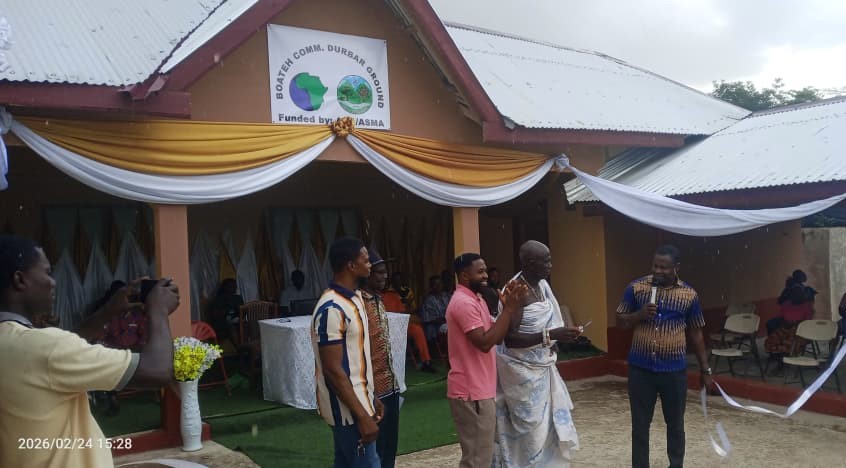
    Boateh, a quiet farming community in the Abuakwa South Municipality, was filled with colour, music and celebration last Tuesday as residents gathered to witness the official inauguration and handover of a newly constructed Durbar Ground.

    The project, a collaboration between Advocates for Community Alternatives (ACA), the Abuakwa South Municipal Assembly and the people of Boateh, marks another milestone in community-driven development within the municipality. It was implemented under ACA’s Oman yie die project, a community-driven development mechanism, that empowers local communities through planning, implementation and microgrants.

    What made the occasion particularly significant was not just the unveiling of a physical structure, but the story of unity and collective effort behind it.

    Speaking during the occasion, ACA’s Senior Trainer Francis Manu described the event as more than the commissioning of a project.

    “Today is not just the commissioning of a project,” he said. “Today is the commissioning of unity, vision, and self-belief.”


    He noted that through the FCAP process, the people of Boateh chose not to wait for development to come to them, but instead took the bold step to plan, decide and work together to bring their vision to life.

    “You didn’t wait to be developed; you chose to develop yourselves. You planned together. You decided together. You worked together. And today, you celebrate together,” he stated to loud applause.

    Drawing on Akan proverbs to underscore the spirit of togetherness, Mr. Manu quoted, “Nsa baako nkura adesoa” (One hand cannot lift a load), explaining that the Durbar Ground stands as proof that when hands come together, burdens become lighter and dreams become achievable.

    He added another proverb, “Baakofoɔ nsa ntɔ dua” (One person’s hand cannot fell a tree), emphasizing that the strength of the community lies in its unity. According to him, Boateh’s achievement demonstrates that development is not imported but built from within.

    Mr. Manu urged the community to see the Durbar Ground as only the beginning. As an income-generating project, he encouraged residents to remain accountable to one another, mobilize funds, revisit their community development vision board, and collectively pursue their next project.

    “If you could achieve this together, then you can achieve more,” he charged. “Tell the world that you did it together, and you can do it again and again.”

    Representing the Municipal Chief Executive, the Abuakwa South Municipal Planning Officer, Aaron Addo Yirenkyi, reaffirmed the Assembly’s commitment to its partnership with ACA and revealed that the collaboration has so far resulted in the implementation of 33 community-driven projects across the municipality.

    He commended the people of Boateh for their unity and determination in executing the Durbar Ground project, expressing admiration for their spirit of volunteerism.

    “The Assembly values and treasures its partnership with ACA,” he said, adding that Boateh’s example reflects what communities can accomplish when they take ownership of development initiatives.

    On behalf of the community, the Chief of Boateh, Dade Mantse Tetteh Kwabena, expressed profound gratitude to ACA and the Municipal Assembly for their support. He appealed for continued collaboration and more development projects to improve the area.

    As drums echoed across the new grounds and residents mingled in celebration, one message resonated clearly: the Durbar Ground is more than a gathering space. It is a symbol of togetherness, courage and community power, a testament that when Boateh walks together, it moves forward together.

  • Confidence Dominic Bedzina: Blending Academic Excellence with Practical Development Leadership

    Confidence Dominic Bedzina: Blending Academic Excellence with Practical Development Leadership

    The two-week in-person training for our three Fellows finally ended last Friday. Even as our Fellows zoom into the next phase of their training, which will mostly be through online, we want to know more about one of them – Confidence Dominic Bedzina.

    Confidence is a purpose-driven development professional with a strong blend of academic excellence, project leadership, and community service.

    Currently pursuing a Master of Science in Development Management at Kwame Nkrumah University of Science and Technology (KNUST), Confidence brings a solid foundation in Banking and Finance from the University of Professional Studies, Accra, complemented by years of hands-on experience in development-oriented projects.

    His career reflects a deep commitment to social impact, particularly in child, youth, and community development initiatives supported by both local and international partners.

    With proven expertise in project management, financial oversight, and community development, Confidence has successfully served leadership roles across multiple non-profit and volunteer organizations.

    As Director of Projects at the Amankwakrom Pentecost Child & Youth Development Centre, he oversees impactful, Compassion International–assisted programs, ensuring accountability, sustainability, and measurable outcomes.

    His professional journey also highlights strong competencies in monitoring and evaluation, global health project management, and leadership—skills further strengthened through certifications from the University of Washington and GIMPA.

    Known for his proactive mindset, teamwork, and excellent communication skills, Confidence Dominic Bedzina is a disciplined, results-oriented professional eager to contribute meaningfully to reputable institutions and development-focused organizations.

  • Cohort 2 of the Sora Kaufman Fellowship Kicks Off Intensive Training in Asiakwa

    Cohort 2 of the Sora Kaufman Fellowship Kicks Off Intensive Training in Asiakwa

    Three individuals selected for the second cohort of the prestigious Sora Kaufman Fellowship, have arrived safely at Asiakwa in the Abuakwa South Municipality of Ghana’s Eastern Region to on a two-week intensive training program. They are Amada-Smith Richmond, Bedzina Confidence Dominic, and Juliet Nyarko Adansi.

    The fellowship, widely recognized as ACA’s flagship initiative, is dedicated to cultivating a vibrant network of African leaders committed to advancing community-driven development (CDD) and grassroots advocacy across the continent.

    The program is designed for practitioners working directly with communities and local institutions to address systemic challenges that limit citizens’ participation in governance and decision-making.

    Through hands-on learning, collective exchanges, and strategic networking, the fellowship strengthens expertise in collective action, human rights, advocacy, and local governance systems.

    This year’s cohort follows the successful completion of a month-long immersive training by the inaugural group, whose impact continues to ripple across their respective communities.

    Opening session

    The opening ceremony will bring together distinguished leaders and facilitators who embody the vision of the fellowship. ACA’s Executive Director, Jonathan Kaufman; the Municipal Chief Executive of the Abuakwa South Municipal Assembly, Nana Adu Sarpong Addo-Aikins; and ACA’s Director of Community-Driven Development, Nana Ama Nketia-Quaidoo, will welcome the fellows. Members of Cohort 1 will also participate to share insights, inspire the new fellows, and foster cross-cohort learning.

    Following the welcome session, fellows will explore their expectations, fears, and ground rules, creating a transparent environment that promotes trust and collaboration. An official ACA/Fellowship Agreement Signing will formalize their commitment to the program’s values and objectives.

    The core of the training will introduce fellows to the essential pillars of CDD. Sessions will cover the introduction to community driven development, theories and concepts of collective action and rudiments, stages, advantages, and challenges of collective action

    These modules will guide fellows in understanding how collective mobilization influences sustainable development outcomes and community resilience.

    Daily evaluations and reflections will ensure continuous learning and adaptation, strengthening fellows’ ability to critically assess their roles as development practitioners.

    Field-Based Learning: FCAP in Practice

    A major highlight of the first week will be a field visit to observe a Facilitated Collective Action Plan (FCAP) meeting. Here, fellows will witness how different segments of a community contribute to local decision-making processes, an eye-opening opportunity to see collective action unfold in real time.

    After the field experience, fellows will return for a detailed debrief, unpacking their observations and articulating how these lessons can be applied in diverse development contexts.

    Community stay

    Midway through the program, fellows will pack up for a transformative community stay, departing to the Papaye Recreational Village. This immersion is designed to strengthen understanding of CDD principles by allowing fellows to live, engage, and work closely with community members.

    Upon return, a structured session will invite fellows to reflect on their experiences with community life, challenges encountered, personal and professional insights gained and what could be done differently in future CDD engagements

    These reflections are expected to deepen empathy, refine field skills, and broaden perspectives on people-centered development.

    Storytelling, Stakeholder Engagement, and Work-Life Balance

    As the training progresses, fellows will participate in a special webinar on effective communication and storytelling, equipping them with tools to document and share community impact stories compellingly.

    Another critical module will focus on stakeholder engagement with MMDAs, local authorities, chiefs, and community structures. Fellows will learn best practices for navigating local governance systems, a vital skill for any community development practitioner.

    Additional sessions will address monitoring and evaluation techniques, balancing family life, health ethics, and demanding development work, overview of post–on-site fellowship activities

    These sessions ensure that fellows not only develop technical competence but are also prepared for the personal and emotional demands of development practice.

    Looking Ahead

    With its blend of theory, practice, reflection, and community immersion, the Sora Kaufman Fellowship continues to establish itself as a leading program shaping Africa’s next generation of community development leaders.

    As Cohort 2 begins their journey in Asiakwa, they carry forward a growing legacy, one grounded in collaboration, empowerment, and a deep commitment to ensuring communities across Africa have a stronger voice in shaping their own development futures.

  • ACA builds climate resilience capacity in Nkoranza South

    ACA builds climate resilience capacity in Nkoranza South

    As part of its ongoing efforts to strengthen community adaptation to climate change, Advocates for Community Alternatives (ACA) continues to empower local networks to lead sustainable development initiatives across its partner communities.

    In the Nkoranza South Municipality of the Bono East Region, the Citizens Committee Network (CiCoNet), an advocacy arm of ACA, has reaffirmed its commitment to tackling the impacts of climate change through a capacity-building workshop on climate resilience and sustainable livelihoods.

    The workshop, organized by ACA for CiCoNet, brought together 90 participants from 20 communities within the municipality. Its goal was to deepen community understanding of climate change, promote the adoption of climate-resilient technologies, and explore alternative livelihood strategies to help households thrive amid growing environmental challenges.

    Facilitated by Dr. Kwabina Ibrahim, ACA’s Science Lead, the sessions offered participants practical insights into climate adaptation measures, sustainable agricultural practices, and community-led strategies for mitigating climate risks.

    Dr. Ibrahim underscored the importance of integrating climate awareness into daily activities, emphasizing that: “communities must become climate-oriented to ensure that their livelihoods remain sustainable and thriving despite changing weather conditions.”

    During discussions, Mr. Daniel Akake, a CiCoNet representative from Kyekyewere, called for access to localized rainfall data to better prepare for drought conditions, highlighting the vital role of climate information in community-based planning and resilience building.

    Mrs. So Abapa Boateng, ACA’s Community Trainer in Nkoranza South, reiterated ACA’s commitment to supporting communities through knowledge sharing and innovation and encouraged CiCoNet members to share the knowledge gained with their respective communities and to document best practices for possible replication elsewhere.

    She emphasized that CiCoNet must continue to serve as the active voice of communities at the municipal level, ensuring that community-driven development benefits everyone.

  • Roots of hope: CiCoNet communities in Nkoranza and Osino plant for the future

    Roots of hope: CiCoNet communities in Nkoranza and Osino plant for the future

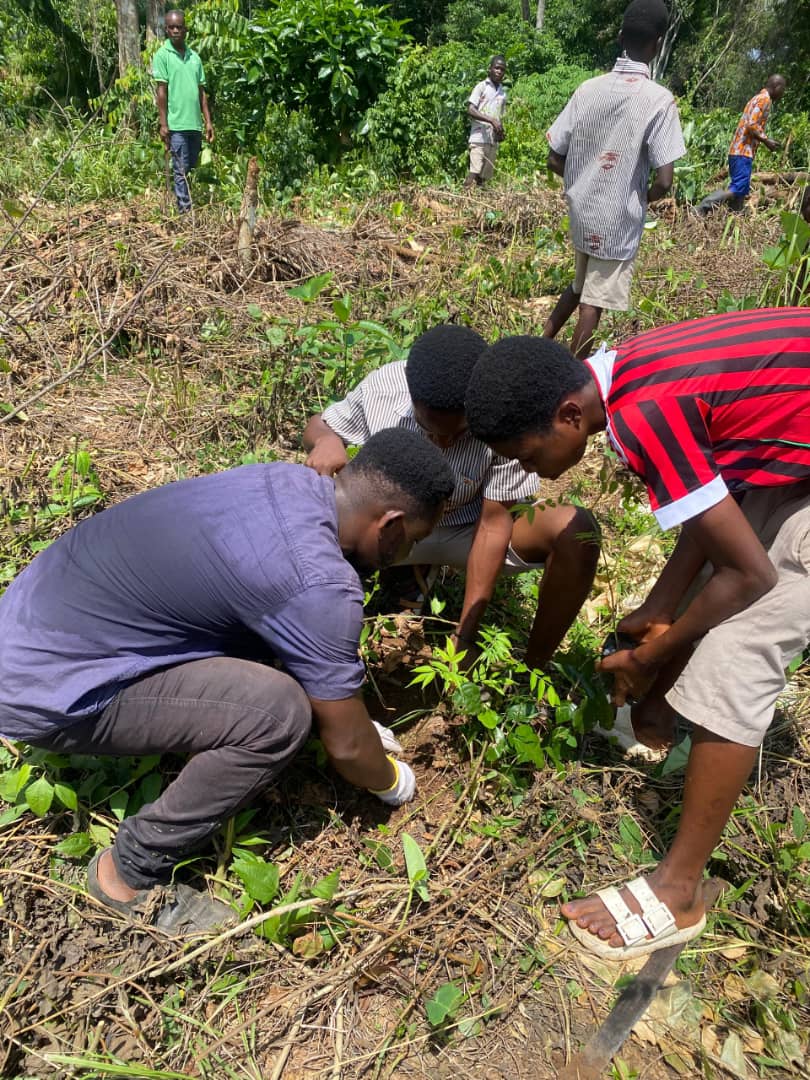
    In Nkoranza and Osino, members of the Citizens’ Committee Network (CiCoNet) came together to do more than plant trees—they planted resilience. Faced with hotter days, declining soil fertility, and shrinking green cover, these communities, supported by Advocates for Community Alternatives (ACA), joined hands to restore their environment one seedling at a time.

    The exercise blended action with education. CiCoNet members, alongside schoolchildren, farmers, and youth groups, discussed why trees matter: they safeguard water sources, enrich soils, provide shade, and buffer the effects of climate change. The seedlings—chosen carefully for the local environment—included both fast-growing species for soil protection and indigenous trees to restore biodiversity.

    In Nkoranza, the local office of the Forestry Commission supported the exercise by donating and supplying seedlings. Schoolchildren proudly carried these young trees to their planting spots, eager to nurture them into the future. One student declared: “This is my tree. I will water it and watch it grow.”

    In Osino, farmers reflected on the past. An elder recalled: “When I was young, our farms had shade and streams. Today the sun is harsher, and the soil is tired. These trees will bring life back.”

    The training emphasized sustainability as much as planting. CiCoNet members and local committees learned how to care for seedlings, protect them from livestock, and monitor their growth. Follow-up visits were planned to ensure the trees would survive and flourish.

    By the end of the day, hundreds of seedlings had taken root—but something deeper had also been planted: a renewed sense of ownership and hope. For Nkoranza and Osino, tree planting through CiCoNet was not just symbolic. It was a living commitment to climate resilience, stronger communities, and healthier futures for generations to come.

  • 20 community members complete legal training on land and property rights

    20 community members complete legal training on land and property rights

    Twenty representatives from some communities in the Eastern Region, where Advocates for Community Alternatives (ACA) operates, have successfully completed a three-day legal training program focused on land and property rights, as well as Ghana’s mining laws.

    The training, organized and facilitated by ACA, sought to strengthen participants’ understanding of the legal framework governing land acquisition, ownership, and registration, while equipping them with the tools to educate their communities on sustainable and lawful practices.

    This program formed part of ACA’s ongoing capacity-building initiative and served as a follow-up to an initial session conducted in April 2025. The series was informed by a needs assessment undertaken by ACA’s Legal Department, which highlighted significant challenges faced by local communities, including disputes over land acquisition and the adverse impacts of mining activities.

    ACA’s legal team led interactive sessions covering Ghana’s legal and regulatory frameworks on land and mining.

    Key legislation

    Participants were introduced to key legislation such as the Minerals and Mining Act, 2006 (Act 703) and its Amendment Act 900 (2015), the Minerals Development Fund Act, 2016 (Act 912), Minerals and Mining (Compensation and Resettlement) Regulations, 2012 (L.I. 2175) and the Land Act, 2020 (Act 1036).

    The facilitators emphasized that individuals or entities seeking to explore, prospect, or mine minerals must first secure a mineral right through the Minerals Commission, with approval from the sector minister.

    They also highlighted the legal requirement for chiefs, allodial landowners, and District Assemblies to be formally notified of such activities, ensuring transparency and accountability in land use.

    Land ownership

    On land ownership, the Land Act, 2020 (Act 1036) was highlighted as the central law governing acquisition, registration, and ownership. The facilitators underscored the importance of land registration as a safeguard against disputes and a means of securing legal ownership rights. Participants were also briefed on the roles of key institutions such as the Lands Commission, the Office of the Administrator of Stool Lands, and Traditional Authorities in ensuring effective land governance.

    Participants expressed their appreciation for the workshop, noting that the knowledge gained would not only help them protect their rights but also empower them to educate others within their communities.

    Confident

    “Before this training, many of us did not fully understand the laws governing land in Ghana. Now I feel more confident that I can protect my family’s land and help others in my community avoid mistakes. This knowledge is very empowering,” said Asabea Sarah, a representative from the Odumase community in the Eastern Region.

    They also called for similar training programs to be extended to other districts and regions facing similar challenges.

    Through such initiatives, ACA continues to promote community empowerment, legal awareness, and sustainable approaches to land and natural resource governance in Ghana.

    ACA helps West African communities that are threatened by the destructive impacts of extractives-led development to take control of their own futures. ACA works directly with communities to design their own sustainable development plans and advocate to achieve those plans, and it builds and supports networks of lawyers and other professionals that will serve communities in need.

  • Hope on the rise: Grassroots communities in Ghana build big dreams with small grants

    Hope on the rise: Grassroots communities in Ghana build big dreams with small grants

    In the heart of Ghana’s Bono East and Eastern Regions, something extraordinary is happening — not from the top down, but from the ground up.

    Jonathan Kaufman, Executive Director of Advocates for Community Alternatives (ACA), recently toured five rural communities where residents are rolling up their sleeves and transforming their lives through a bold initiative known as the Facilitated Collective Action Process (FCAP), locally dubbed “Oman yie die.”

    With support from ACA and $8,000 in seed funding per community, places like Asuano, Johnkrom, and Nkwabeng in Nkoranza South, along with Ntabea and Abesim Yeboah in Abuakwa South, are turning microgrants into major milestones.

    In Asuano, construction is well underway on a new three-unit Junior High School block, complete with an ICT lab and teacher offices — a dream come true for students who previously studied under trees or in cramped conditions. In Johnkrom, women and youth are eagerly watching a new gari processing and milling center take shape — a move expected to boost local income and food security.

    But perhaps the most ambitious vision comes from Nkwabeng. Originally aiming for an outpatient department, the community is now rallying additional funds to build a 24-room health facility. Their goal is to upgrade their modest clinic into a fully functional polyclinic — a leap forward in rural healthcare.

    “These communities are not waiting for change — they’re building it,” said Mr. Kaufman. “And what’s even more inspiring is how openly and honestly, they’re doing it. I attended two accountability sessions where community leaders detailed every cedi spent. This kind of transparency sets a gold standard.”

    The ACA team, including Director of Community-Driven Development, Nana Ama Nketia-Quaidoo, also met with local government officials who are not just observing, but actively participating. Nkoranza South’s MCE, Godfred Dapaah, was praised for helping secure vital permits, including clearing hurdles with the Forestry Commission to allow timber harvesting for roofing.

    In Atiwa West, the spirit of partnership was equally strong. District Chief Executive, Amo Johnson Anom, personally donated building materials to a community project and even mediated a local conflict, urging unity for the greater good.

    “These leaders are not just sitting in offices — they’re getting their hands dirty for their people,” Mr. Kaufman added.

    Nana Ama noted that despite setbacks like seasonal storms and occasional leadership disputes, progress has been swift and spirited.

    “In just two months, most projects already have their roofs on. The communities have gone above and beyond — raising funds locally, contributing to labor, and staying resilient. That’s real ownership,” she said.

    From new classrooms to life-saving health facilities and income-generating centers, these projects are a testament to what happens when communities lead their own development — with a little support and a lot of heart.