Author: Jonathan Kaufman

  • Victims of Land Grabbing and Environmental Damage File Suit against Côte d’Ivoire in the ECOWAS Court of Justice

    Victims of Land Grabbing and Environmental Damage File Suit against Côte d’Ivoire in the ECOWAS Court of Justice

    [et_pb_section fb_built=”1″ _builder_version=”4.6.6″ _module_preset=”default”][et_pb_row _builder_version=”4.6.6″ _module_preset=”default”][et_pb_column type=”4_4″ _builder_version=”4.6.6″ _module_preset=”default”][et_pb_text _builder_version=”4.6.6″ _module_preset=”default” hover_enabled=”0″ sticky_enabled=”0″]


    Similimi in Abuja, 29 January 2021 – Frustrated by years of land loss, environmental destruction and stalled promises of relocation, the people of Similimi Community in northeastern Côte d’Ivoire have filed suit against their own government at the ECOWAS Court of Justice.

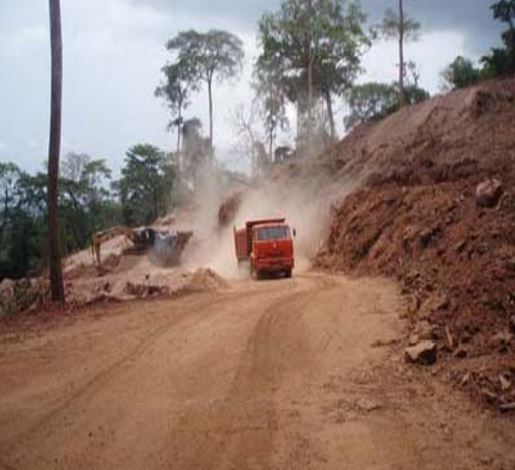
    Similimi residents lived mostly off their cashew and fruit trees and vegetable farms until Boundoukou Manganèse S.A. (BMSA), the subsisidary of Indian minerals company Dharni Sampda, began mining for manganese on village lands, just meters away from heavily populated areas. Their lands – the sole means of subsistence in the village – were torn from them, their natural environment invaded by fumes and dust, and their creeks polluted by toxic tailings.  As a consequence, they suffer respiratory ailments and no longer have clean water to drink.  The company conducts blasting frequently, shaking village homes and cracking their walls.  “It was a good life here in Similimi.  We breathed clean air and drank clear water.  Now everything is destroyed, and nothing is left of the Similimi we knew.  They have destroyed our fields and cultural sites, polluted our waters.  Yet the government and the company have done nothing to solve the problems, and we’re waiting to be relocated and compensated properly,” said Adou Kouamé, Chief of Similimi. 

    The people of Similimi alerted the mining company and the local authorities to these infringements of their rights and demanded relocation, but neither the State nor BMSA has taken any steps to assist the affected population.  “We have sent letters to the authorities to inform them of the environmental risks we are running, and we have complained about the environmental spoliation.  But nothing.  We continue to suffer from the operations of BMSA,” said Kobenan Kra Michel, plaintiff and a member of the Local Mining Development Committee.

    Several government delegations visited Similimi and recognized the seriousness of the conditions in which the residents were living.  They even acknowledged the need to relocate the village.  “The delegations that visited Similimi said that the village would be swallowed up if the mine were to expand, because Similimi is inside the perimeter of the extraction zone.  They made promises but never kept them,” explained Dr. Michel Yoboué, Executive Director of Groupe de Recherche et de Plaidoyer sur les Industries Extractives (Extractive Industries Research and Advocacy Group, or GRPIE), a group that defends the rights of Ivoirian mining communities and supports the plaintiffs.

    International and national legal and human rights standards require the Ivoirian government to ensure a clean living environment and provide for the proper relocation of people affected by mining projects, but the State has flouted these requirements at every turn.  “When their own internal investigation proved that BMSA was polluting the water in 2015, the Ministry of Mines reversed the environmental authorities’ decision to halt operation,” said Rashidi Ibitowa, chief counsel for the Plaintiffs.  When BMSA’s permit expired in 2019, the government granted a renewal without consulting affected communities, and despite all the outstanding complaints.
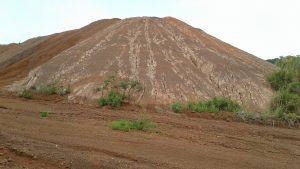
    Tailings from the processing of manganese ore are dumped in the water that the locals consume, causing diarrhea and other stomach ailments.  One of the plaintiffs, Kouakou Kouman Kouamé, is the father of a six-year-old child who died from stomach distress cause by consumption of contaminated river water.  “My son Richard complained of terrible stomach plains, and I took him to the health center at Sapli, about 4 kilometers from Similimi by a foot trail,” said Mr. Kouamé.  “He died at the health center, and the doctor who treated him explained that the stomach ailment was a result of drinking the dirty river water.  My whole family drinks from the river because we have no other source of water in Similimi.”

    The loss of farmland has meant a near-complete deterioration of livelihoods for the people of Similimi.  “My farm was my only source of income, and BMSA ruined our family when they took it away from us,” lamented Kouassi Abenan Kra Odette, President of the Similimi Women’s Association.  Meanwhile, a recent independent study sponsored by GRPIE proves that air quality in Similimi and other communities affected by the mine is poor and may cause respiratory ailments.

    GRPIE and an Ivoirian law firm, Cabinet d’Avocat SCPA les OSCARS, have teamed up with Advocates for Community Alternatives (ACA) and the Public Interest Lawyering Initiative for West Africa (PILIWA) to represent the people of Similimi.  The ECOWAS Court of Justice, based in Abuja, is empowered to hear human rights claims – such as the property, health, and environmental claims in this case – against Côte d’Ivoire and other West African governments.


    Press Contacts: 

    Côte d’Ivoire        Dr. Michel Yoboué, Groupe de Recherche et de Plaidoyer des Industries Extractives

                                  +225 07 62 35 29|myoboue@gmail.com

                                  Me. Rashidi Ibitowa, Counsel for the Plaintiffs

    +225 07 78 1983 | irash917@gmail.com

    International       Jonathan Kaufman, Advocates for Community Alternatives

    +233 55 555 0377| jonathan@advocatesforalternatives.org

    Prince Chima Williams, Public Interest Lawyering Initiative for West Africa

    +234 802 364 9890 | princewchima@yahoo.co.uk

    [/et_pb_text][/et_pb_column][/et_pb_row][et_pb_row _builder_version=”4.6.6″ _module_preset=”default”][et_pb_column type=”4_4″ _builder_version=”4.6.6″ _module_preset=”default”][et_pb_text _builder_version=”4.6.6″ _module_preset=”default”]

    Documents

    Adou Kouamé et autres c. Côte d’Ivoire – Plainte CEDEAO – 29.01.2020
    Communiqué de presse plainte CEDEAO Similimi – 29.01.2021

    Similimi ECOWAS Complaint – press release 29 Jan 2021

    [/et_pb_text][/et_pb_column][/et_pb_row][/et_pb_section]
  • Victory at the ECOWAS Court of Justice: Judges hold Guinea responsible for Zoghota Massacre

    Victory at the ECOWAS Court of Justice: Judges hold Guinea responsible for Zoghota Massacre

    [et_pb_section fb_built=”1″ _builder_version=”4.6.6″ _module_preset=”default”][et_pb_row _builder_version=”4.6.6″ _module_preset=”default”][et_pb_column type=”4_4″ _builder_version=”4.6.6″ _module_preset=”default”][et_pb_text _builder_version=”4.6.6″ _module_preset=”default” hover_enabled=”0″ sticky_enabled=”0″]

    ABUJA, NIGERIA – 10 NOVEMBER 2020 – For over eight years, the people of Zoghota in southern Guinea have been seeking justice for the massacre that devastated their village. Today, they can finally celebrate a ruling from the regional ECOWAS Court of Justice declaring that Guinean security forces are responsible for the murder, arbitrary arrests, and torture of Zoghota’s citizens.

    Just after midnight on 4 August 2012, Guinean security forces entered the community, firing wildly. They killed six villagers, wounded several others, burned homes, and stole personal property. “They came at night, while the people were sleeping,” said Kpakilé Gnédawolo Kolié, the President of the community, who is also the leader of the collective of victims of the massacre. “We were woken up by the sound of bullets, and when people went outside to see what was happening, they gunned our fathers and brothers down.” Some villagers who were arrested during the attack were tortured by soldiers who cut them on their arms, necks, and wrists. Security forces arbitrarily arrested and tortured Zoghota residents before and after the massacre, as well.

    The attack was retaliation for a large-scale protest over employment practices and environmental destruction at the Zoghota iron ore mine owned by Vale-BSG Resources (VBG), an international mining conglomerate. During the protests, villagers from several of the communities surrounding the mine – led by the residents of Zoghota village – occupied the mine site and were accused of destroying company property.

    The massacre was never investigated by Guinean authorities, and security forces and the company
    provided conflicting explanations for the killings. Guinean human rights organization Les Mêmes Droits pour Tous (MDT) filed a criminal complaint against several security forces commanders in 2013, but the case never advanced. Most of the defendants refused to appear before a judge to answer for their actions, and the file was eventually transferred to a military tribunal, where it languished. The mining company’s responsibility was never fully investigated, despite clear evidence of their participation in the planning and execution of the attack.

    Represented by MDT and Advocates for Community Alternatives (ACA), a Ghana-based human rights organization, the people of Zoghota turned to the ECOWAS Court of Justice – a regional court with the power to hold West African states responsible for human rights violations – in October 2018. Today’s ruling was a complete vindication of their claims.

    “The Court agreed that Guinea’s security forces violated the rights to life, freedom from torture and arbitrary arrest, and an effective legal remedy,” said Me Foromo Frédéric Loua, President of MDT. “Finally, after eight long years, the perpetrators of this heinous act will be held responsible for their crimes.” The Court also ordered Guinea to pay a total of 4.56 billion Guinean francs (approximately 463,000 U.S. dollars) to the victims and their families.

    The action now turns to Guinea’s domestic courts, where community members have renewed their complaint against the security forces and demanded an investigation into the role that VBG played in the massacre. “It’s now time for the Guinean institutions to finish what the ECOWAS Court started, and to prosecute and punish the security commanders and corporate agents who executed the Zoghota massacre,” said Jonathan Kaufman, Executive Director of ACA.

    The ECOWAS Court’s ruling also has important implications for the future of mining around Zoghota. VBG suspended its operations at Zoghota after the massacre and then lost its concession to mine iron ore there in a massive corruption scandal. However, Guinea recently announced plans to re-award the concession to Niron Metals, a company linked to Beny Steinmetz, one of VBG’s ultimate owners and beneficiaries. “We’ve told the government that there will be no mining at Zoghota until we see justice for the massacre,” said Mr. Kolié. “The ECOWAS Court’s judgment will help us to stand firm, because now we know that beautiful day is getting closer.”

    Judgment – Kolie v. Guinea – ECW/CCJ/JUD/25/20

    [/et_pb_text][/et_pb_column][/et_pb_row][/et_pb_section]
  • ACA Supports COVID-19 Prevention in Nkoranza South

    ACA Supports COVID-19 Prevention in Nkoranza South

    [et_pb_section fb_built=”1″ admin_label=”section” _builder_version=”3.0.47″][et_pb_row admin_label=”row” _builder_version=”3.0.47″ background_size=”initial” background_position=”top_left” background_repeat=”repeat”][et_pb_column type=”4_4″ _builder_version=”3.0.47″ parallax=”off” parallax_method=”on”][et_pb_text admin_label=”Text” _builder_version=”3.0.47″ background_size=”initial” background_position=”top_left” background_repeat=”repeat”]

    As Ghana – like the rest of the world – comes to grip with the COVID-19 pandemic, ACA is doing its part to help our partner communities in Nkoranza South prepare for impact. 

    In partnership with the Nkoranza South Municipal Health Directorate, we have supported the training fifty (50) community health volunteers on the origin and symptoms of COVID-19, and the measures that communities can take to stop the spread of the virus.  These volunteers, who include several members of the Citizens Committee Network (CICONet) that ACA organized to form an interface between communities and local authorities, will educate the communities through the village public address system, help the Municipal Health Directorate identify people who enter the communities and target them for screening, and help with contact tracing if community members are found to be infected with the COVID-19 virus.

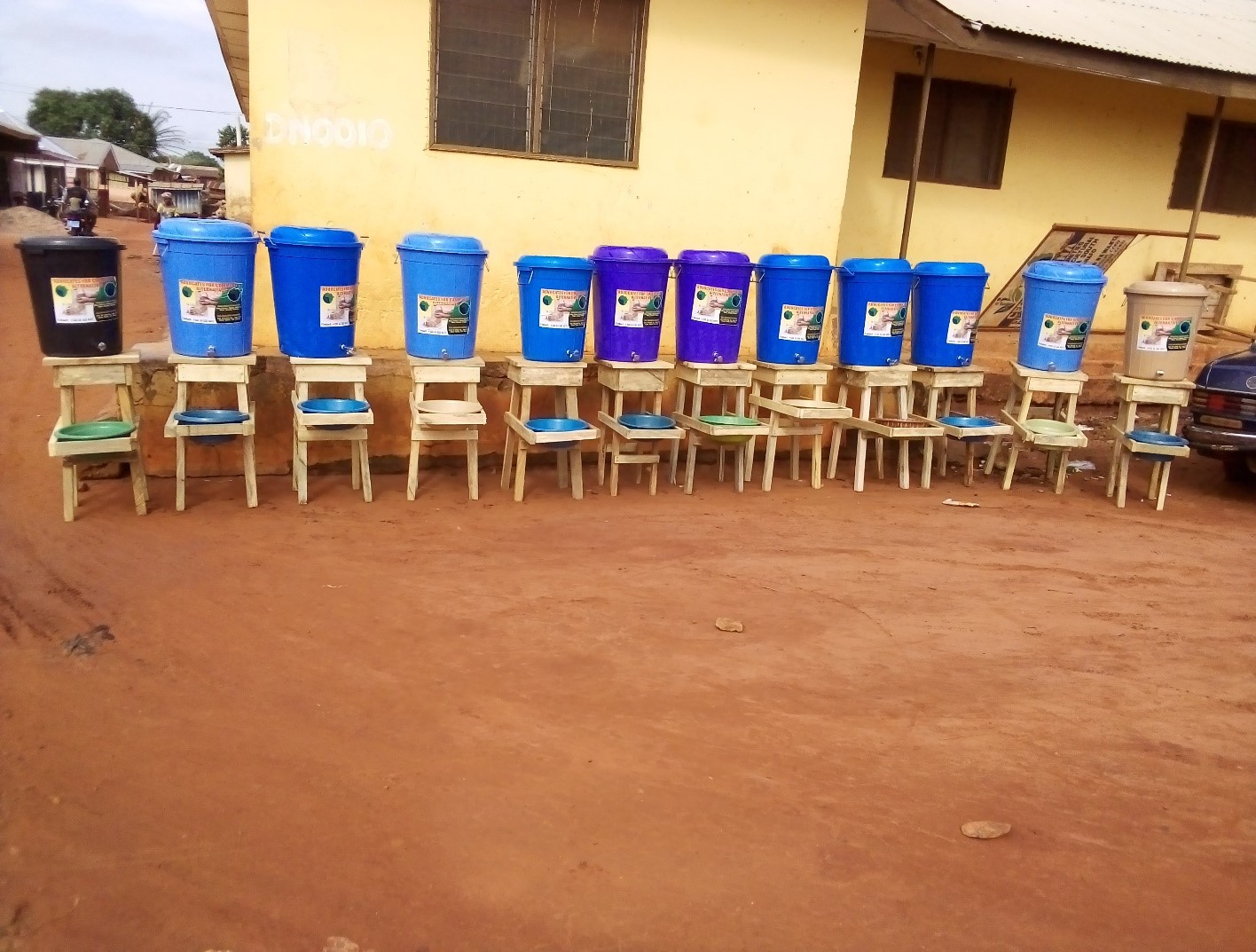
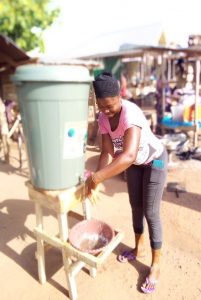
    ACA has also set up and is assuring the equipment and maintenance of twenty hand-washing stations in Donkro Nkwanta, Kyeredeso, Nwoase, and Salamkrom as a first-line measure for preventing the spread of the virus. Items donated include Veronica buckets, wooden stands, soap, and hand washing bowls.

    Despite limitations on public gatherings during the pandemic, all of ACA’s assistance and interventions are the product of consultation and direction from community leaders, public health experts, and – as much as possible – the population of the communities.

    “We are very grateful to ACA for all the support given to us; we have benefited from the Facilitated Collective Action Process (FCAP) as well as legal services and now preventive equipment for COVID-19,” says Nana Kwabena Otoo, the Caretaker Chief of Nwoase Village.

    [/et_pb_text][/et_pb_column][/et_pb_row][/et_pb_section]

  • Italian energy superpower ENI and Nigerian community reach historic agreement to mitigate chronic flooding of village

    Italian energy superpower ENI and Nigerian community reach historic agreement to mitigate chronic flooding of village

    Joint Press Release

    Port Harcourt, Benin City, Accra, Rome, Paris – 8 October 2019 — After years of battle, residents of the community of Aggah in Rivers State, Nigeria, finally have hope for relief from the floods that have plagued them for five decades, thanks to a ground-breaking agreement with Italian energy company ENI S.p.a published on 2 October 2019. A community association, Egbema Voice of Freedom (EVF), and its representatives, Advocates for Community Alternatives (ACA) and Chima Williams & Associates (CWA), had filed a complaint against ENI in front of Italy’s OECD National Contact Point on 15 December 2019, with the support of the International Federation for Human Rights (FIDH).

    The complaint stressed the devastating impacts the flooding had on the health, property, livelihoods and environment of the Aggah community. It was submitted under the OECD Guidelines, which establish international standards of corporate conduct to which Italy and its corporations are committed. In a rare successful case before an OECD National Contact Point (NCP), the agreement addresses the essential concern of the complainants, i.e. the urgent construction of drainage solutions to mitigate the flooding and a potential resort to a technical expert if more efforts are needed.

    “We are celebrating this news in Aggah.  The agreement is an achievement that follows years of battle to get ENI and its subsidiary NAOC to act to resolve the flooding they have created. We remain however vigilant on how the company and its Nigerian subsidiary will implement the agreement,” affirmed Pastor Evaristus Nicholas, spokesperson for Egbema Voice of Freedom.

    “The community had been asking NAOC, ENI Nigerian subsidiary, to fix the flooding problem for years, but to no avail,” said Jonathan Kaufman, Executive Director of ACA.  “The game changed when we went to Italy on the basis of the OECD Guidelines, which apply to all Italian companies, and asked ENI to take responsibility for what was happening on the ground in Aggah.”

    ENI has drilled for oil in and around the town of Aggah since the 1960s. The complaint alleges that the company built elevated roadways, embankments and platforms that completely block natural streams that used to flow through Aggah, causing violent annual flooding of large swathes of farmland and residential areas since 1970. According to a survey of over two thousand Aggah residents, 90% of households have lost agricultural products while over 65% reported severe health problems as a result of the flooding. Several people have drowned in the floodwaters – including one villager who died just last month. Floods also destroy sewage systems, resulting in vast pollution and harm to the ecosystem.

    “This is particularly positive news. First, because the community’s central demand is finally acknowledged by ENI. Second, because successful cases for victims before the OECD complaint mechanism are extremely rare. This is the result of a relentless and joint effort by the community, advocates and NGOs to get the company to act,” said Giacomo Cremonesi, Italian lawyer and FIDH representative in the procedure before the Italian NCP.

    After the complaint was deemed admissible, the Italian NCP opened a mediation procedure between the parties in the presence of a third-party Conciliator; the process led to an agreement that was made public on Wednesday 2 October 2019. The terms of settlement provide for the urgent construction of new culverts/drainage channels and maintenance and management of the existing ones to avoid flooding. It also indicates the verification of the impact of those measures in the presence of a technical expert, to determine whether further action should be taken. NAOC’s surveyors have already entered the community to determine the setting of any new construction.

    “This success story shows that it is possible, when victims properly coordinate with their advocates and present their cases with strong evidentiary backing, and when the NCP does its job to make companies – no matter how mighty –  listen and act accordingly. This further underscores the benefits of following due process and the rule of law rather than the rule of self help,” said Prince Chima Williams of CWA, the Nigerian law firm representing the complainant (EVF).

    Press contacts:

    Advocates for Community Alternatives (ACA)

    Jonathan Kaufman: jonathan@advocatesforalternatives.org   +233 55 555 0377

    International Federation for Human Rights (FIDH)
    Sacha Feierabend:
    sfeierabend@fidh.net   +33 6 85 12 24 53

    Chima Williams & Associates (CWA)
    Prince Chima Williams:
    princewchima@yahoo.co.uk; +2348023649890.

    Egbema Voice of Freedom (EVF)
    Pastor Nicholas Evaristus:
    royalgraceassembly_evarist@yahoo.com; +2348064329322.


  • Sierra Leone Villagers Seek Mining Justice at ECOWAS Court

    Sierra Leone Villagers Seek Mining Justice at ECOWAS Court

    29 August 2019 – The government of Sierra Leone shot and beat protesters and helped a mining company pollute and unjustly grab traditional lands, according to a human rights lawsuit filed by residents of Koidu, Sierra Leone at the ECOWAS Court of Justice.  The plaintiffs are asking for proper relocation, enforcement of the Mining Lease Agreement between the government and mining company, investigation of incidents of violence in 2007 and 2012, and compensation for their suffering and losses.

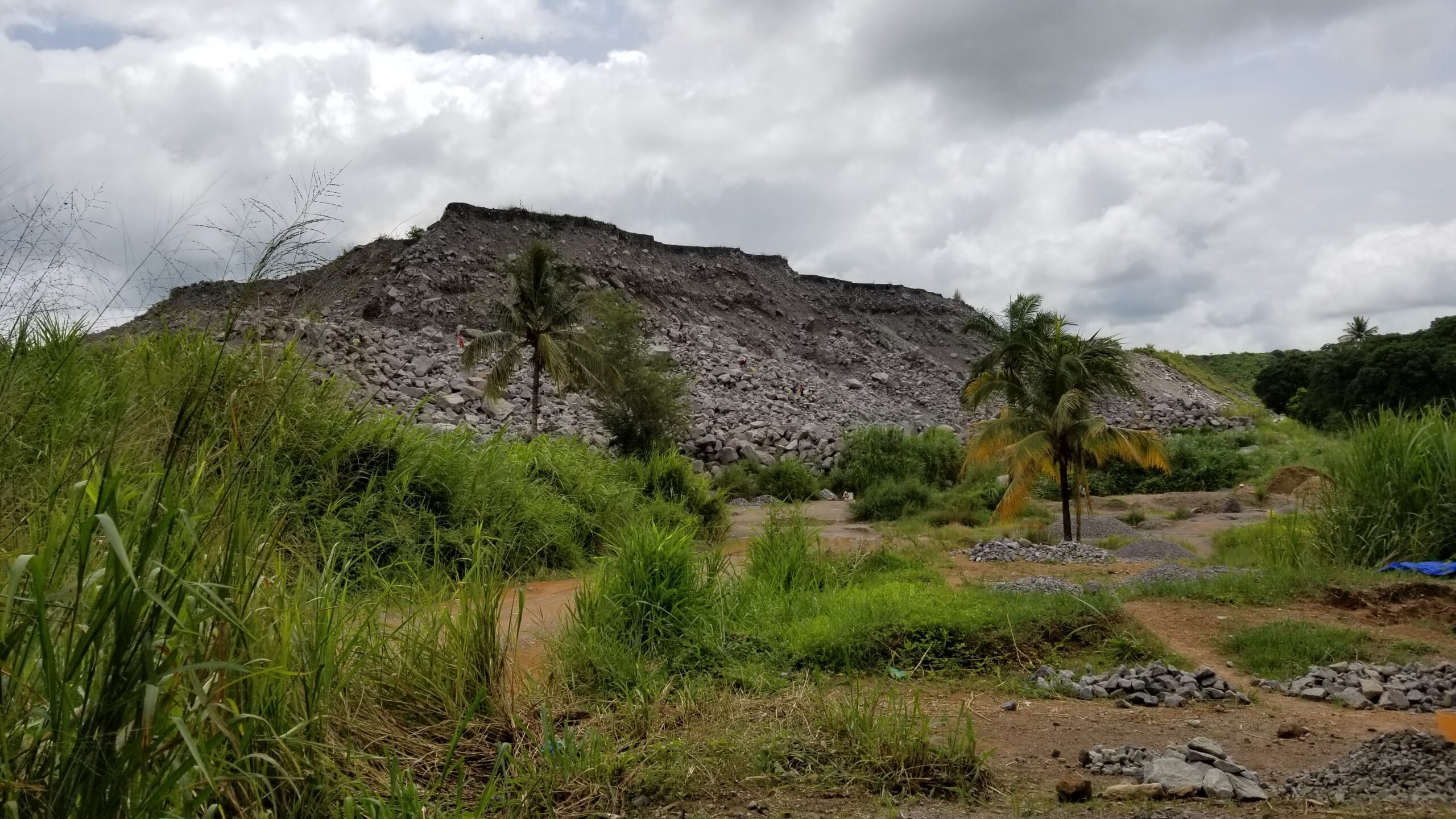
    Many Koidu residents live in the shadow of the immense waste dump of a diamond mine operated by the Octea Group. These individuals have been awaiting relocation for over a decade, with no end in sight. The proximity of the mine to their homes means mining activities have disrupted their livelihoods and access to basic living necessities. Explosions from the mine have sent rubble flying onto their farmland and crashing through their roofs. With support from the State, the company has diverted water onto their land, flooding it. Women who previously farmed small plots have lost that land and are now reduced to taking rocks from the company’s giant rubble pile and breaking them into gravel to sell to construction crews. “This back-breaking work is ruining my health, but what choice do I have?” complained Aminata Bangura, leader of the cooperative of women stone-breakers. “I can barely make enough to feed my kids, but I don’t have land to grow food for them anymore.”

    Madam Kumba King, Tankoro Queen Mother and representative of the Marginalized Affected Property Owners Association, lamented the destruction of their community. “We used to farm and live in peace, but now our lands and water sources are poisoned and covered in rubble. Our homes are shaken by explosives every day.” Tremors from blasting cracks residents’ walls and collapses their ceilings. Throughout the community, those who once had ready access to well water now find their wells dry during the dry season because the mine has disturbed the water table.

    Despite the residents’ complaints, the government has failed in its legal obligation to ensure the relocation of these individuals and the proper replacement of their land and homes. Even those that have received relocation report that the resettlement site lacks basic living essentials.  Their new houses are smaller than their old homes and have already started crumbling after just a matter of months due to poor construction.

    The complaint further alleges that the Sierra Leone repeatedly committed unjustified violence against demonstrators in Koidu.  According to several witnesses, police officers used firearms to disperse peaceful protesters, resulting in two deaths and several grave injuries in 2007 and again in 2012. After the shooting in December 2007, the government created the Jenkins-Johnston Commission of Inquiry, which found the government and the company to be jointly responsible for the violence and recommended important police reforms. Although the government officially accepted these proposals, it failed to implement any of them, and violence struck again in December 2012. For both incidents, the government did not hold any security officers responsible, nor did it provide assistance to the victims and their family members, who continue to wait for justice to this day. The community is represented by a consortium of West African lawyers from the Public Interest Lawyering Initiative for West Africa (PILIWA), as well as C&J Partners of Makeni, Sierra Leone.

  • First University Legal Clinic in Côte d’Ivoire Launched at Boauké

    First University Legal Clinic in Côte d’Ivoire Launched at Boauké

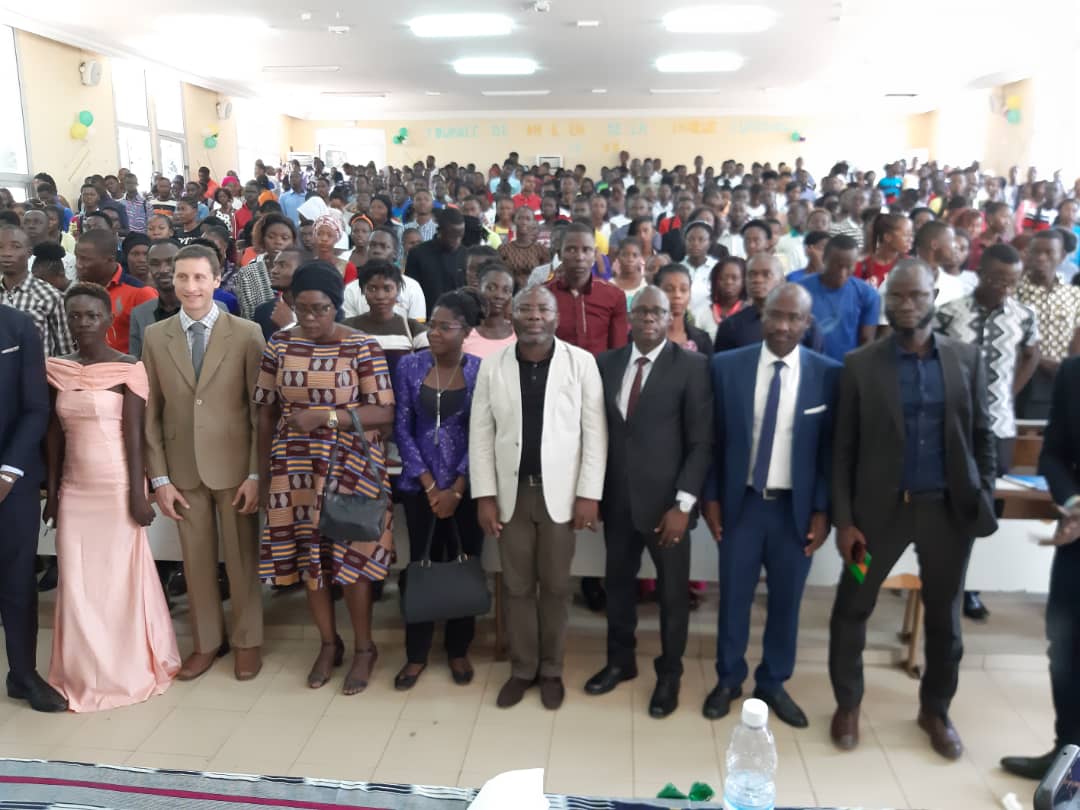
    The Université Alassane Ouattara in Bouaké, Côte d’Ivoire, has launched the first ever university legal clinic in the country – and one of the first in Francophone Africa.  In partnership with ACA, the Groupe de recherce et de plaidoyer sur les industries extractives (GRPIE), the Réseau des Cliniques Juridiques Francophones (RCJF), and the Association des Femmes Juristes de Côte d’Ivoire, the Bouaké clinic will help communities affected by extractive industries seek justice and find legal redress for human rights and environmental abuse.

    Clinical legal education is a complement to traditional instruction at law schools, in which students put their classroom-learned skills to work by collaborating with external partners on actual cases, for real clients, and then reflect on the experience with faculty.  At the same time, clinical students help to fill the justice gap, providing legal services to poor and marginalized populations that can’t normally afford a lawyer.  While clinics have been common in the United States since the 1960s and 70s, when they were an important part of the legal fight for civil rights, there are few university clinics in the Francophone world. 

    The Boauké clinic – a part of a new Masters Program in the legal profession – is the brainchild of M. Adama Yéo, a member of the National Human Rights Commission of Côte d’Ivoire and a professor at the university, and Prof. Silué Nanga, the Dean of the Law Faculty.  Students will receive practical training in public interest law skills – interviewing, fact-finding, drafting, and argumentation – from university faculty and skilled clinical practitioners from the Association des Femmes Juristes de Côte d’Ivoire, which operates a legal aid bureau in Bouaké.  They will work with GRPIE to apply those lessons in a real-life setting: the villages surrounding Bondoukou, where communities are facing environmental destruction and constructive eviction by an Indian manganese mining company.  ACA will provide technical support, developing curricula and materials and helping to connect the clinic to other innovative learning initiatives in Africa and elsewhere.