Author: Emyloia

  • Expanding Impact: FCAP Heads to West Mamprusi

    We’re excited about the steady progress in expanding our community-driven development model, FCAP, to the West Mamprusi Municipality in Ghana’s North-East Region.

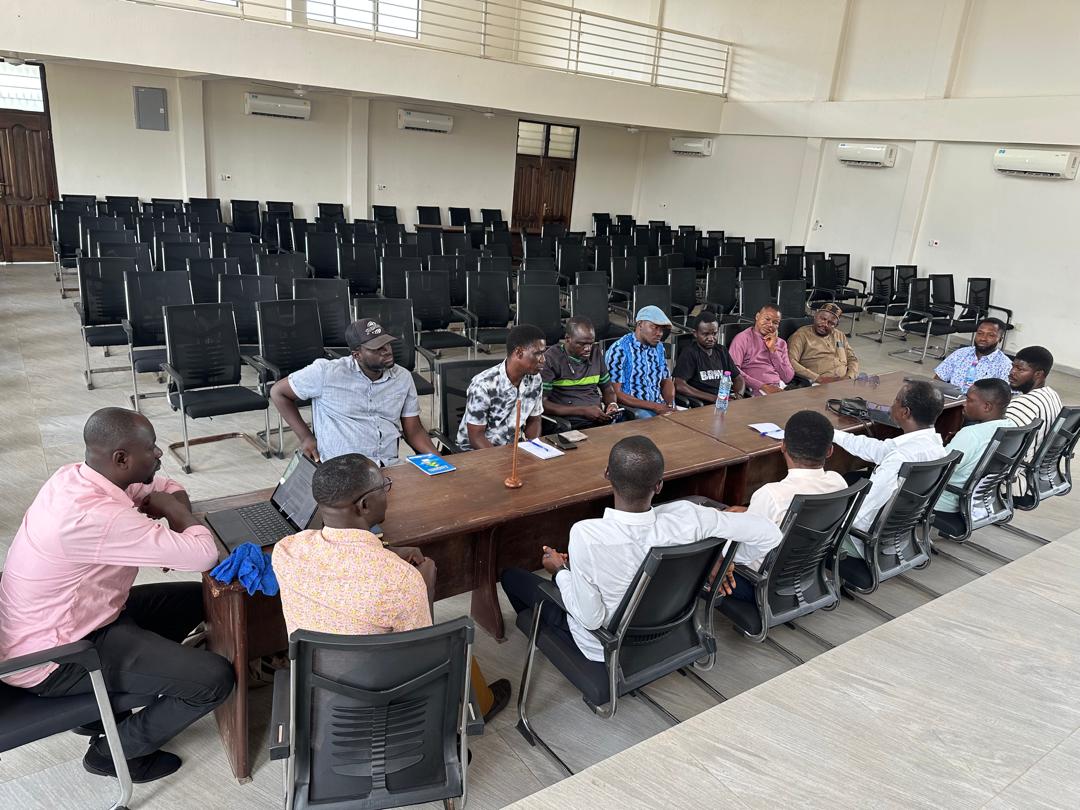
    Earlier this week, a seven-member delegation from West Mamprusi visited Abuakwa South Municipality to gain firsthand insight into how FCAP works. This follows a prior engagement where ACA, Spark Microgrants, and Water and Sanitation for Urban Populations visited West Mamprusi.

    Led by ACA’s Project Manager Godfred Osei Nimako, Senior Trainer Francis Manu, and Community Trainer Joseph Obeng, the team toured Kyebi Akwadum, Owuratwum, Addo Nkwanta, and Ahinkwa Sisi. They engaged with community members, observed ongoing projects, and met with officials of the Abuakwa South Municipal Assembly.

    The momentum is clear – FCAP is set to extend its life-changing impact to many more communities nationwide.

    West Mamprusi Delegation:
    * Sebiyam Ali – Senior Technician Engineer
    * Elijah Adam – Assistant Development Planning Officer
    * Mustapha Umar – Assistant Director I/ Head, Central Administration Unit
    * Suale Sulemana – Head, Physical Planning Department
    * Alhaji Wahab Ibrahim – Head, Social Welfare & Community Development
    * Beni – Physical Planning Officer
    * Abdul Nafiwu Mahama – Assistant Development Planning Officer
  • Strengthening “Oman Yie Die”: CDD Sharpens Strategy for Nationwide Expansion

    Strengthening “Oman Yie Die”: CDD Sharpens Strategy for Nationwide Expansion

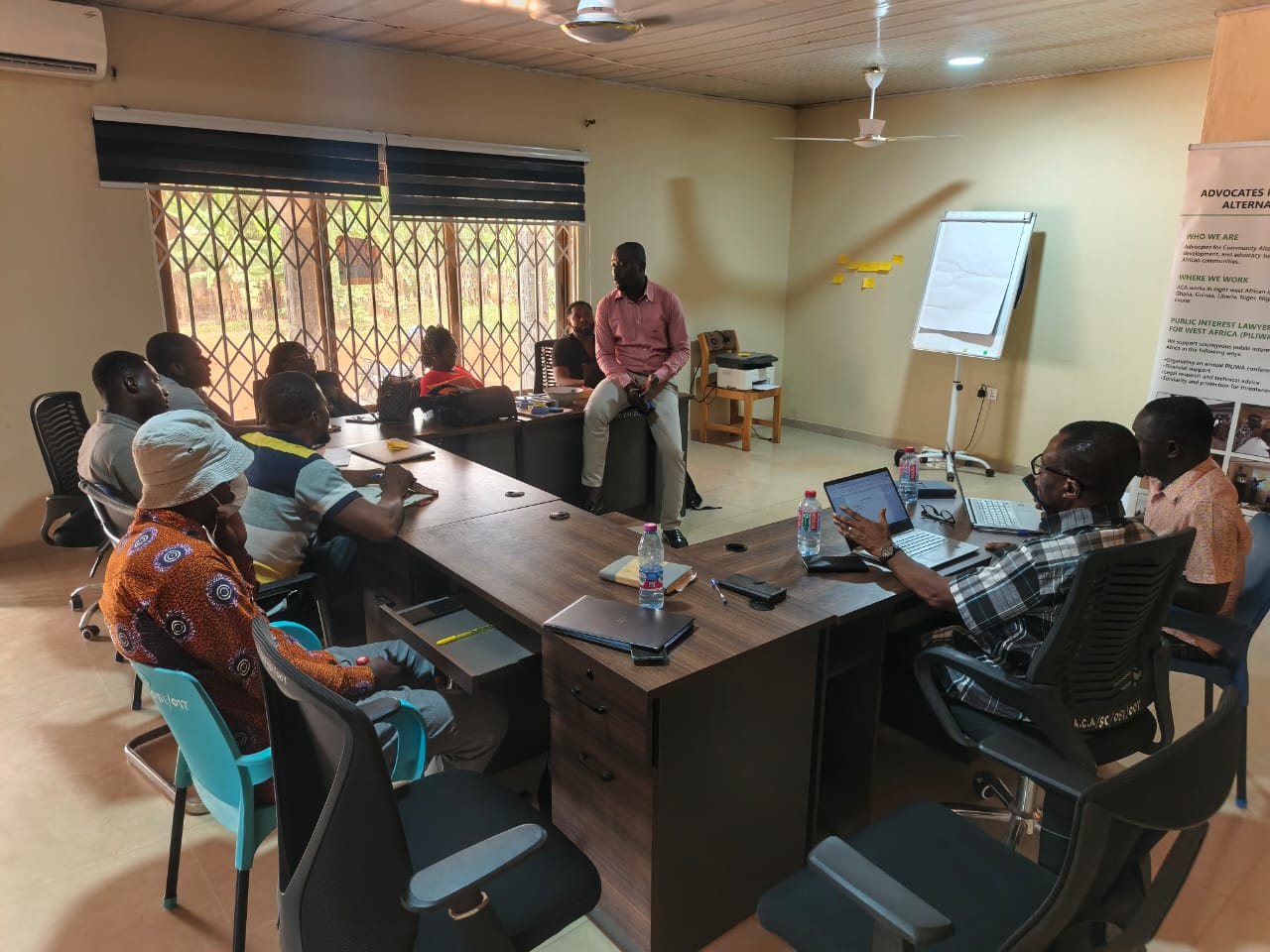
    ACA’s Community-Driven Development (CDD) Department continues to build its capacity to effectively implement its flagship Facilitated Collective Action Process (FCAP), widely known in Ghana as “Oman Yie Die.”

    At its team session in Osino in the Eastern Region, the team reviewed and refined the FCAP model to enhance its impact and future implementation.

    Project Manager Godfred Osei Nimako opened the session with a forward-looking update, announcing the expansion of FCAP to 200 additional communities, 100 in northern Ghana and 100 in the south.

    In the Eastern Region, Abuakwa South, Fanteakwa North, and Suhum Municipal have been selected for the next phase, alongside six communities in Nkoranza South.

    Senior Trainer Francis Manu led a practical session on the key steps in rolling out FCAP, while ACA Legal Officer Bridget Kartey provided guidance on land acquisition and its legal framework.

  • Celebrating Excellence & Impact in Our Communities!

    Celebrating Excellence & Impact in Our Communities!

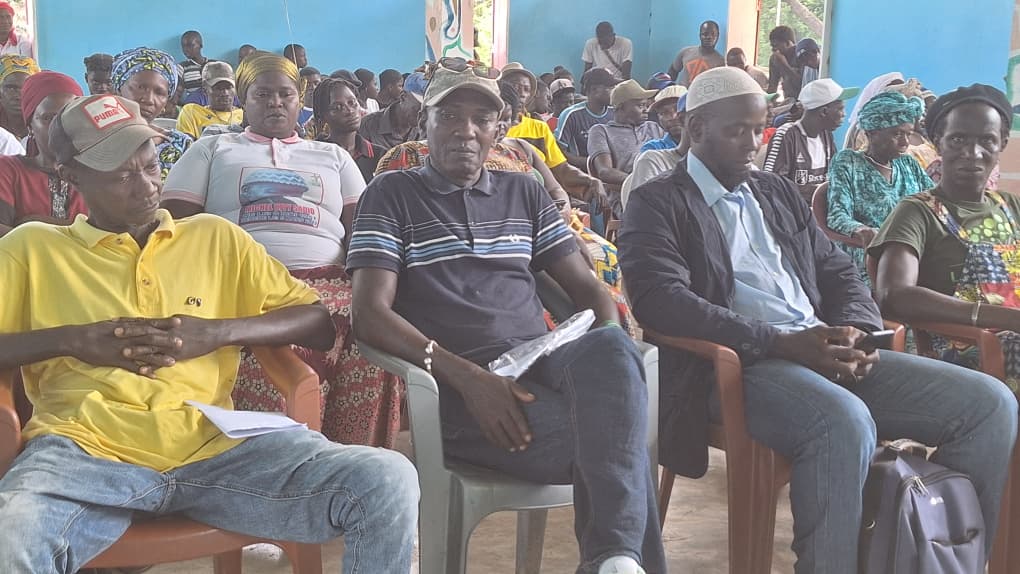
    At today’s graduation ceremony of 22 communities held at Owuratwum near Kyebi in Abuakwa South, a truly inspiring moment unfolded.

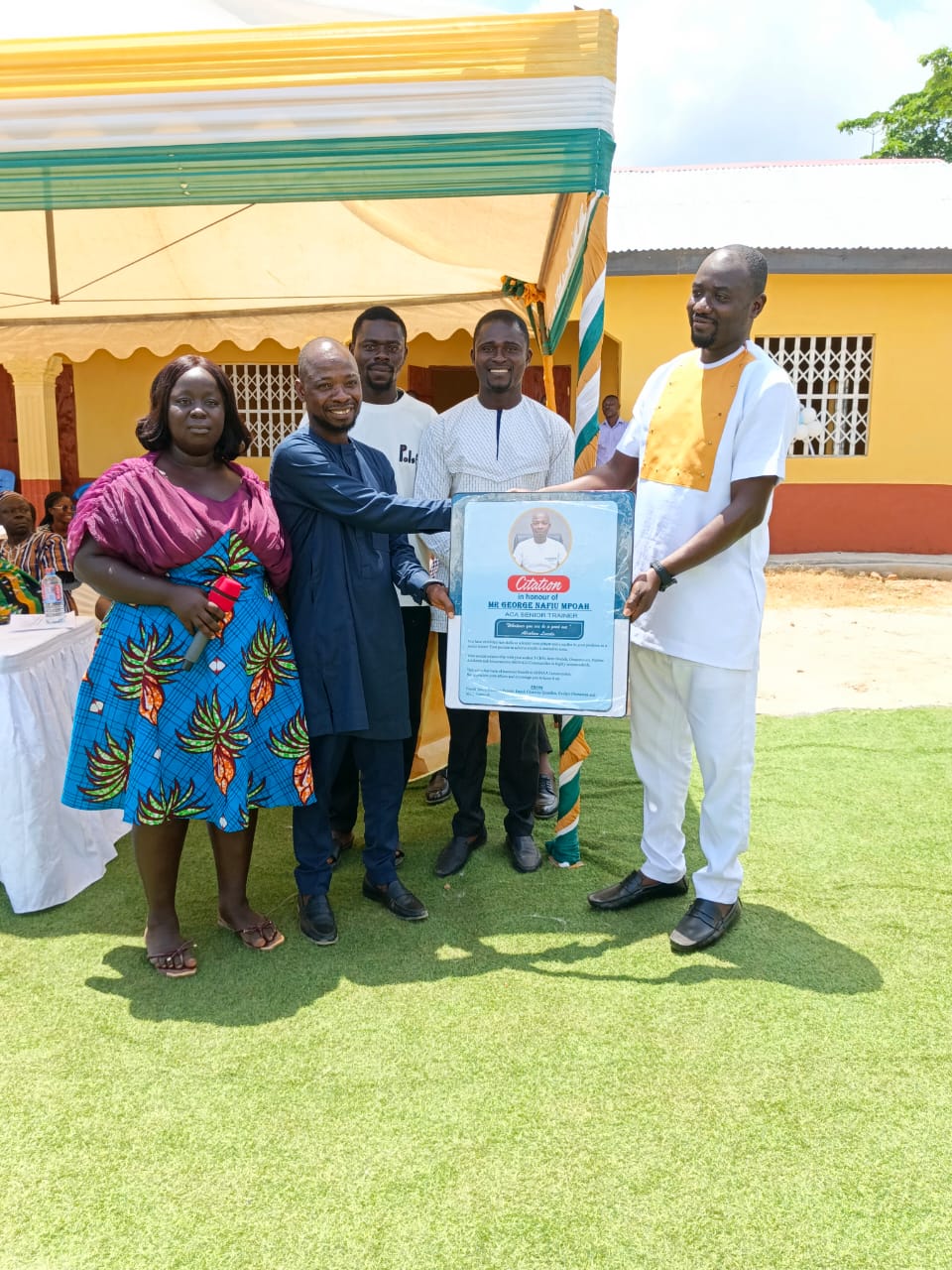
    Five communities—Boateh, Owuratwum, Ntabea, Adukrom, and Atwemamena—came together to honor one of our exceptional Senior Trainers, George Nafiu Mpoah, with a special award. This recognition celebrates his unwavering dedication and commitment to the successful implementation of the Oman Yie Die projects across these communities.

    Your passion and hard work continue to transform lives and uplift communities.

    Congratulations, George, for making ACA proud!

  • 22 Communities Graduate as ACA Transforms Lives with Sustainable Projects in Eastern Region

    22 Communities Graduate as ACA Transforms Lives with Sustainable Projects in Eastern Region

    Advocates for Community Alternatives (ACA), an Accra-based NGO, has held a colorful graduation ceremony at Owuratwum near Kyebi in the Abuakwa South Municipality, marking the completion of the Facilitated Collective Action Process (FCAP), locally known as Oman yie die, in 22 communities.

    In partnership with the Abuakwa South, Atiwa West, and Fanteakwa South district assemblies, ACA has delivered a range of sustainable projects over recent years. These include school blocks, teachers’ quarters, a CHPS compound, a doctor’s bungalow, mechanized boreholes, electrification project, a soap-making center, and a poultry farm – significantly improving local living conditions.

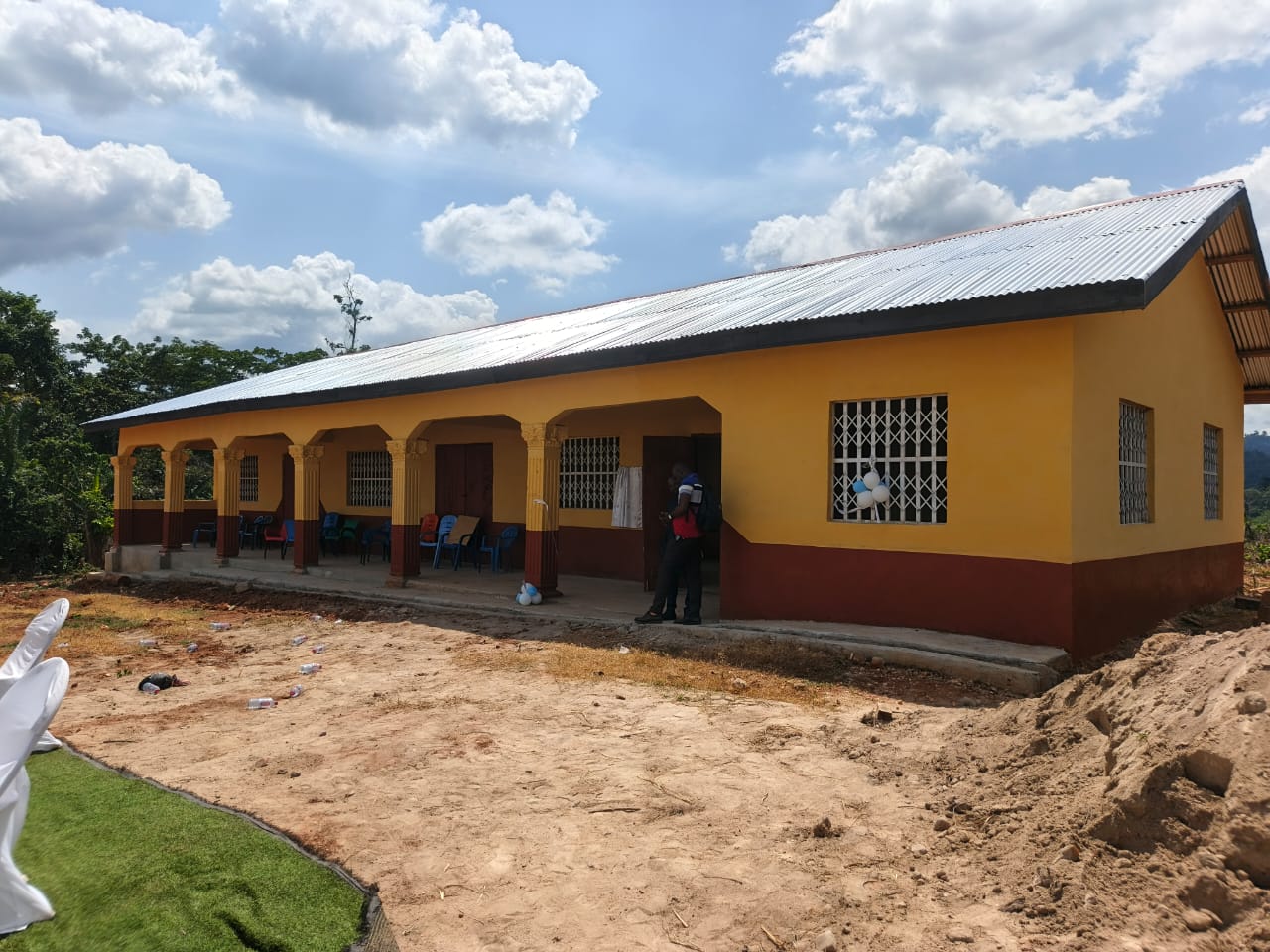
    A key highlight of the event was the inauguration of a newly constructed three-unit kindergarten block at Owuratwum under the program.

    Speaking at the ceremony, ACA’s Project Manager, Godfred Osei Nimako, traced the organization’s work in the Eastern Region to 2020, following earlier efforts in Nkoranza South in the Bono East Region.

    “After successful pilot projects in Sagyemase, Nsuapemso, and Juaso, ACA expanded in 2023 to reach more communities across the three districts. So far, ACA’s interventions have benefited 34 of 56 communities in Abuakwa South, 28 of 32 in Fanteakwa South, 20 in Atiwa West, and 24 in Nkoranza South”, he stated.

    Mr. Nimako urged beneficiary communities to maintain the projects and continue mobilizing local resources for further development.

    He emphasized that the Oman yie die initiative aims to revive communal cooperation and self-help traditions.

    He also announced plans to extend the program to 200 additional communities nationwide over the next two years.

    Local leaders, including the Assembly Member of Odumasi Electoral Area, Collins Akonnor and Ankobeahene of Owuratwum, Nana Oturoku Danquah III , expressed gratitude to ACA and community members for the achievements.

  • A Powerful Finale: Celebrating Excellence at the 2025 ACA–PILIWA Moot Court Competition

    A Powerful Finale: Celebrating Excellence at the 2025 ACA–PILIWA Moot Court Competition

    After two weeks of rigorous advocacy, sharp legal reasoning, and inspiring displays of young talent, the 2025 ACA–PILIWA Moot Court Competition has officially come to a close — leaving behind not just winners, but a renewed sense of purpose for public interest law across West Africa.

    From the virtual preliminary rounds to the grand in-person finale at the College of Law, Caleb University, the competition brought together some of the brightest law students from across South-West Nigeria to interrogate critical issues of human rights and environmental justice. Each round reflected the depth of preparation, resilience, and intellectual courage that defines the next generation of public interest lawyers.

    After an intense and highly competitive final round, the champions emerged:

    🥇 First Position: Lagos State University (LASU)

    🥈 Second Position: Caleb University

    🥉 Third Position: Olabisi Onabanjo University

    Special honours were also awarded to outstanding individual and team performances:

    🏆 Best Oralist: Baruwa Haliyah (Caleb University) — for her exceptional courtroom presence, clarity, and persuasive advocacy.

    📄 Best Memorial: University of Lagos — for the depth, structure, and legal brilliance of their written submissions.

    Beyond the rankings, this competition achieved something even more profound: it sharpened minds, built confidence, and strengthened commitment to justice. Participants explored the practical application of regional and international human rights instruments, tested their advocacy skills under pressure, and engaged meaningfully with the realities of public interest litigation in Africa.

    Through this initiative, Advocates for Community Alternatives (ACA), the Public Interest Lawyering Initiative for West Africa (PILIWA), and Caleb University have once again reaffirmed their unwavering commitment to nurturing young advocates and promoting social justice, environmental protection, and human dignity across the continent.

    As the curtains fall on this historic inaugural edition, one truth stands clear:

    The future of public interest law in Africa is bold, brilliant, and already in motion.

  • The 2025 ACA–PILIWA Moot Court Competition

    The 2025 ACA–PILIWA Moot Court Competition

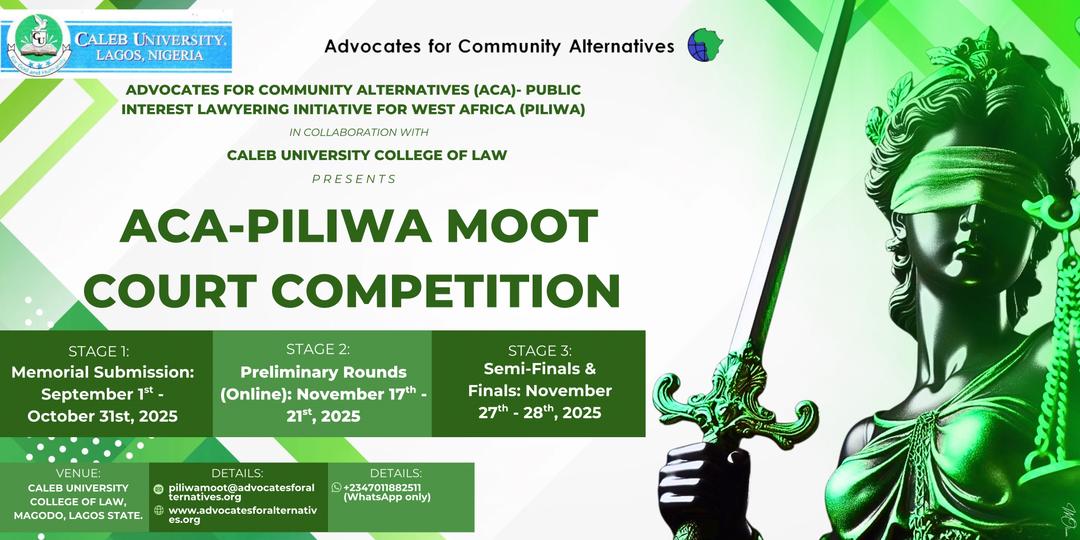
    Advocates for Community Alternatives (ACA)- Public Interest Lawyering Initiative for West Africa (PILIWA), in collaboration with the Caleb University College of Law, proudly announce the 2025 ACA–PILIWA Moot Court Competition.
    This year’s edition will take place in a hybrid format from November 17 to 28, 2025, bringing together some of the brightest law students across South-West Nigeria. The preliminary rounds will be held virtually, while the semi-final and final rounds will be convened in-person at the College of Law, Caleb University, Magodo City Campus, Lagos State, Nigeria.
    A total of ten universities are confirmed to participate in the preliminary rounds beginning Monday, November 17, 2025.
    The competition provides a unique platform to nurture the next generation of public interest lawyers, deepening their understanding of human rights and environmental law in Africa. It seeks to raise awareness on pressing human rights issues, highlight the relevance of regional and international human rights instruments, and equip students with practical advocacy and legal reasoning skills vital for impactful legal practice.

    Through this initiative, Caleb University, ACA and PILIWA reaffirm their commitment to strengthening public interest lawyering and promoting social justice across the continent.

  • Financiers warned of huge risks to communities and biodiversity as Rio Tinto approves world’s biggest mining project

    Financiers warned of huge risks to communities and biodiversity as Rio Tinto approves world’s biggest mining project

    Simandou deposit, Guinea. Photo: Rio Tinto
    The Board of Directors of Anglo-Australian mining giant Rio Tinto is exposing Guinean communities and the company’s shareholders to grave risks by approving a $6.2 billion investment in the Simandou iron project without adequately studying and mitigating environmental and social risks, according to civil society organisations BankTrack and Advocates for Community Alternatives.

    The Simandou project involves four extensive mining blocks in a globally recognized biodiversity hotspot in southeastern Guinea, over 650 km of new rail lines traversing chimpanzee habitat and the territory of at least 450 communities, and a dedicated port facility in a coastal area where artisanal fishing comprises the main source of income and food security.  While the project is still under construction, local communities have already reported widespread land theft, destruction of farmlands, profanation of cultural sites, pollution of sacred springs and drinking water sources, and degradation of fish stocks and other sources of livelihoods. (1)

    Rio Tinto is one of the main developers of the project through its controlling stake in a local joint venture, Simfer S.A., that was granted rights to mine half the iron ore deposit.  While much of the infrastructure for the project has been built by the holder of the other half of the mineral rights, the Chinese-led Winning Consortium Simandou (WCS), Simfer is the joint owner of the railway and the port.

    “So far, Rio Tinto’s public commitments to strict social and environmental norms has been cold comfort to Guinean communities in the path of the Simandou project,” explained Jonathan Kaufman, Executive Director of Advocates for Community Alternatives.  “As co-owners of the rail and port facilities, they could have put a stop to the abuses and ensured that affected people receive a remedy for what they’ve suffered, but they’ve done nothing.”

    The project developers could mitigate the risks of the project if they properly studied and planned for them, but according to civil society advocates, both Simfer and WCS have failed to do so. (2)

    BankTrack, together with partners, first raised the alarm about the risks and impacts of this project last summer by publishing a Dodgy Deal profile. The banks financing Rio Tinto and the other project developers were also warned in a November 2023 letter, in which they were reminded of their responsibilities under the United Nations Guiding Principles on Business and Human Rights and the OECD Guidelines for Multinational Enterprises. (3)

    The pollution of waterways, failure to respect social and environmental commitments, and decision to start construction before environmental review was complete all constitute violations of Guinean law that could threaten Rio Tinto’s legal and social licenses to operate.  They are also violations of the Equator Principles and the IFC Performance Standards, to which many international financial institutions have pledged adherence in their funding decisions.  If the project results in an environmental and humanitarian disaster, as Human Rights Watch has warned it could, financiers that uncritically support Rio Tinto will find themselves complicit.

    Banks funding Rio Tinto should therefore engage the company to ensure that harms so far experienced by communities are addressed, further risks are mitigated, and with the active participation of local communities. Specifically, banks should insist that Rio Tinto publicly commit to adhering to the IFC Performance Standards, submit to an independent audit under the IRMA standards for responsible mining, apply the principle of Free, Prior, and Informed Consent with respect to the affected communities, and publicly disclose key project documents, including impact assessments and audits and the project’s Environmental Compliance Certificates.  

    Notes to editors

    (1) More information about the Simandou project’s risks and impacts can be found on BankTrack’s Dodgy Deal profile, here: https://www.banktrack.org/project/simandou_iron_ore_project_guinea 

    The profile includes up-to-date maps showing the project’s impacts on communities, protected areas, biodiversity hotspots and chimpanzee habitats produced by EarthInsight.

    (2) WCS’s environmental and social impact assessments are dire; for example, they predict irreversible impacts to groundwater systems that supply local communities and flow into the headwaters of the Niger River, a lifeline to millions of people in several arid West African countries.  But they are also inadequate; expert reviews have shown that they are based on outdated and inapplicable data, fail to include key mitigation plans for biodiversity and management of effluents, and dedicate insufficient funds for the preservation of endangered species such as the West African chimpanzee, the forest elephant, and the pygmy hippopotamus.  

    Rio Tinto’s own record of due diligence is no better; the company’s original impact plan for preserving biodiversity relied on “physically removing or scaring away animals,” and its current assessments and plans have not been made public.  In fact, Rio Tinto began clearing land and building its own section of railroad before its impact studies had ever been considered by the Guinean government.

    (3) Letters were sent to 23 major financiers of Rio Tinto, for an example see here.

    For media enquiries please contact:

    1. Emyloïa Kpadonou, Communications Officer, Advocates for Community Alternatives: +233 50 037 5984
    2. Ryan Brightwell, Research & Communications Director, BankTrack:  +31 634 643 116