Author: WebMaster

  • LIBERIA COMMUNITY DEVELOPMENT

    Notes from the Field: Liberian communities taking development into their own hands

    In late March 2021, Advocates for Community Alternatives (ACA) embarked on a field mission to rural Liberia to assess its programs, support partners, and build new collaborations. The findings were very encouraging: the partner communities are embracing community-driven development in a very remarkable way and are joyfully taking the initiative to remake their communities according to their own vision.

    These field  visits took place between March 20th and 31st, 2021 in Lofa county: a region in Liberia well known for producing rice. Focus was laid on communities which were undergoing the Facilitated Collective Action Process (FCAP) activities. The primary purpose of the visit was to assess the performance of the communities on the overall FCAP projects in the Wologizi Mountain communities, provide support and guidance to implementing partners on how to maintain good FCAP practices and build effective working relationships with them. This visit provided ACA with a unique opportunity to know the real impacts of the projects and the challenges therein.

    The ACA team embarked on a capability building training for implementing partners on Monitoring, Evaluation and Learning (M&EL) as well as on the use of Microsoft Excel. The desire to put in place systems that guarantee efficiency and improve the skills of participants necessitated these training sessions. At the end of the sessions with the implementing partners, a debriefing session was held to discuss the challenges that were encountered and propose solutions on how to tackle them.

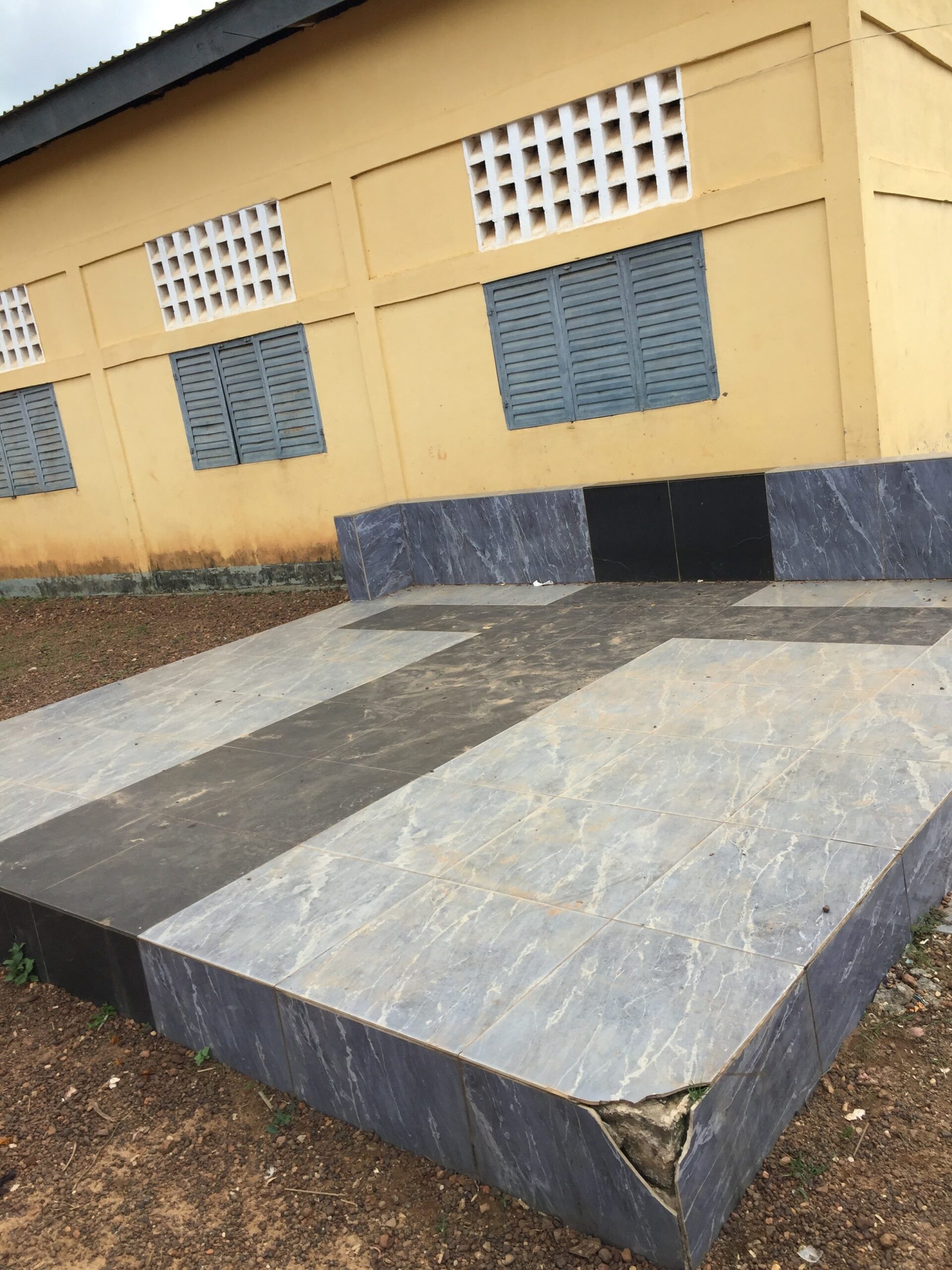
    ACA through Village Development Fund (VDF) and Green Advocates International (GAI) support four communities Karzah, Kpademai, Wobeyimeh and Betibah in Wologizi mountain in Lofa County. Although all the communities are making encouraging efforts to improve their communities through the FCAP process, it is worth sharing that, “Wobeyimeh”, one of the smallest communities that developed its vision to be a community with modern houses, has proven that words are powerful when supported with actions. It was observed that the community had built a community center with a sitting capacity of about 400 people which serves as a meeting place for everyone during community decision-making. It is also worth mentioning that Wobeyimeh, has gone further to build cement houses with painted and glass windows as a fulfilment of their vision.  The community’s next objective is to build a rice factory which will aid in the processing of the harvested rice through the FCAP Microgrant.                                

    The team then moved on to Margibi County. Popularly known for its rubber plantation, Margibi has the communities of Dokai, Jorkporlorsue, Bloume and Kolleh-Dapolo under its jurisdiction. The main objective for this visit was to assist in strengthening women to become economically independent and to be empowered on how to resist sexual violence. For this reason, ACA has advanced plans and has started carrying out baseline community assessment together with community leaders.

    (Wobeyimeh Community rice factory project  under construction)
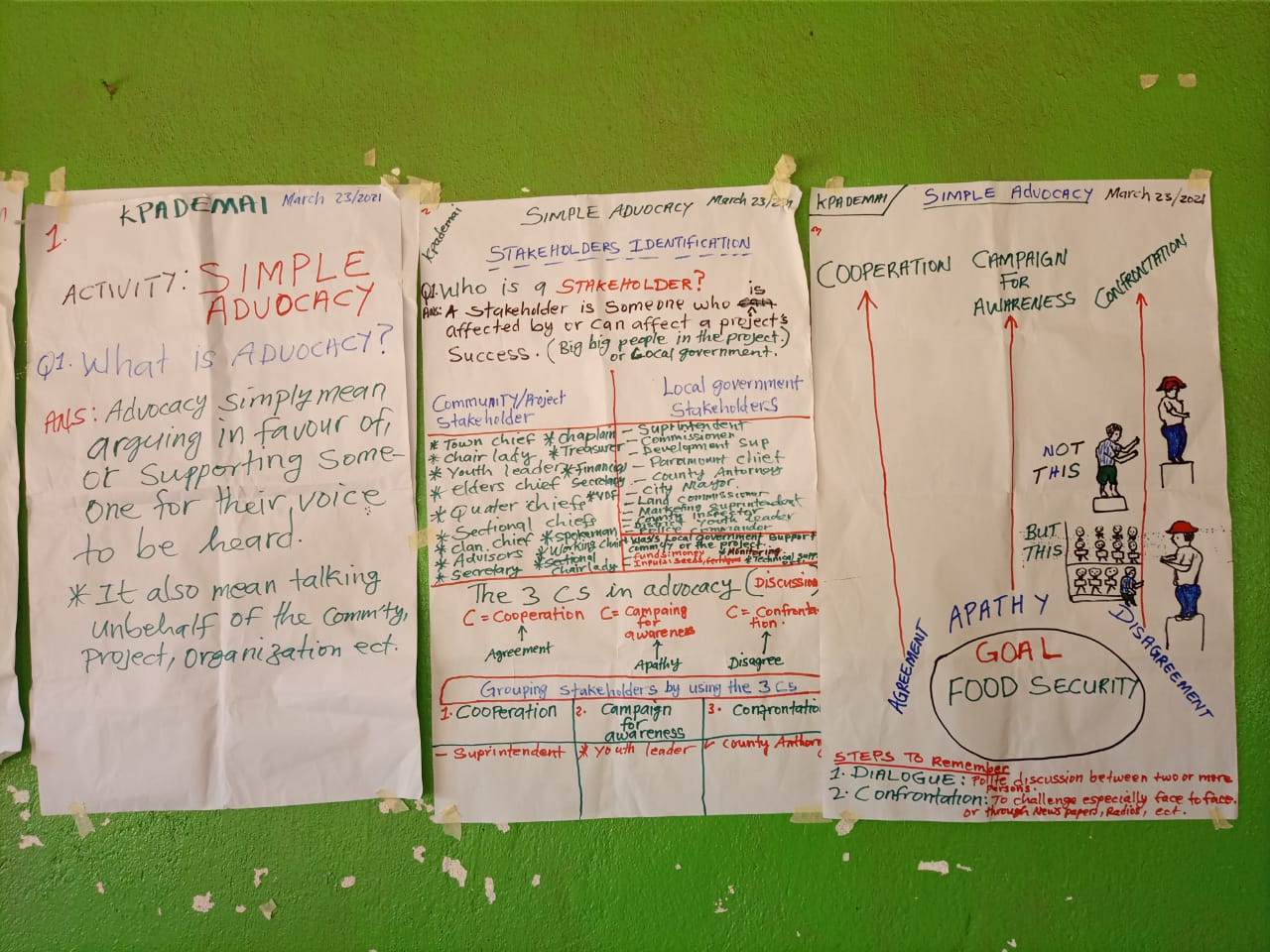
    (Notes from Kpademai Planning phase)
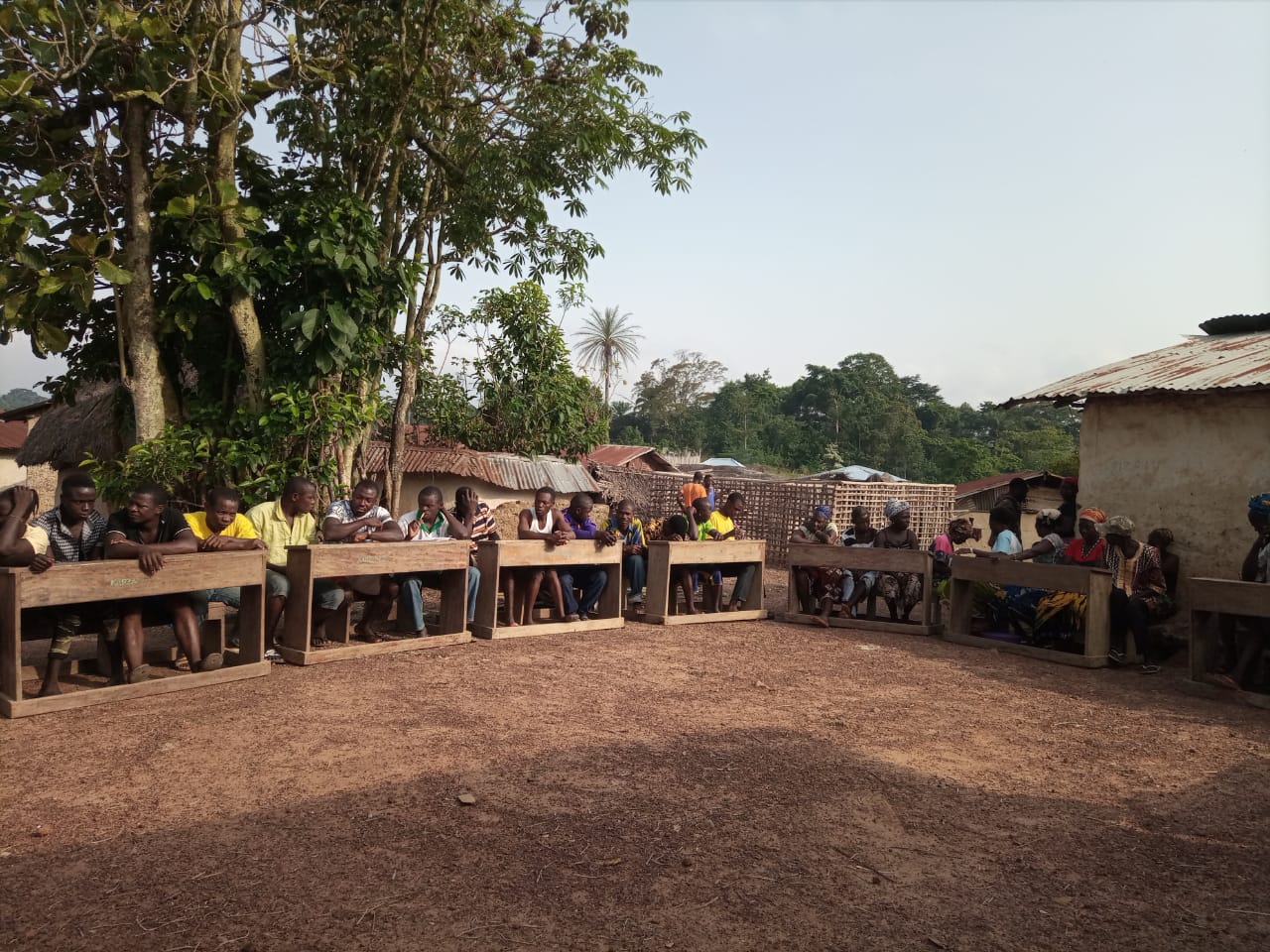
    (Karzah in FCAP meeting discussing among peers )
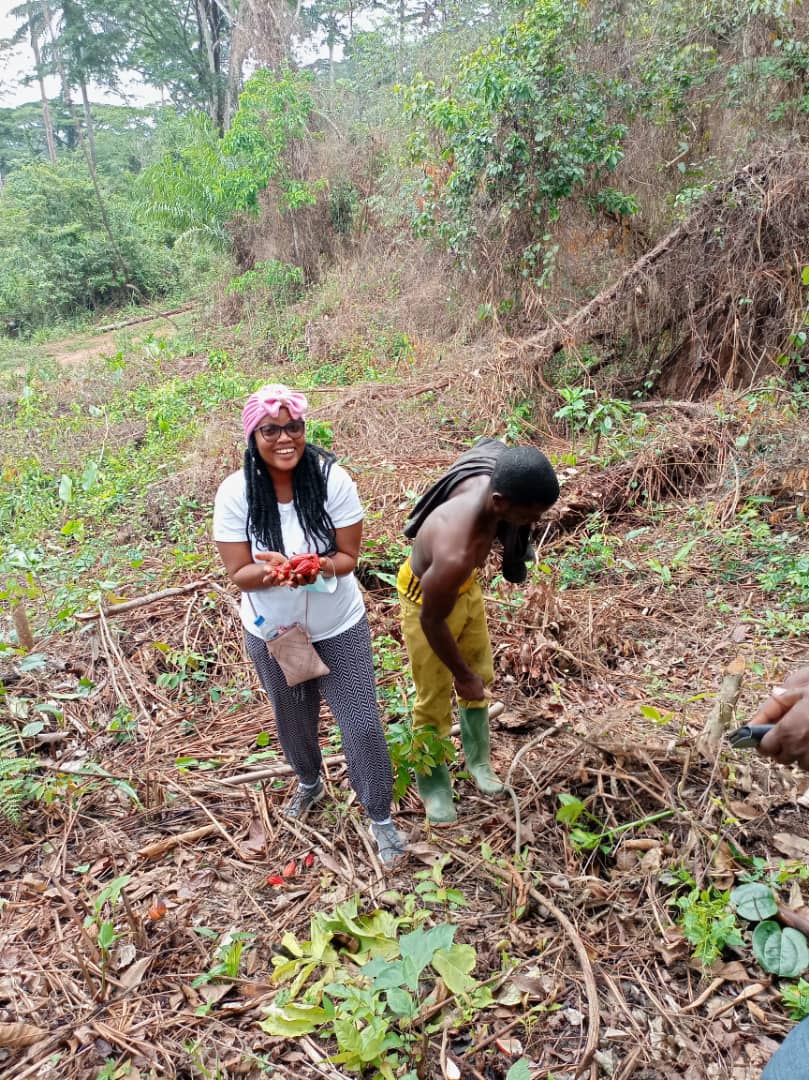
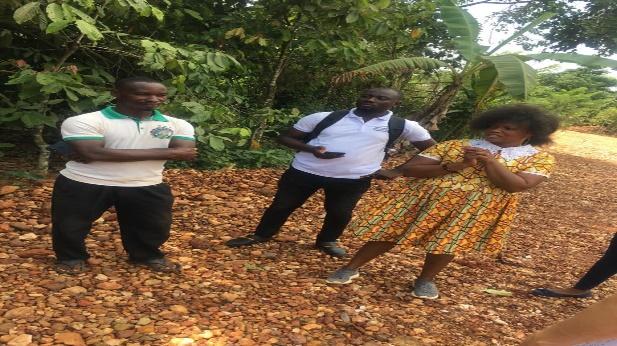
    (A visit to Betibah community rice farm)
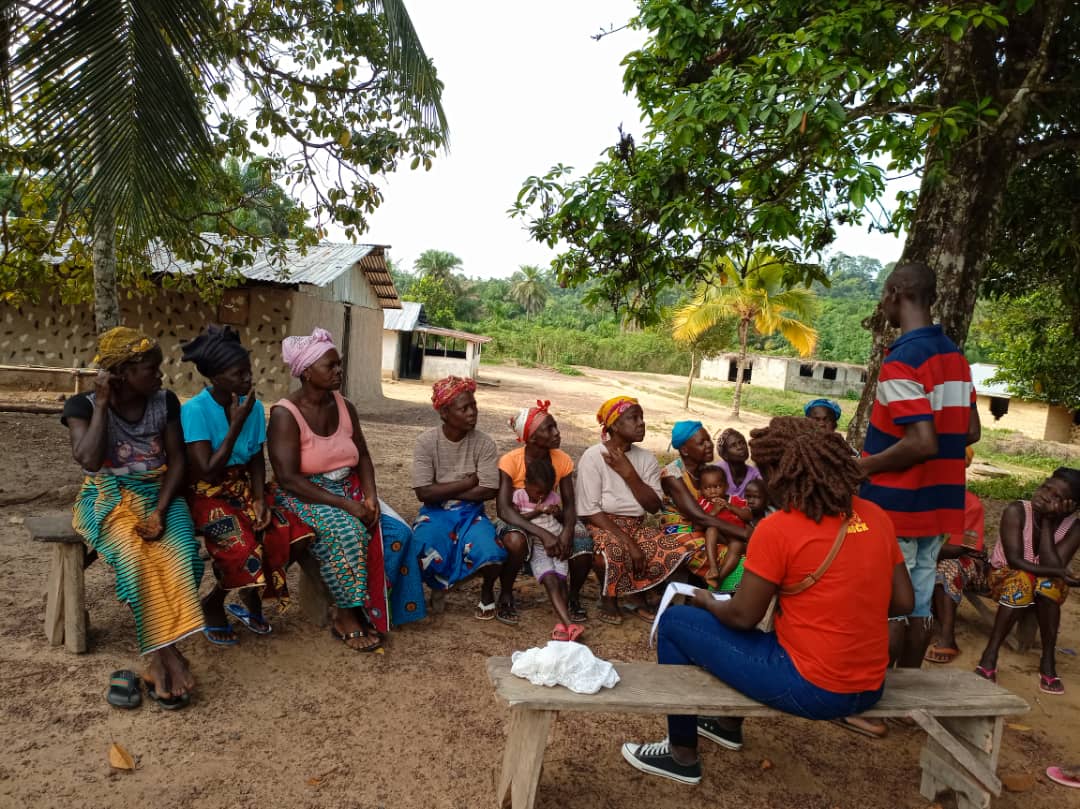
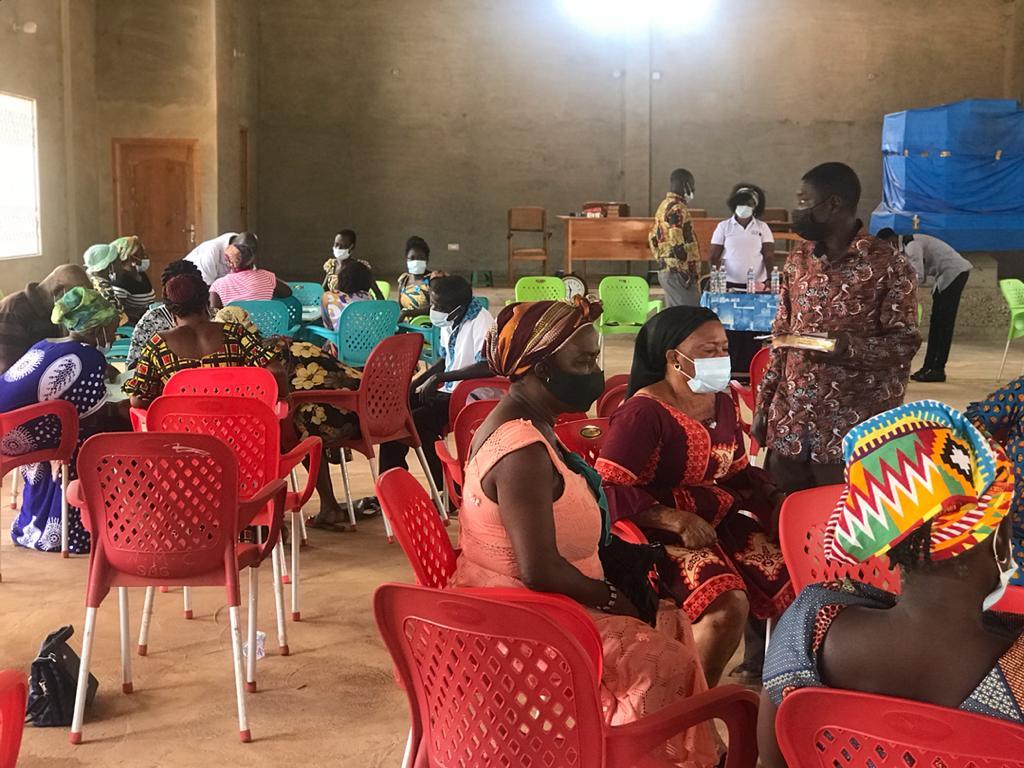
    Meeting with  some women in SRC Communities.
  • LAND ENCROACHMENT

    LAND ENCROACHMENT AT JUASO, NWOASE, AND DONKRO NKWANTA.

    Advocates for Community Alternatives(ACA)  partner communities in Ghana are facing land challenges by powerful actors such as mining companies and traditional authorities. They are, however, mounting a courageous resistance to the land challenge using a number of strategies.

    Juaso

    Kibi Goldfields Ltd. (KGL) operates a gold mine in the Juaso community in the Eastern Region of Ghana. 

    BSD, a subsidiary of Kibi Goldfields, has  mined  2 feet away from the stream which is identified to be a buffer zone and against the law. In March 2021, the natives in the community noticed that  Kibi Goldfields had intentions of carrying out their mining activities in the stream which is their source of water for domestic use.

    The community, realizing that mining in a watercourse could affect their health, decided to protest against the company.They gathered at the company premises clothed in red attires to show their displeasure and make their voices heard. This forced the company to withdraw from the illegal project.

    Just a month after ceasing operations in the stream, Kibi Goldfields entered another part of the community, popularly referred to as “Old Cemetery,” and cleared approximately 17.5 acres of farmland to extend their mining activities. Once again, their activities were illegal because they failed to seek permission from the landowners

    The natives of Kibi, reported to the District Chief Executive (DCE) and the District Police Commander and made their grievances known to them. The DCE intervened, and the company ceased its operations in the Old Cemetery area. 

    In April 2021, KGL extended operations to another piece of land at the outskirts of the community. Unfortunately, they also chose to clear roads through the villagers’ cocoa plantations to access their new mining site. In constructing the roads, some cocoa trees were destroyed without prior notice or compensation to the farm owners. Instead,the company only reached out to the community to call them for negotiations over compensation after cutting the trees.  This is a clear violation of Regulation 14 of the Minerals and Mining (Compensation And Resettlement) Regulations, 2012 (L.I. 2175).

    Nwoase

    Offspring of settlers from the northern region of Ghana have been living peacefully and farming for years alongside the indigenous population in the village of Nwaose, in the Bono East Region.  The Nwoase’s traditional chief,Atekoanohene, has however, upset both settlers and indigenes, for which he sold  nearly all the village’s farmland to outsiders. The  villagers are losing their lands in which they have cultivated household crops and watermelons(main source of income) to another traditional ruler. Their cashew plantation lands have also been sold off to a group of soldiers.

    Even though the chief’s unethical actions affected both settlers and indigenes, the settlers, also tenant farmers, are hurt deeply as they have nowhere else to go. This is because they did not keep ties with their ancestors’ original communities, and have always carried out their duties to the Atekoanohene as subjects of the stool.

    This is not the first time that the Atekoahene has placed his own financial gain over the good of the residents of Nwoase.  In past years, he has demanded tribute of goats for the privilege of continuing to farm the land or even for rearing animals within the village.  He extorts hundreds of cedis from residents before allowing them to bury their deceased on village land and forbids them from growing crops with germination periods of longer than three months.  Earlier this year, the chief struck back against the farmers’ decision to continue farming their land.  Announcing that he would “replace the people with cattle,” he signed a deal with local ‘Fulani’ herders, inviting them to bring cows to graze on community farmland and even within the confines of the village itself.

    The people believe their chief is engaging in human right violations by depriving them of their right to livelihood, as well as violating his constitutional duties to administer the land for the benefit of the subjects of the stool.

    Most recently, the land caretaker, who sold land to the soldiers, cut down cashew trees on another piece of land  and replanted new cashews.  The community has complained to Ghana’s Commission for Human Rights and Administrative Justice and is awaiting the Commission’s recommendations.

    Donkro Nkwanta

    The community of Donkro Nkwanta is located in the Nkoranza South District of the Bono East Region, adjacent to Nwoase.  About ten years ago, the people of Donkro Nkwanta successfully led a coalition of three other neighboring communities to reject the expansion of industrial gold extraction by U.S. mining giant Newmont. The residents remain united against any form of mining in the future.

    This resolution, however, is now being tested, as the Nkoranzahemaa, the Queen Mother currently exercising traditional authority over the Nkoranza Paramount Chieftancy, has sold land belonging to Donkro Nkwanta to AnnG Farms, purportedly for the cultivation of cash crops.  Although the people and king of Donkro Nkwanta have protested strongly, AnnG has already destroyed several acres of cashew trees belonging to community farmers.

    Community members, fearing that the land will actually be used for mining, have taken their concerns to the Nkoranza South Municipal Security Committee, which recommended that the Donkro Nkwanta land be returned to its original owners.  The community continues to stand firm with their king to insist that their right to land ownership should be respected.

    (The Juaso stream after the illegal mining activities)
    (A cleared piece of land in Juaso used by Kibi Goldfields two metres from the stream)
    (BSD, a subsidiary of Kibi Gol(dfields mining two metres away from the Juaso stream)
    (cocoa trees cut down by Kibi Goldfields at the Old Cemetery area)
    (road created by Kibi Goldfields through individual cocoa farms at Old Cemetery)
  • CICONET TRAINING

    CICONET UNDERGOES CONFIDENCE BUILDING TRAINING

    It is a bright Wednesday morning with the sun’s rays glimmering in Segyimase, a small community within the Abuakwa South Municipality. Famous for its gold, Osino, capital of Fanteakwa South District is a town located in the Eastern Region of Ghana along the Accra-Kumasi highway and home to the people of Juaso and Nsuapemso. 19 May 2021 marks another eventful day for the people of these three communities. The people of Segyimase, Nsuapemso and Juaso have gathered for their monthly Citizen Committee Network (CiCoNet) meeting at the Methodist Church of Segyimase. The strong desire to develop their communities has brought together this group of determined people to deliberate on how to improve on their livelihood.

    The main objective of CiCoNet is to build the capacities of 60 members from these three communities who would serve as intermediates and whose duty is to help advocate on behalf of communities to see development happening within their communities. Through these meetings, these members would be empowered and acquire knowledge and skills on how to address issues pertaining to the development of their communities, and how to present situations to their local governments when need be. Cognizant of the fact that they cannot rely completely on the Government or Non-Governmental Organizations (NGOs) for their survival, they have taken this bold step to harness the potential of their communities for progress and development. 

    Like all other meetings, they began by reminding themselves of their vision, mission and goals which they had initially developed. This reminder instills in them the strong desire to succeed and propels them towards working hard in achieving their goals. It is also a way of prompting them about their various roles and responsibilities in developing their community.

    Figure 1: CICONet members participating in confidence building exercise.

    Today’s session which recorded a total of 47 participants, focused on building self-confidence. Participants were engaged in confidence building activities, experience sharing and learning. They were divided into groups and given a task to carry out. To encourage participation, each participant presented the roles they played in ensuring that the exercise was completed. Each group chose a group representative who did the main presentation. Groups graded themselves based on their confidence levels. They also identified the challenges they faced and what they could have done better if they had a second chance.

    Figure 2: Presentation of results by a group member

    Participants were then given another opportunity to undertake the same activity and were asked to grade themselves again. It was observed,that the level of confidence of participants had improved. 

    When queried about what had changed, most participants attributed their improvement to the lessons learnt from the first trial and the desire to get better. Some referred to the slogan “Experience is the best teacher.”

    After the exercise, participants were then taken through a talk by the Community Development Officer of ACA, Nana Ama. While making reference to the exercise they just completed, she explained to them the importance of building self-confidence and different ways in which it could be done. She concluded by encouraging them to assist each other as much as possible in this path. 

    Giving his impressions about the meeting, George Owusu Asante, Chairman of CICONet stated: “Today’s meeting has encouraged us to be bold and courageous. It has made us to feel more confident and has taught us about unity and love. Now, we have the courage to approach the authorities and present our problems.”

    It is therefore very important for these communities to be aware of their rights as well as their roles and responsibilities and the need to hold their local authorities accountable, while honoring their responsibilities. This is a major step in ensuring responsiveness, mutual accountability and sustainable development.

  • Compensation Training at Juaso

     ACA Legal Team Educates Juaso Victims on Mining Compensation Procedures as the Community’s Fight for Survival Continues.

    The community of Juaso seem to be re-living one of their worst nightmares. Within the past few years, most of them have lost an immeasurable number of resources due to mining activities being carried out in the area by Kibi Goldfields Limited (KGL). Farmers have lost large tracts of land, depriving them of their major sources of income with little or no compensation. Many families have lost a greater part of their heritage to these miners. As a result, community members have become disillusioned as their complaints to local authorities to halt the menace and for compensations to be made, seem to be falling on deaf ears.

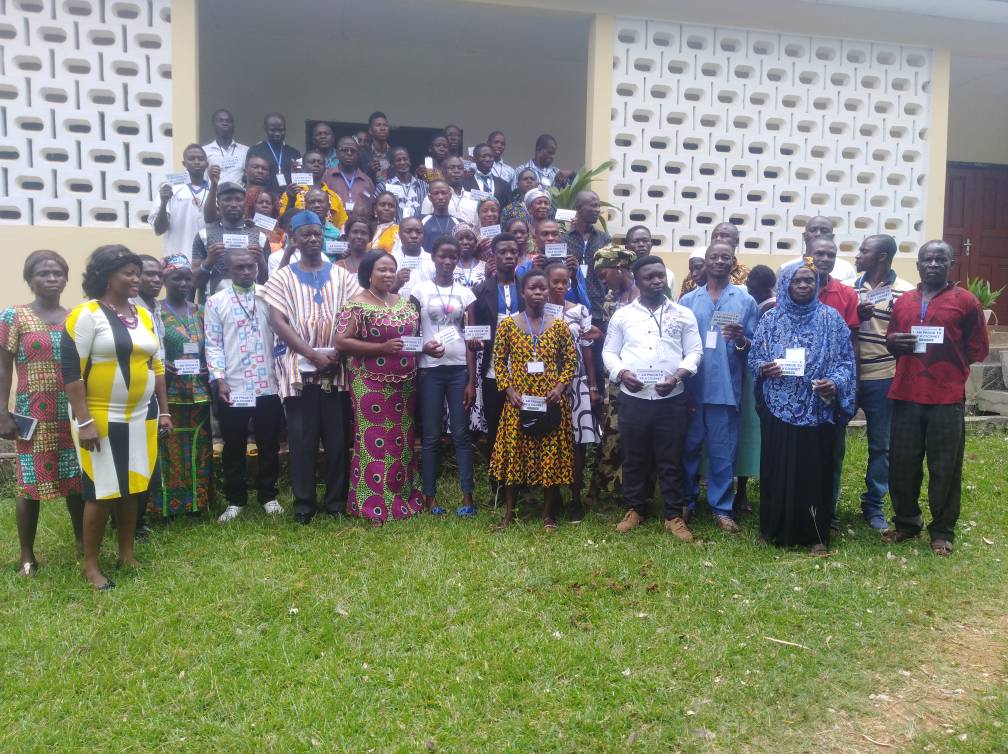
    Figure SEQ Figure |* ARABIC 1: A cross section of Juaso Community members

    Farmlands that were once fertile grounds for food crops have now been replaced by stony roads. The indigenes complain of the use of the military to intimidate them into accepting the conditions laid out to them. Community members reckon that they woke up one morning to the realization that activities such as cutting down of trees had been going on at night while they were asleep. Some attest to being told by KGL that the activities were carried out at night because they were conscious of the fact that the community would not approve of them.

    KGL has been granted the permit by the government to mine in the area but have failed to follow proper consultation processes with the community and have also ignored the statutory compensation procedures according to Ghanaian law, thereby providing either meagre compensations or nothing at all to affected victims

    It is saddening knowing that these people are being deprived of their major source of livelihood without proper compensation. As part of Advocates for Community Alternatives’ (ACA) role in ensuring that these communities sustain their livelihood, a partnership was formed with Centre for Public Interest Law (CEPIL). The goal of this partnership is to guide communities like Juaso to make informed decisions and take actions regarding issues related to mining and its impact on the community.

    To that effect, the Executive Director of ACA, Jonathan Kaufman paid a visit to Juaso on Friday 21 May 2021 to have a clearer picture of the situation and to educate the people on their rights with respect to compensations. During the interactions, he clearly explained the legalities surrounding compensations with regards to areas affected by mining enshrined in the laws of Ghana. Mr. Kaufman also highlighted the fact that some of these laws were not in alignment with international laws.


    Figure 3: ACA team interacting with some community members.

    He educated the community on those areas which were excluded from mining procedures (forest reserves, water bodies) and those which were not (fields, homes, schools, roads). This was aimed at creating awareness on the long-term consequences these activities might have on them if proper measures were not taken. 

    The ACA team accompanied by four community members also visited the site to enhance the knowledge of the community on how compensation plans work. This included Francis, a 42-year-old farmer who had been greatly affected by these mining activities. Based on what he had lost, and with the guidance of a compensation template, the group was able to develop an estimate of what his compensation ought to have looked like. The difference in the methods of compensation plans per company was also taken into consideration. Community members felt cheated by the revelations of the findings. A template was provided to aid the community calculate the value of what they had lost.

    It is worth noting that the initial mining site on which KGL was carrying out its activities had been abandoned in search of a new site. The big question here is “Is KGL giving the community members their rightful due after the destruction being caused?” 

    These and other thought-provoking questions are the drivers that prompt ACA to join forces with the community in seeking possible solutions towards ensuring that the people of Juaso are adequately compensated by these mining companies.

  • 22 Liberian Indigenous communities accuse the Salala Rubber Corporation (SRC), a Subsidiary of SOCFIN, a transnational corporation based in Luxembourg and an International Finance Corporation (IFC) Client, of grave human rights and environmental abuses using World Bank financing.

    Press Contacts
    Alfred Brownell
    Email: alfred.brownell@greenadvocates.org
    Green Advocates USA
    Skype: alfredbrownell
    Phone#:+1541 255 2399

    Francis K. Colee 
    Green Advocates International 
    Email: francis.colee@greenadvocates.org 
    Phone# +231777077206 

    Simpson D L Snoh 
    Alliance for Rural Democracy 
    Email: simpsonsnoh.ard@gmail.com 
    Phone# +231777529064 

    Kakata City, Liberia, May 27th, 2019 – In a complaint filed today, 22 Liberian indigenous villagers say, the Salala Rubber Corporation (SRC) is using World Bank money to expand and operate its Liberian plantations through illegal land grabs, sexual violence, and intimidation of human rights defenders, according to a complaint filed today. Residents of 22 Indigenous Villages in Margibi and Bong Counties are asking the International Finance Corporation (IFC), the World Bank’s private-sector arm, to intercede and take special steps to protect community based Land, Environmental and Human Rights Defenders from harm and reprisals as a result of their complaints consistent with the IFC October 2018 Position Statement on Retaliation Against Civil Society and Project Stakeholders.

    SRC, a Liberian subsidiary of Luxembourg-based agricultural giant Socfin, took over the Weala Rubber Company in 2007, after the end of Liberia’s civil war. SRC received an IFC loan in 2008 to expand and modernize its rubber plantations. But according to villagers, that expansion has undermined their livelihoods and has been accompanied by violence against women and community leaders. The company has forcibly taken over traditional territory and even lands for which locals hold formal title deeds, without regard for land rights and without compensating the owners. One resident explained, “Our ancestors resided upon these lands before the Republic of Liberia even existed.” But now many villages are surrounded by plantation, their farmlands and forests cleared and engulfed by rubber trees. 

    Without the farmland or the forest, communities have entered a period of food scarcity. “When I was a child, our parents fed us three times per day. We had plenty of land for farming, and we grew enough food to feed the family and sell some for profit,” one woman said. “The forest was used for hunting, medicine, and rivers for catching fish. Now I can only feed my two children once per day.” SRC also sprays pesticides and other chemicals around the villages, polluting sources of water. Community members report that their water sources including creeks, rivers and streams have changed color, smell foul, and often cause rashes and diarrhea when imbibed soon after rounds of spraying. They also complained that their sacred sites – tombs, shrines, Sande (women traditional schools and universities) and Poro (male traditional schools and universities) and areas of forest reserved for medicinal plants and religious activities – have been destroyed and desecrated.

    Living near SRC’s plantations brings other perils as well. The few women who find employment with the company are subject to harassment by the contractor heads who manage them; they often face demands for sex just to receive payment that is due to them. Women who walk through the plantations at night – often a necessity because villages are literally surrounded by rubber trees – fear running into plantation guards, who humiliate them and threaten them with rape. Activists and community leaders who voice their opposition to the company or seek redress for the damages have been arrested and their legitimate grievances criminalized on spurious charges and put under continuous surveillance. The communities’ complaint asks the IFC to take special steps to protect these organizers, land, environmental and human rights defenders from harm. 

    In January 2019, a Swiss organization, Bread for All, published a detailed report revealing the abuses and impacts on communities of SRC’s operations, but the company has yet to respond. Frustrated with this failure to address their concerns, the communities have directed their complaints toward the Compliance Advisor Ombudsman (CAO), an office of the IFC that investigates allegations that IFC-funded projects are in breach of IFC’s own strict social and environmental safeguard policies. 

    Green Advocates International, the Liberian organization filing the complaint and supporting the Indigenous communities, hopes the IFC complaint will have a better outcome. “SRC has harmed these communities on such a massive scale that the IFC must compel the SRC to remedy these abuses and make them whole again. The IFC has a duty, an obligation and a responsibility to protect, respect and fulfill the rights of these indigenous villagers,” says Alfred Lahai Gbabai Brownell Sr, the lawyer representing the indigenous communities and the 2019 Goldman Prize Winner, Lead Campaigner and Founder of Green Advocates International. “With the interventions of the Compliance Advisor Ombudsman (CAO), we hope the IFC will hold SRC accountable for its actions. This would be an important and sizable symbolic victory for all of our impacted communities that have continuously suffered these abuses for almost half a century without and form of remedy IT IS TIME to hold the IFC, SOCFIN and its subsidiary, the SRC fully accountable,” says Brownell.

    Green Advocates International 

    Green Advocates International is Liberia’s first public interest environmental law and human rights organization dedicated to ensuring the protection of the environment, defending human rights, empowering and amplifying the voices of poor people who are victimized in resource exploitation and by using the rule of law to hold state and non-state actors accountable for their actions. The program activities of Green Advocates are conceptualized to amplify environmental protection, a transparent and accountable system of governance in natural resources management to benefit indigenous people who are the custodians of natural resources, the intellectual and cultural rights of rural people, and the link to the protection of the human rights of marginalize people. 

    Quotations from Affected Community Members 

    “Human rights defenders in the communities have been systematically targeted by the IFC’s client, SRC, as a result of their activities in seeking redress for legitimate grievances regarding SRC’s activities, and are continuously surveilled by local police and SRC’s private security contractors”
     – Says Francis K. Colee, Head of Programs Green Advocates 

    “During the SRC expansions in the 1960s and 1979/80, many of us were forced to evacuate to indigenous tribal ‘reserve land.’ Once we were evicted from the reserve land, we had nowhere to go. The government knew we were there, we paid taxes.”
    – An elderly male member of the community 

    “SRC cleared sacred places such as our traditional revered snake bushes, Sande bush, Poro bush, taboo trees, sacred rivers, ritual lands, and ancestral graves while expanding its rubber plantation. We used snake bushes to cure those bitten by snakes. SRC destroyed many of these sites during the clearing of the bush or the demolition of towns.” 
    – Youth leader from the community 

    “Our ancestors resided upon these lands before the Republic of Liberia even existed. Now SRC’s expansion is making our entire way of life impossible to continue.”
    – An elderly male member of the community 

    “When I was a child, our parents fed us three times each day. They had plenty of land for farming and grew enough food to feed the family and sell some for profit. The forest was used for hunting, medicine, and rivers for catching fish. Now I can only feed my two children once per day.” 
    – An Indigenous women leader 

    “The same bulldozers which destroyed farmlands have also demolished many graveyards, or cut the them off from the surrounding forest, robbing them of spiritual value. We can no longer honor our ancestors.”
    – A chief from one of the villages 

    “We now must use water from the creek in the swamp within the planation, even though the water is unsuitable to drink.” 
    – Another women leader 

    “If a woman travels after 6 (six) PM in the evening, she can expect to get raped.” 
    – Woman land rights defender 

    “SRC has harmed our communities on such a massive scale that making us whole again could prove to be impossible.” 
    – A young female Land Rights Defender 
  • Donkro Nkwanta Residents Become Active and Engaged Citizens Through CICONET

    Donkro Nkwanta Residents Become Active and Engaged Citizens Through CICONET

    Fifty residents of the villages of Donkro Nkwanta, Kyeredeso, Nwoase, and Salamkrom have completed their fourth month of activities through the Citizens Community Network, or CICONET.  As part of their commitment to engage with local authorities and practice active citizenry, CICONET members have learned how local government works, hosted Town Hall Meetings with government officials, and chosen advocacy projects to improve their communities’ governance.


    CICONET began in April 2018 with a keynote address from the Municipal Chief Executive of Nkoranza South Municipality, Ghana, Ms. Diana Ataa-Kusiwaa.  Since that time, the network members have met monthly and learned to interact with local and traditional government leaders.  They have held the Municipal Assembly to account for incorporating their own community development vision into Nkoranza South’s Medium-Term Development Plan, exercised oversight over development projects in the area, and communicated community grievances in a positive and constructive way.


    Through CICONET, community members have also developed the solidarity and confidence to advocate on their own behalf with their leaders.  Most recently, they decided to tackle a land dispute with the traditional chief of one of the four villages.  The participants developed and put into practice an assertive but culturally appropriate strategy to ensure that community land is used and governed appropriately.

  • Donkro Nkwanta Communities Break Ground on Community Projects

    Donkro Nkwanta Communities Break Ground on Community Projects

    [et_pb_section bb_built=”1″][et_pb_row][et_pb_column type=”4_4″][et_pb_text _builder_version=”3.0.106″ background_layout=”light”]

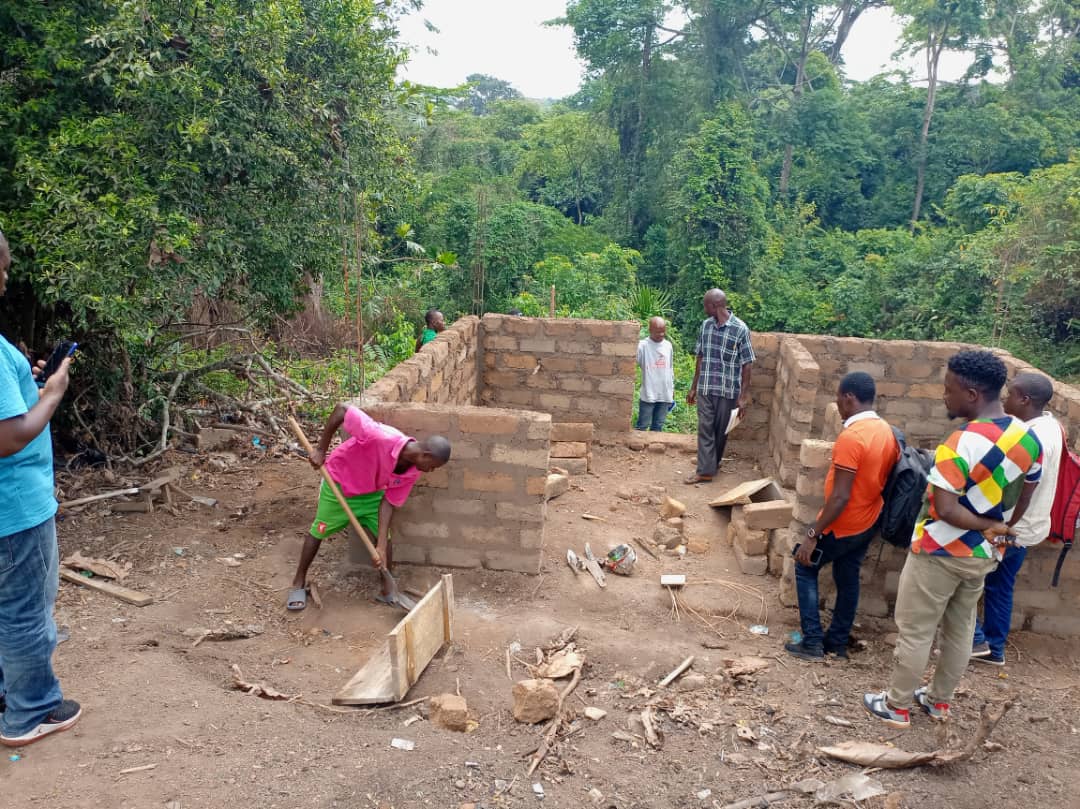
    In the past month, two of the communities at Donkro Nkwanta in the Brong Ahafo Region of Ghana – Salamkrom and Kyeredeso – have broke ground on community-driven development projects with ACA’s support.  Each of the villages has created its own development and advocacy vision that will keep it safe from the destructive impacts of mining for years to come.


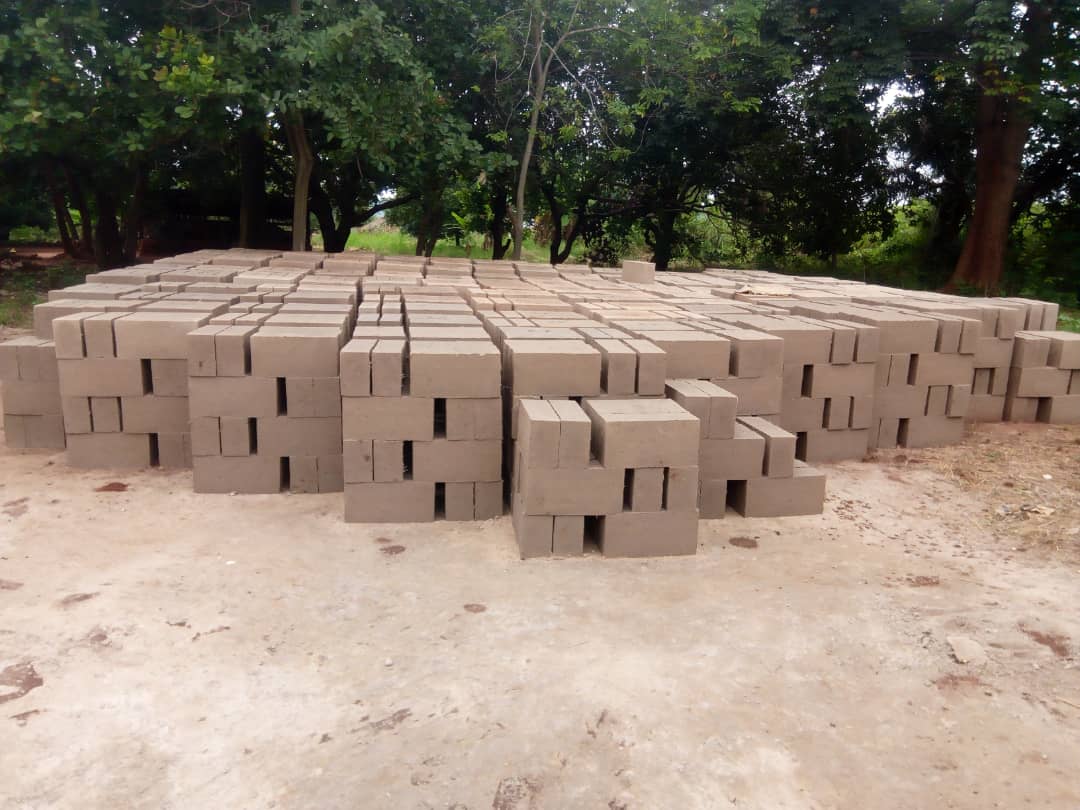
    In both Kyeredeso and Salamkrom, community artisans have cleared building sites and molded concrete blocks, and they expect to start construction in August.  Kyeredeso is building a health clinic, and Salamkrom is preparing accommodations for the village school’s teachers.  Both communities have signed grant agreements with ACA, and they have received the first disbursements on these “microgrants.”


    The villages are two of the four communities that ACA supports in Ghana to choose their own development trajectory in the face of threats from the mining and petroleum industries.

    [/et_pb_text][/et_pb_column][/et_pb_row][/et_pb_section]